

Christian Fredrikson, CEO at Fingerprints discusses Biometrics predictions for 2021
It’s heartening to see biometric technology playing a role in helping people, communities and workplaces adapt to the changes triggered by the past year. As we stand at the beginning of 2021, the value of biometrics is reaching far beyond mobile and is set to become even more prominent in new areas. Most notably biometric payment cards are providing a route map to safer, more hygienic in-store payments, while smart homes and workplaces are becoming more secure and user friendly with biometric access control. Let’s take a look at where we are now, and where we’re headed next.
Maturing mobile market
After over a decade of integrations, mobile is the most mature and established market for consumer biometrics, with some 80% of smartphones shipped today now incorporating some form of biometric sensor. Biometrics is now consumers’ preferred method to authenticate on mobile. Recently we celebrated that our own sensors have been integrated in 500 mobile device models globally, in nine out of the top ten smartphone OEM brands. But this is by no means a static market. Mobile continues to grow, with 1.4 billion fingerprint sensors for smartphones projected to be shipped annually by 2026.
Crucially, this growth is driven by innovation. For manufacturers, ongoing R&D refinements to the biometric sensors themselves are enabling biometrics to support broader smartphone product development and innovation like foldable, full screen and 5G handsets. New fingerprint sensor shapes, for example, are important evolutions supporting OEMs as they push hard to differentiate their products.
Unlocking the device with the touch of a finger is now complemented with multiple new uses, such as operating the camera; volume and power control; and scrolling. Not to mention logical access to applications and payment authorizations. The latter in particular is proving popular, with Goode Intelligence predicting that over $1.67 trillion-worth of biometric payments will be made annually by 2023. The payments world is taking note too, with industry body EMVCo defining new security requirements for consumer device biometric authentication for payments. This recognition by payments industry heavyweights is a strong testament to the now central role of biometrics in this space, and we were delighted to start the year with news that our FPC1541 was first to achieve approval from EMVCo in line with new CDCVM Security Requirements.
Speaking of biometrics in payments…
As we enter 2021, biometric payment cards are no longer “on the horizon” – they’re actually here, with major commercial rollouts from French banks BNP Paribas and Crédit Agricole underway.
Momentum has been gathering steadily for a few years, but it has undoubtedly gained additional traction as a truly touchless, hygienic and secure way to pay amid the ongoing worldwide public health measures. Our research indicates that a third of consumers now worry about infection from PIN-pads when paying in-store. To put that in context, this is now the same level of concern as handling cash. Traditional contactless is one answer, but an imperfect one. PIN authentication is required as soon as the regional contactless cap, which on average sits at around €50, is exceeded as well as on every fifth payment in Europe. Biometric payment cards provide a more reliable solution, enabling banks to safely remove the contactless caps so consumers can enjoy truly secure contactless payments, no matter the value.
Unsurprisingly, the tech is well-received by consumers, with new research suggesting that over half would actively change banks to get a biometric payment card. This is especially significant considering how hesitant consumers tend to be when it comes to switching banking provider or embracing new technology. It’s not just banks and consumers who benefit either – retailers, for example, are also seeing how the tech can enhance the checkout or POS experience, removing friction while increasing security and consumer confidence, without requiring any update to existing infrastructure. As we move through increasing commercial rollouts, it is exciting to see this technology in the hands of more and more consumers.
Innovation ahead
Call it the Swedish entrepreneurial mindset, but we’re always looking to innovate and identify new opportunities for refining and applying our technology. One of the most exciting new areas we’re seeing is the expanding potential for biometric access applications, most notably in smart home and smart workplaces.
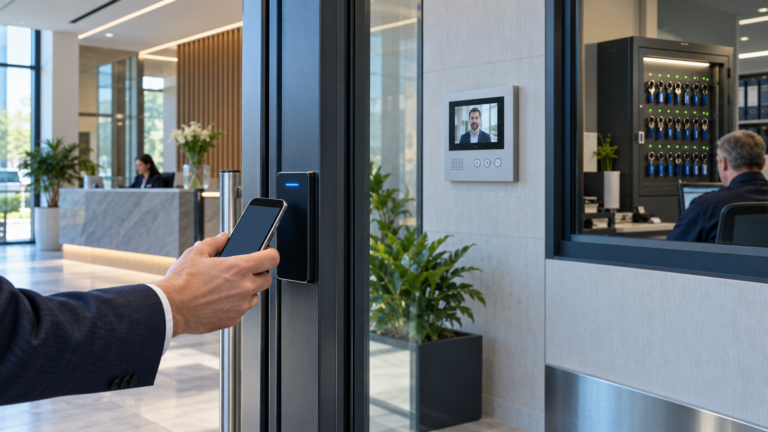
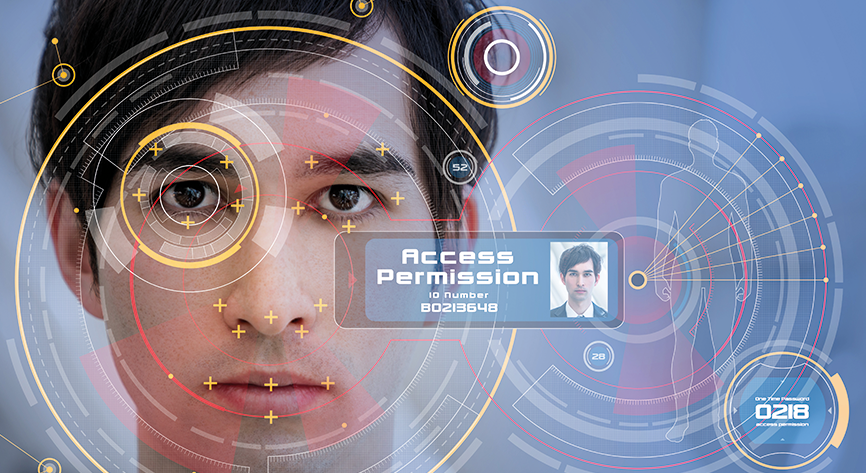
While boosting workplace and remote working security has been a long-standing priority for many organizations, the last year has certainly increased the desire for more secure and convenient access – both physical and logical. Biometric access cards, with authentication on the card, are one example that improves security, convenience and hygiene for entry to shared workspaces. Touchless biometrics authentication – using face, iris or a combination of the two – is another convenient means to secure entry to buildings and busy, hygiene-conscious environments such as hospitals.
Meanwhile, biometric authentication is in increased demand as a more convenient and secure authentication method for both consumer and enterprise PCs. Our research has found that most consumers (66%) are tired of PINs and passwords, and 51% would prefer using biometrics to authenticate themselves. Solutions such as fingerprint-enabled PCs and USB dongles can offer a pain-free means for IT departments to secure access to VPNs and confidential files, without simply creating yet more clumsy and insecure PINs and passcodes. By 2026, approximately two-thirds of the 260 million PCs shipped yearly are estimated to have a fingerprint touch sensor.
Personalization is also on the agenda. For example, colleagues could access their own individual settings on a shared work computer or, at home, profiles on a gaming console can be configured. Biometric sensors, familiar and trusted from smartphones, are ready-made to step into new elements of our daily life – from our front door to our personal or work PC. The possibilities are limitless – this market is one to watch.
On to 2021!
It’s an exciting time for biometrics, as the value of the convenience and security it offers across multiple – and expanding – applications come to the forefront. Crucially, in recent circumstances, it’s proved itself to be an adaptable technology, which has also helped us to adapt to the recent changes in our daily lives.
Perhaps now more than ever it’s important not to look too far ahead, but as biometrics continues to solidify its place across several markets, we can be certain its ability to simplify our lives will continue to drive growth.
To stay up to date on the latest, trends, innovations, people news and company updates within the global security market please register to receive our newsletter here.
Media contact
Rebecca Morpeth Spayne,
Editor, Security Portfolio
Tel: +44 (0) 1622 823 922
Email: [email protected]