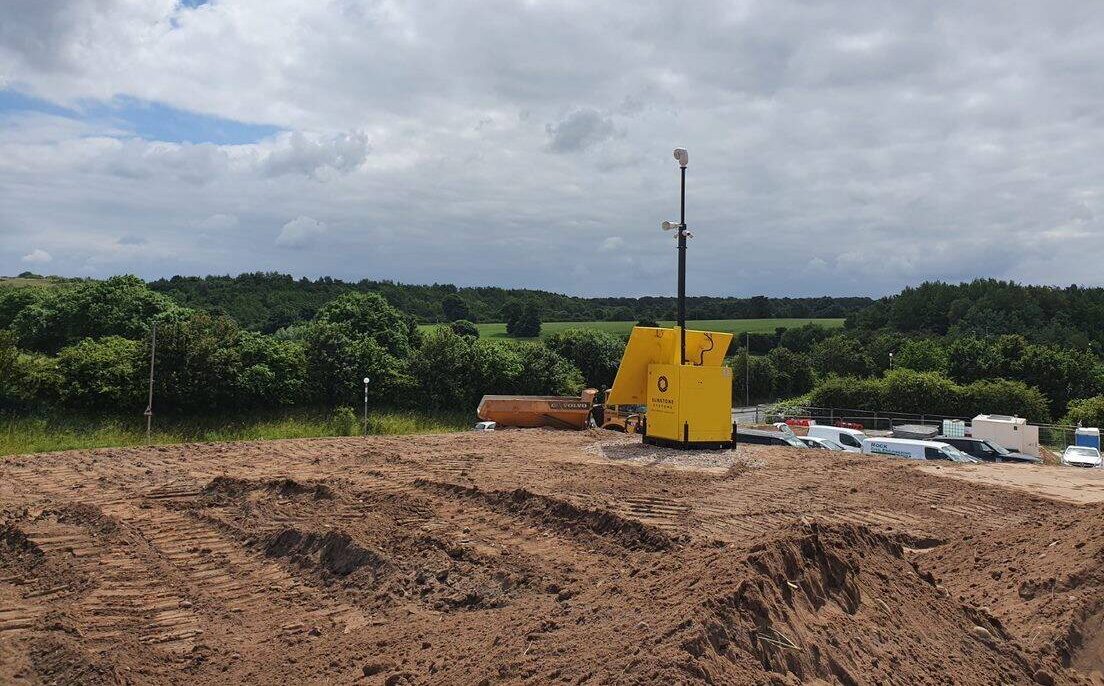

Liam Cornish, Head of Technical Operations at Sunstone Systems talks about how the design of solar-powered surveillance and telecommunications systems requires a meticulous approach to ensure safety, reliability, and efficiency. Too often now I see systems deployed with little regard for the above. This ultimately leads to a poor client experience and potentially unsafe conditions when clearly profit has been the main consideration. This article explores the essential factors in design risk assessment, emphasizing site selection, power system design, structural integrity and operational safety.
Site Selection and Environmental Considerations
No set of site conditions or client requirements are ever exactly the same, so rarely can an assessment be based on a ‘one size fits all’ approach, nor should it be. The following are just a few basic points that should always be considered before any system is selected as suitable for a deployment:
- Solar Irradiance: Evaluating the site for optimal solar exposure is crucial. Ensure the location receives sufficient sunlight throughout the year to maintain consistent power levels. This assessment helps in choosing the right site that maximizes solar energy capture.
- Weather Conditions: Assess the frequency and severity of adverse weather conditions, including storms, snow, and heavy rains. These factors can significantly impact the platform’s performance and must be considered to ensure the system’s resilience and reliability.
- Ground Conditions: Ingress and Egress of equipment must be taken into account as the seasons often dictate the suitability of a deployment, bad weather or simply winter will influence any deployment or collection, but also just the nature of ever evolving sites can hamper access to equipment even whilst it’s in use.
- Orientation and Obstacles: Shading has a significant effect on a systems ability to function properly, any deployment location should be surveyed to assess not only its current conditions but also those of the contract ongoing. Highways can be a particular problem when considering shading as vegetation is rarely managed and quickly grows to obscure panels. Obstacles such as signs and especially crash barriers also have a hugely detrimental effect on solar harvest, the very worst cases we’ve all seen being towers installed under trees, facing north.
Power System Design
- Energy Storage: A robust energy storage system is necessary to provide power during periods of low sunlight. Consider the type, capacity, and lifecycle of batteries to ensure a reliable and long-lasting energy supply. Batteries systems should ideally be designed not only to power the equipment but also to protect the batteries themselves from frequent deep discharge. If batteries are constantly being taken to their limits it doesn’t take long for them to degrade to a state that requires them being completely replaced, not only is this a costly exercise it also has a negative effect on any perceived carbon savings and whilst this isn’t necessarily the main consideration for using solar in the first place considering any environmental impact should still be part of any assessment.
- Power Management: Power management systems to optimise energy consumption help extend the operational life of the platform by efficiently managing power distribution and usage. Proper management and systems catered to the clients specific needs, reduce downtime and therefore engineer visits, which adds to the overall safety of a system, especially when deployed in a location such as Rail or Highways where access can be limited. The absolute last resort should be having to swap out batteries due to a lack of power especially in the environments above, the duration of these works along with the manual handing involved can only ever be considered high risk.
- Solar Capture: Studies should be undertaken for every project to ensure that a system has enough potential power harvest to satisfy both the above points for the duration of any contract and not just the months of increased irradiance, this ensures a good client experience and helps to bolster the industry’s image, whereas systems that are underpowered will only result in downtime damaging the perception of solar security systems and at times causing dangerous situations.
Structural Integrity and Durability
- Materials: The use of corrosion-resistant and durable materials to withstand environmental conditions ensures the longevity and reliability of a system, even in harsh conditions. This adds to the overall safety of the product making deployment and removal of systems less problematic, which in turn reduces operatives time on site. The less time spent deploying reduces the overall risk, especially important in Highways applications where ‘time windows’ are limited or more likely works are undertaken at night.
- Mounting and Support Structures: Ensure the mounting structures for solar panels and equipment can withstand wind loads, and other mechanical stresses. Robust structural design is critical for preventing damage and maintaining stability.
- Maintenance Accessibility: Design the platform for easy access to components for maintenance and repairs. Equipment should be secure to prevent any unauthorised or malicious access, especially electrical systems however these measures shouldn’t hamper an engineer’s ability to carry out maintenance task if and when required…
Read the full article on Liam’s LinkedIn.
Read the full article for free in our latest issue here.
Never miss a story… Follow us on:
Security Buyer
@SecurityBuyer
@Secbuyer
Media Contact
Rebecca Morpeth Spayne,
Editor, Security Portfolio
Tel: +44 (0) 1622 823 922
Email: [email protected]