
Could screening deter future train terror attacks?
In the aftermath of the August 2015 incident in France, Tim Compston, features editor at SecurityNewsDesk, asks if there is anything that can be done to deter future attacks?
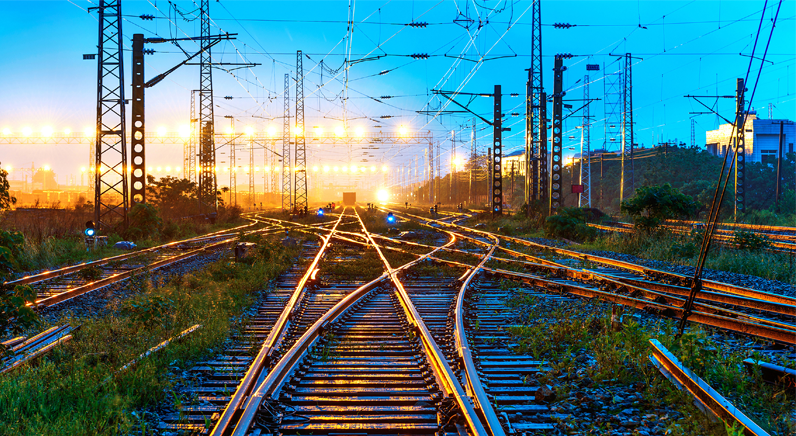
The ‘lone wolf’ attack on a high speed train travelling from Amsterdam to Paris in August 2015 – which was stopped in its tracks by the brave actions of those on board – underlines just how vulnerable rail passengers are whilst on the move. Worryingly, it appears that the suspect was able to join the service in Brussels without raising any suspicions and, allegedly, was carrying a concealed hand gun, assault rifle with 270 rounds of ammunition, a box-cutter and petrol.
So what can the authorities and rail operators do to respond to the heightened threat level? Well, for his part, the French interior minister, Bernard Cazeneuve – following discussions with European ministers – has already announced a series of measures, including more identity and baggage inspections and police patrols. Also under consideration is name-based ticketing on international trains.
Logistical challenges
On whether mass passenger screening, like that at airports, could be viable, Mike O’Neill, managing director, of UK-based Optimal Risk Management Limited, feels that the logistics involved simply make it a non-starter. This echoes the sentiments of Guillaume Pepy, president of SNCF, who pointed out that in France there are 20 times as many rail passengers as air passengers.
O’Neill goes on to say that more limited action may be possible: “You could have spot checks and even passenger profiling in terms of looking at behaviour and the bags they are carrying.” He adds that the fact most weapons break-down to fairly small pieces makes life even more difficult. For O’Neill it is the work ‘behind-the-scenes’ by the security services to identify individuals ahead of time which is the game changer: “It is has to be intelligence-led.”
Stand-off screening
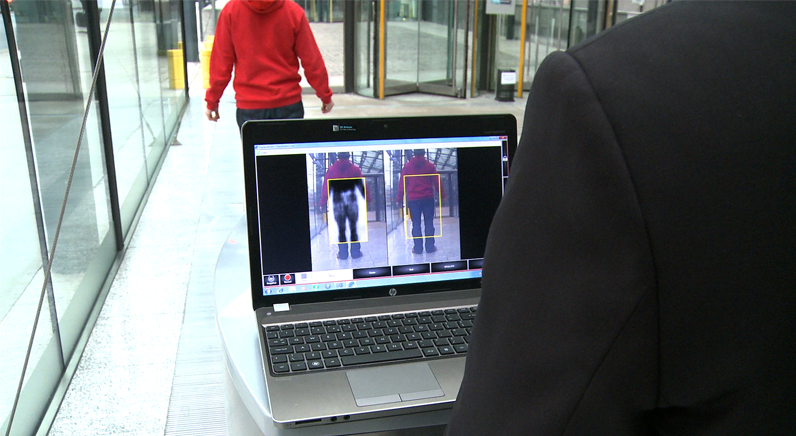
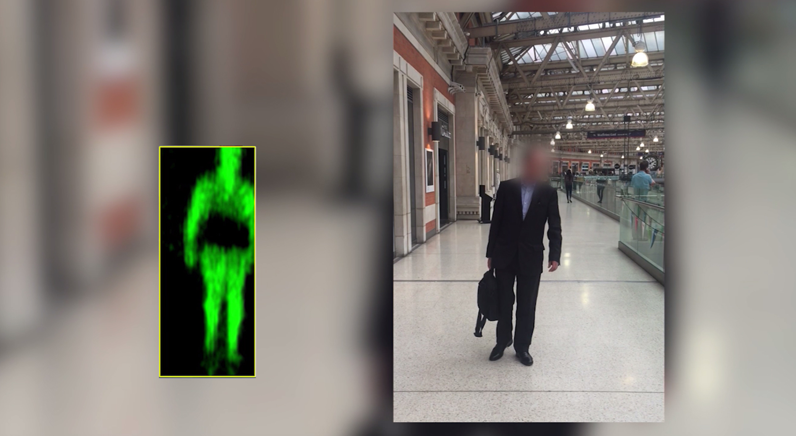
Turning to Mark Marriage, transport solutions specialist at Digital Barriers, he suggests that, for concealed object detection, compact ‘stand-off’ people screening could offer a solution: “We use a non-invasive screening method which you just walk past.” Marriage explains that it employs not only CCTV but also a terahertz camera to receive and interpret the natural terahertz energy emitted by individuals and the environment.
Real-time video
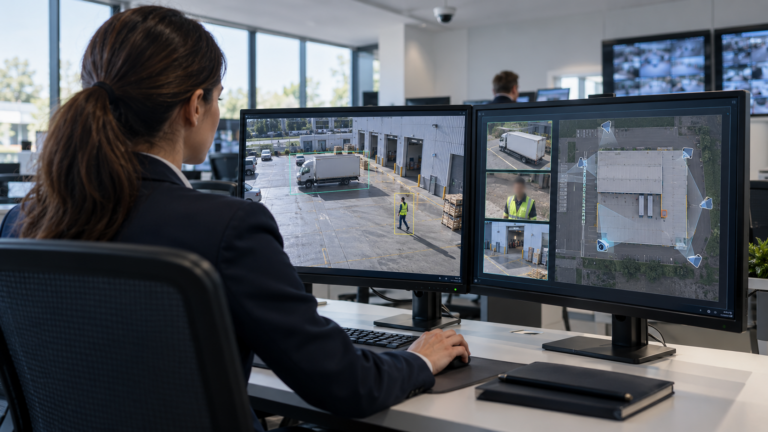
Another challenge for rail operators who have cameras on their trains, and staff being kitted out with body worn video, is how to transmit footage back in a consistent way to an external control room. Some security experts like Optimal Risk’s Mike O’Neill argue that as events unfold so quickly there is little that such video footage can add to how an incident plays out: “It is for evidential use, not really for preventative use,” says O’Neill.
In the view of Simon Jenkins, product manager for TransVu at AD Group, while it is theoretically possible to take footage from a fast moving train, in practice it is probably of fairly low quality and not necessarily in real-time because existing connections aren’t reliable enough and don’t provide sufficient bandwidth: “No one is taking video off moving trains at the moment,” concludes Jenkins.
Offering his thoughts on this subject, Mark Marriage at Digital Barriers believes that, despite the pitfalls highlighted, technology with its roots in military operations could make real-time streaming from trains a practical proposition. He explains that a compression algorithm, developed by Digital Barriers, allows the optimising of video to the available bandwidth so avoiding latency and break-up.
Adding analytics
Considering other innovations in the context of rail security, Dr Rustom Kanga, ceo at Omniscient, is an enthusiastic advocate of the intelligent use of video surveillance: “You can do face recognition of people of interest in a crowd.” Dr Kanga says that for railway stations it is feasible to recognise people on a suspect list at say 20 metres distance.
Added to this, Dr Kanga reckons that flagging-up an abandoned bag in a crowded scene is much easier now thanks to ‘non-motion detection’: “In a railway station where everything is moving it makes more sense to apply ‘non-motion detection’ which focuses on the things that have actually stopped moving.”
So to conclude, we are likely to witness an even greater emphasis on intelligence-led efforts, the extension of spot checks of individuals and their bags across Europe, and new and enhanced technologies – like stand-off screening – coming down the track.
[su_button url=”https://www.securitynewsdesk.com/newspaper/” target=”blank” style=”flat” background=”#df2027″ color=”#ffffff” size=”10″ radius=”0″ icon=”icon: arrow-circle-right”]For more stories like this read the SecurityNewsDesk Newspaper[/su_button]