
How can wireless access control be the ideal solution for sustainably focused educational facilities for their perimeter security challenges?
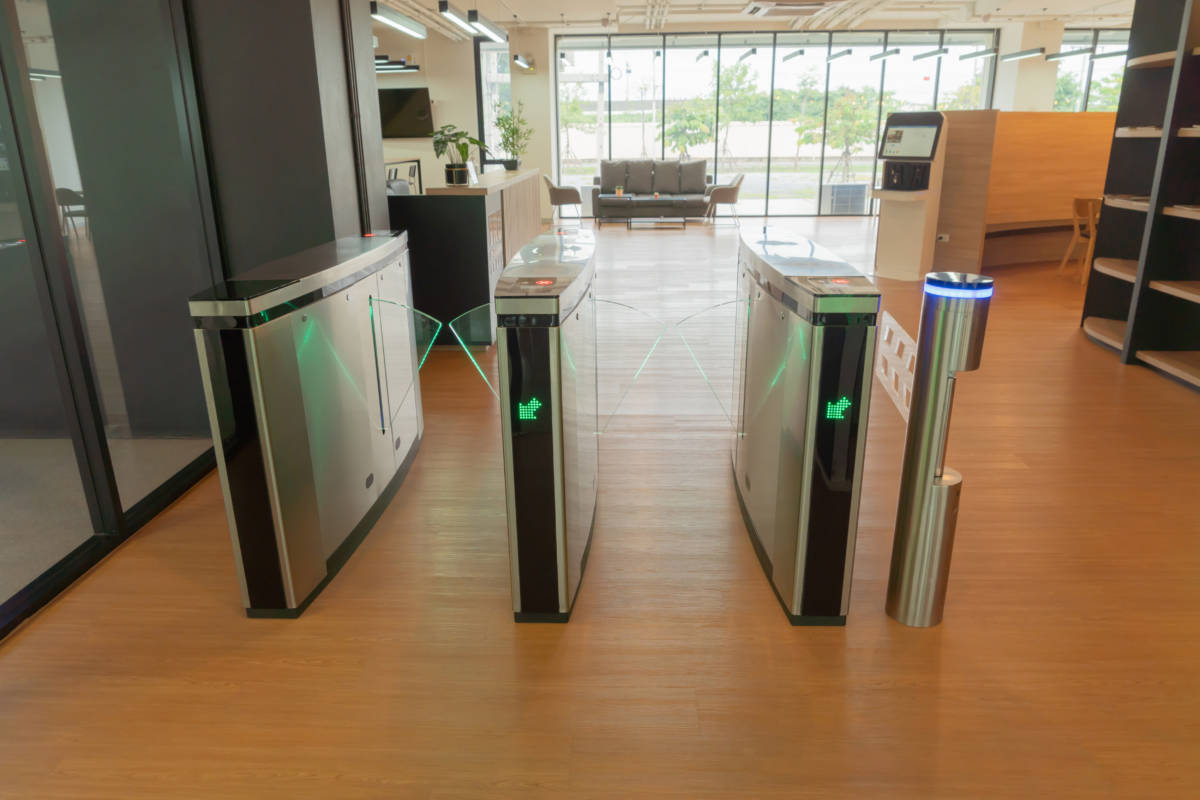
At its most basic level, access control is a system for enabling or preventing persons from entering or exiting a location – whether it is a website, building or room. Its secondary functions include recording any movement in and out of locations and providing data trails for audit, traceability, compliance or improvement purposes.
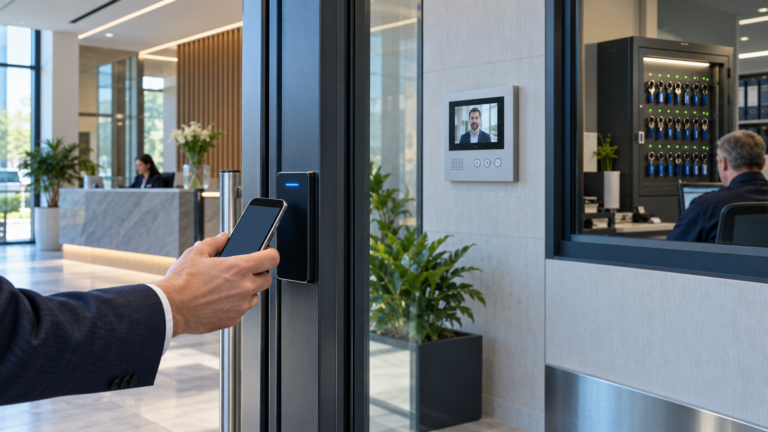
The majority of access control systems rely on a “credential” to recognise and validate the person or asset transiting in and out of a location. This credential may be something the person has (key, card, identification tag), something they know (password, PIN) or something intrinsic to them (biometric data such as iris recognition, fingerprints).
In many systems, more than one layer of credentials may be required, while some systems require a second party credential (second keyholder or visual recognition by an approved inspector via CCTV link). The more layers and subsystems, the greater the complexity of integrating the systems and storing, accessing and making use of the data.
Within educational premises, the drivers for access control are: the safety of students, staff and authorised visitors, legal compliance and statutory duties placed on governors, school heads, local authorities and other bodies, protection of valuable assets, security and protection of data gathered by the organisation and held on IT systems and management and control of security across different venues, sometimes at the university level, spread across a city base
The nature of educational facilities, its students and data presents added challenges when it comes to security and in particular, access control. Only certain authorised people are allowed within a campus or grounds for legal and protection reasons. This means access control solutions must be tightly monitored and have no flaws for penetration.
Educational premises, by nature, present a number of access control challenges that may not apply to other public buildings or private/commercial spaces. The age group of the user population and the need to consider all user groups (including people with disabilities), mitigates the use of complicated systems.
The safety requirement for swift and safe egress in the event of a fire or any other emergency is also of top priority to conform with local, national and international standards and regulations for security and fire safety.
In addition, there are other challenges such as the need to avoid a ‘fortress’ atmosphere to maintain mental health and wellbeing for students. Students are incredibly at risk of becoming NEET. This means that young people are dramatically affected by mental health and their environment, so educational facilities must foster a healthy, safe and positive atmosphere to protect students.
Similarly, the ‘open’ nature of many educational premises (such as IT and leisure facilities), with either full public access or permitted group access being increasingly required, presents additional challenges. This is more present within university campuses as they typically span across a large number of buildings within a campus, town or city. The incorporation of completely different facilities such as the student union, library and accommodation (at the university level) add another layer of difficulty for access control manufacturers when designing and installing a security solution. This also adds complications with the age of many buildings, which can make repairs, modifications and cabling expensive and problematic.
The skills and availability of non-teaching support staff with time and ability to implement and maintain an effective access control system, where success is often reliant on human behaviour and habitually-following good practices (persuading pupils not to swap ID cards or credentials, quickly reporting lost credentials to the appropriate person, and so on) is a challenge unique to the educational environment.
To read the rest of this article and latest news please see our May issue here.
Media contact
Rebecca Morpeth Spayne,
Editor, Security Portfolio
Tel: +44 (0) 1622 823 922
Email: [email protected]