
With more than 31,000 customers across 171 countries, Verkada has closed a landmark fiscal year defined by strong growth figures and real-world impact of AI-powered security and efficiency at scale.
The conversation around artificial intelligence in the security sector has shifted decisively from speculation to implementation. Organisations worldwide are no longer asking whether AI belongs in physical security, but how quickly they can deploy it and to what effect.
What is often overlooked in this shift is that AI is not entirely new to the sector. Video analytics, behaviour detection, and automated alerts have existed for years, yet adoption has historically been constrained by infrastructure, integration complexity, and cost. The emergence of cloud-native platforms, combined with advances in processing power and data accessibility, is now removing those barriers. As a result, AI is moving from a supplementary capability to a central operational layer, enabling security teams to transition from reactive incident response to proactive risk management.
At the same time, the pressure on security teams has intensified. Multi-site operations, labour constraints, and the growing expectation for real-time intelligence are forcing organisations to reassess how security systems function at scale. AI is increasingly seen not simply as a feature, but as a necessary tool for managing complexity, improving response times, and extracting meaningful insight from vast volumes of data.
174 New AI Capabilities: Moving Security from Reactive to Proactive
In the past year, Verkada delivered more than 174 new AI features and product updates. While quantity alone means little, the character of these innovations reveals a consistent design philosophy: reducing the burden on security teams by enhancing detection, analysis, and communication, while keeping human operators in control.
A key development is the AI-Powered Unified Timeline, which visually reconstructs the journey of a person or vehicle of interest into a single, map-based view that can be exported for investigations. What previously took hours or days can now be completed in minutes, fundamentally changing how investigations are conducted and how quickly incidents can be resolved.
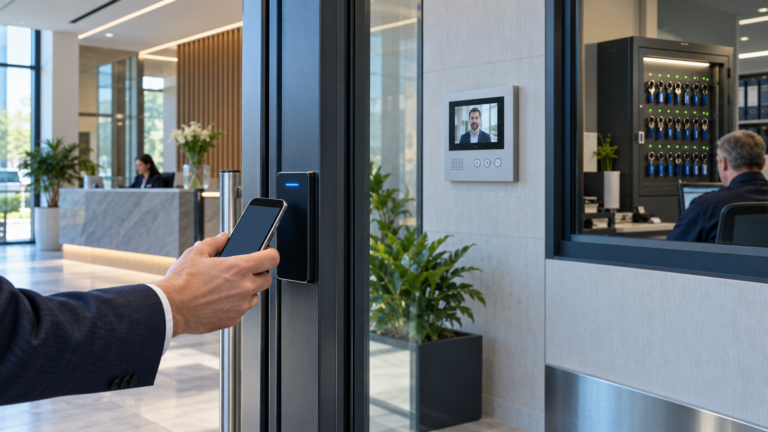
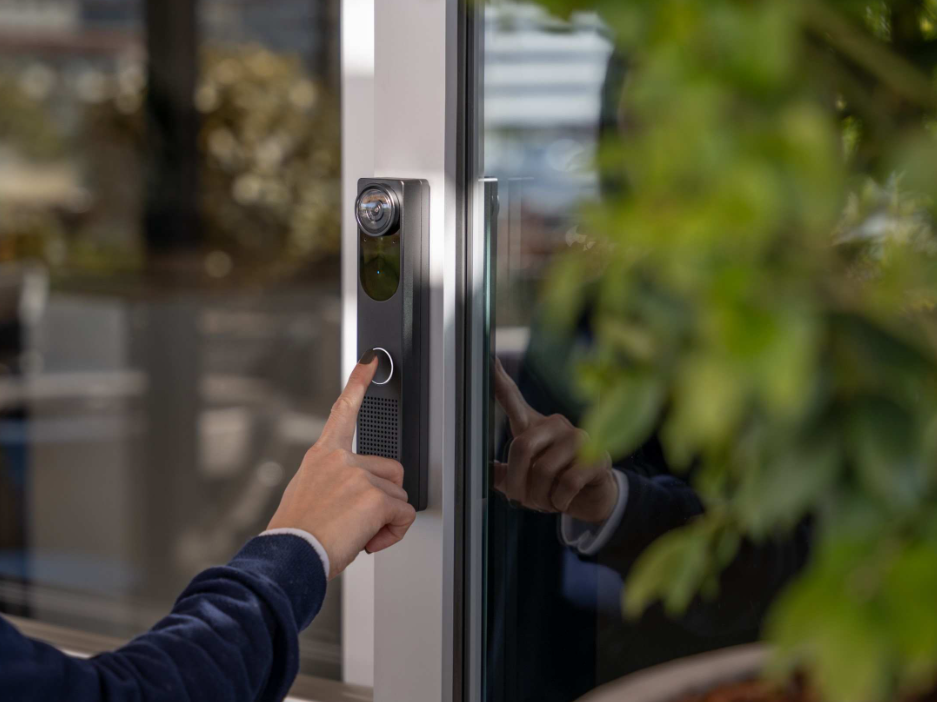
Communication has also been enhanced through AI-Powered Voice Directory and Live Translation on Verkada’s intercom system. Visitors can communicate their intent naturally and in any language, with real-time transcription and translation provided to both visitor and call recipient. For organisations operating across multiple geographies, this capability removes friction at access points and improves both security and user experience.
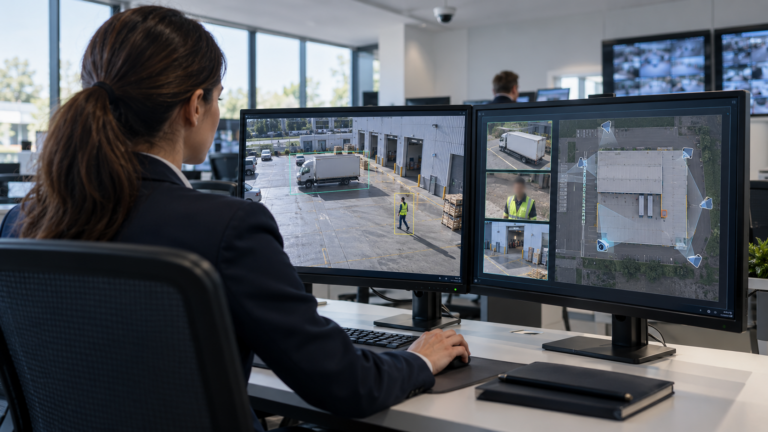
Detection and alerting have evolved significantly. AI-Powered Alerts notify teams of anomalous events such as slip-and-fall incidents, perimeter breaches, or individuals in hazardous areas without appropriate PPE, alongside audio triggers such as glass breaking or shouting. Crucially, these alerts are delivered with associated video context, enabling faster, more informed decision-making and reducing the need for manual monitoring.
A Platform Built for Scale
For Verkada, a company that has built its platforms around cloud-native, AI-powered technology from the ground up, the results of this broader industry shift are now visible in performance. The company reported revenue growth of 30% year on year, alongside a valuation of $5.8 billion following an investment from CapitalG, Alphabet’s investment arm, and a customer base spanning more than 171 countries.
“Verkada’s growth in the past year reflects the massive opportunity to bring AI into the physical world,” said Filip Kaliszan, Co-Founder and CEO of Verkada. “The longstanding investments we’ve made in AI have enabled us to meet this moment in the market, and most importantly to build safer communities around the globe together with our customers and partners.”
The numbers behind Verkada’s latest year tell a story of both breadth and depth. More than 2 million Verkada devices are now online worldwide. Its video security cameras process in excess of 400 million images per hour at peak, its access control system powers 8 million door unlocks each day, and its visitor management platform prevented more than 5,000 potential security threats in the past year alone.
Critically, customers are not simply trialling one aspect of the platform and stopping there. Seventy-eight percent of Verkada’s core customers now use two or more of its product lines, while 54% use three or more. The average customer nearly doubles their initial spend within the first 12 months, a pattern that points to genuine operational value, not just initial enthusiasm.