
How some security teams are using new smart tech platforms to win an unexpected advantage.
It was once presumed that technology would one day replace security officers but increasingly the opposite is happening. In sectors such as higher education, technology isn’t replacing officers it’s moving them right to centre stage.
This trend was highlighted in February at an international user-group conference hosted by CriticalArc in Reading, UK.
Over two days, more than 100 risk and security managers – many from top global universities across Europe – shared examples of how their teams are now contributing to the profitability and future success of their institutions. In the case of universities, that means helping them to stand out in the competitive global market for students.
One common theme that emerged was the way security teams are now much more connected with the communities they are tasked to protect, thanks to technology.
Using the SafeZone service, for example, individual officers are interacting more with both students and academic staff. They are helping not just to prevent crime and deal with incidents, but to improve quality of life on campuses by providing an approachable, capable response for anyone who needs help, advice or reassurance.
Even the process of introducing and running the system – requiring active ‘marketing’ and community engagement by officer ‘ambassadors’ – is raising the visibility of officers, changing the way they work, and the way they are seen.
With growth in awareness around issues such as mental health and wellbeing, discrimination and sexual assaults, the increased connectivity enabled by the technology is hugely important.
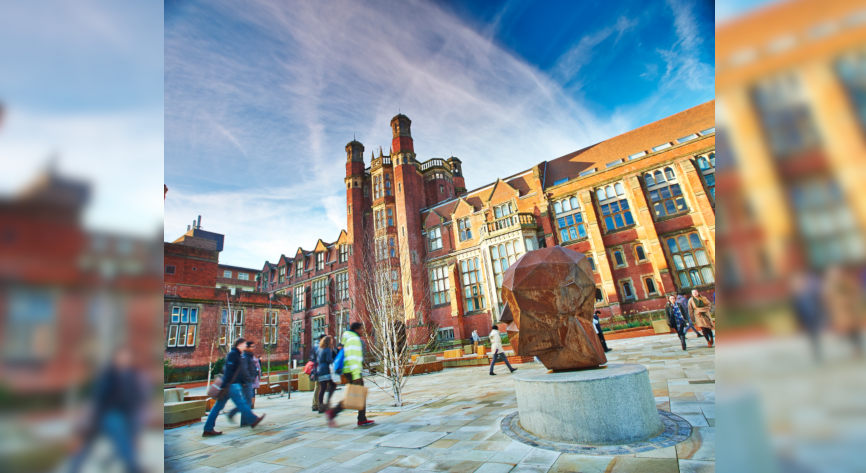
“Without a doubt it’s a fantastic platform,” says Shed Coulthard, Estates Security Manager at Newcastle University – a globally recognised civic university, based in central Newcastle, and home to one of the UK’s top medical schools. “I don’t think we have realised its full potential yet. It’s something that will grow and grow. Students love it. Parents love it. It’s just a very versatile tool that can answer a lot of issues.”
Delegates at the conference gave many striking examples of the system in action – describing how their security officers have dealt with medical emergencies, reduced criminality, intervened during terrorist incidents and improved customer service day-to-day, telling how they’ve tackled incidents on their local sites and resolved problems half-way around the world (Newcastle University has campuses in London, Malaysia, and Singapore, for example).
Shed Coulthard’s team was highlighted at the event for their role as ‘innovation champions’ thanks to the work they’ve been doing helping to steer future developments for the SafeZone platform. They serve as a useful example of the way technology can be used not just to enhance officer capability but to upgrade the nature of the job.
How does it work? SafeZone is described by CriticalArc as a unified safety and security solution which includes a mobile app for users that helps to keep them safe by making it easy to request emergency or medical assistance. In practical terms this means that security officers can pinpoint the location of anyone calling for help to within two or three metres, and they can also see real time where their own colleagues and supporting resources are located.
Interestingly, at Newcastle the system is also protecting the NHS employees who regularly access the University’s facilities – pointing towards a possible future development of the solution which delegates at the conference said could include collaborative networks of security departments (at universities, hospitals, local authorities, major corporates etc.) each extending protection and response to one another’s users, much as air traffic controllers pass on responsibility for flights moving from one air space into the next.
Technically, the underlying capability to develop such a partnership already largely exists. Security teams currently using SafeZone can ‘geo-fence’ individual users (or groups of users) wherever they are – not just students and staff on campus but those working remotely, even internationally.
Easy direct communications, advice and calls for emergency assistance can be triggered in any location globally where there is a signal.
On the campuses themselves, within the immediate local areas where officers are on hand to provide a physical response, the time taken to reach individuals needing help has been significantly reduced.
For example, at Newcastle the system was recently used when a member of staff slipped on ice in the car park and broke her hip. Using the SafeZone app proved to be the fastest way of calling for first aid assistance and helped offset the risk of exposure due to bitterly cold conditions.
The technology offers many safety, security and operational benefits but two specific aspects are proving invaluable for Newcastle University: the system’s scalability and the development of a desktop app.
As a result of the integration of the desktop function into its IT network, the security team can now encourage anyone working on-site after hours to sign in and to take advantage of the improved safety monitoring available. This is not just a theoretical advantage – at other institutions fatalities have resulted from lone working in, for example, laboratories with hazardous materials.
With this new generation, more flexible technology, even after hours the control room team can know exactly where people are and can put in place safety monitoring protocols, and compile accurate muster lists in case of an emergency.
It’s significant how the Newcastle University security department has also been able to expand its security coverage and responsibilities to include new buildings, such as its cutting-edge research facility in Singapore, at no extra cost.
“It is giving us the tools we need to protect the university’s community around the world,” says Shed Coulthard – and in a competitive global market, where students and their families are looking for a high quality experience, that matters.
“We now have a consistent and measurable approach to safety and security across our international estate, with SafeZone giving students and staff the support they need wherever they are,” Shed Coulthard adds.
And looking to the future, it is likely to be developed further. SafeZone is now an integral part of life not just at Newcastle University but also at the neighbouring Northumbria University too. The two institutions already share some of each other’s facilities and the two security teams are increasingly collaborating on best security practices. They also support jointly hosted activities such as a recently organised off-campus Fresher’s Week party.
Going forward, their aspiration is to work with the City Council, Northumbria Police and other agencies to see Newcastle recognised as one of the UK’s safest cities.