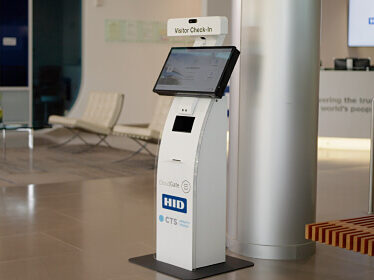

HID has combined document authentication and facial recognition technology with Soloinsight’s CloudGate visitor management platform and a self-service kiosk from Connected Technology Solutions, creating an integrated approach to visitor identity verification.
Announced on 11 August, the system is aimed particularly at enterprise and critical infrastructure environments where organisations need greater assurance that the individual receiving a temporary access credential is the person they claim to be. Potential applications include hospitals, data centres, offices and logistics facilities managing significant numbers of contractors, suppliers and visitors each day.
The integration brings HID’s ATOM document reader and U.ARE.U facial recognition module into Soloinsight’s CloudGate physical identity and access management platform, with the hardware integrated into CTS’s self-service kiosk.
Identity checks move beyond self-declaration
Traditional visitor management systems can provide an effective record of who has entered a site, but their value depends on the quality of the identity information captured at check-in.
HID’s approach adds an authentication step before access is granted. Visitors can be pre-registered by a host and receive a QR code before arrival. At the kiosk, the code is scanned before the visitor presents an identity document such as a passport, driving licence or supported mobile ID.
The ATOM reader examines document data, while the facial recognition module compares the individual against the presented identity and performs a live-face check. Once verification is completed, CloudGate records the transaction, issues the visitor pass and alerts the host.
For security teams, the practical benefit is a stronger connection between the visitor record and the physical individual entering the facility.
Integration supports compliance and scale
The platform also demonstrates how visitor management is becoming more closely connected to wider physical identity and access management.
CloudGate can maintain centralised visitor histories for investigations and reporting, while HID says the platform supports more than 30 physical access control system connectors and over 150 integrations across IT, HR, identity management and security systems.
This is particularly relevant in environments where temporary access has traditionally been handled separately from permanent employee credentials. Contractors and visitors may require access to sensitive areas, but organisations often have less information about them than their permanent workforce.
The move towards document authentication, biometrics and integrated access workflows therefore reflects a wider change in visitor security. Knowing that somebody signed in is no longer necessarily sufficient; organisations increasingly need to establish who they are, what access they were given and whether that information can be demonstrated after an incident.
For buyers responsible for complex or regulated sites, visitor management is consequently becoming part of the wider identity assurance strategy rather than simply a reception function.