

Why the next era of AI surveillance requires a new approach to storage. Rainer W. Kaese, Senior Manager for HDD Business Development at Toshiba Electronics Europe, outlines this evolution
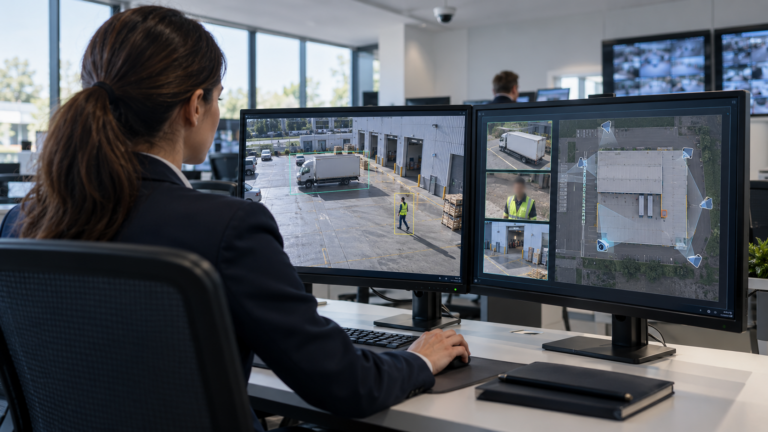
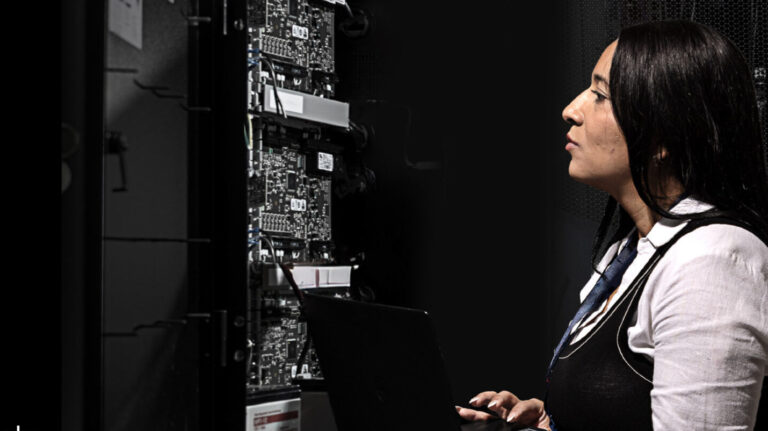
Artificial intelligence is transforming surveillance systems, enabling capabilities such as real‑time analytics, facial recognition, behavioural detection, and automated alerts. These advancements dramatically increase the volume and complexity of data being generated. Modern cameras — from HD to 4K and even 8K — produce enormous video streams (8K can exceed 100 Mbps per channel). At the same time, AI applications require fast access to both live and archived footage. This combination places unprecedented pressure on storage systems, which must support continuous high‑bandwidth recording while also enabling rapid, random data retrieval for AI analysis.
Storage built for AI: Meeting the new performance demands
Toshiba’s S300 AI series of surveillance‑optimised HDDs is engineered precisely for these challenges. Offering capacities up to 24TB, the drives support up to 64 camera streams plus 32 AI analysis streams, thanks to firmware tuned for AI‑heavy workloads. Designed for 24/7 operation, the drives deliver enterprise‑grade endurance with an annual workload rating of up to 550TB, making them suitable for mission‑critical surveillance environments where reliability is non‑negotiable.
Why HDDs still lead in surveillance applications
Although SSDs continue to advance, HDDs remain the backbone of surveillance storage, especially in large deployments. The key reason is cost‑efficiency at scale: HDDs offer a six‑ to ten‑times lower cost per terabyte compared to SSDs, making them the only practical choice for long‑term retention of massive video archives.
Surveillance workloads are also predominantly sequential, which aligns naturally with HDD architecture. This allows HDDs to deliver consistent, high‑speed recording and playback, even when AI analytics are running simultaneously.
Toshiba’s development efforts go beyond capacity increases. The S300 AI series is optimised for the random‑access patterns introduced by AI processing, ensuring fast retrieval of relevant footage. Power efficiency and sustainability are also priorities: HDDs are highly recyclable — largely composed of aluminium and copper — and offer competitive power consumption for continuous sequential recording.
Engineered for reliability, compatibility, and long‑term value
Toshiba’s commitment to quality extends to every aspect of our surveillance HDDs. Features such as rotational vibration sensors, wide operating temperature ranges, and robust firmware ensure reliable operation in challenging environments — from non-air-conditioned cabinets to multi-bay RAID arrays.
Toshiba drives undergo extensive compatibility testing with leading NVR and DVR platforms, reducing integration challenges and minimising the risk of data loss.
One of the often-overlooked strengths of HDDs is their standardisation. With consistent form factors and interfaces, Toshiba drives are easy to deploy, replace, and upgrade — ensuring long‑term investment protection for customers.
Preparing for the future of AI‑powered surveillance
As AI capabilities continue to expand, Toshiba is committed to advancing HDD technology to meet the next generation of surveillance requirements. The company’s HDD Innovation Lab in Düsseldorf, Germany works closely with customers to develop hybrid storage architectures, combining HDD capacity with SSD speed for optimal performance.
Whether for small businesses, enterprise installations, or city‑wide surveillance networks, Toshiba aims to deliver storage solutions that are reliable, scalable, and ready for the AI‑driven future of security.