

Rhombus has expanded its cloud-managed physical security platform with a new Windows Video Wall application, allowing security teams to display live camera feeds using standard Windows hardware rather than requiring dedicated viewing appliances.
Released on 18 August, the application extends functionality previously available through Rhombus’ Apple TV app. Compatible computers running Windows 10 1809 or later can now be connected to a monitor or television and configured as an always-on security display.
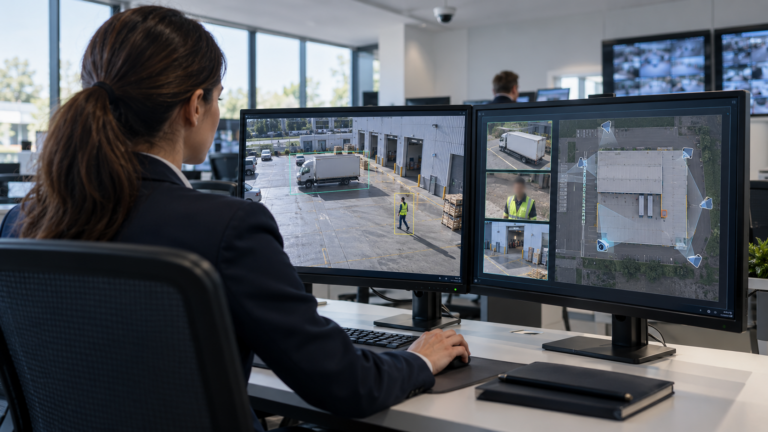
The development addresses a practical consideration for security operations centres, reception areas, retail environments and other locations where operators need persistent visibility of multiple cameras. Rather than requiring users to keep security footage open within a browser, the application creates a dedicated live monitoring environment.
Sixteen streams from standard hardware
Rhombus says a 4×4 video wall displaying 16 simultaneous live camera streams can operate on relatively modest hardware. The software automatically uses standard-resolution streams for smaller tiles before switching to higher-resolution decoding when footage is displayed full-screen.
The platform can also support multiple monitors from a single Windows PC, with each display showing a different video wall. Layouts, cameras and rotations remain managed through the central Rhombus Console.
For unattended locations, a kiosk mode allows the application to launch automatically following a restart. Rhombus says the system is designed to recover following power interruptions, software crashes and Windows updates without requiring an operator to reopen the application manually.
Video delivery also adapts according to network availability. Where possible, streams are transmitted directly from cameras across the local network, with the platform falling back to the Rhombus cloud when a local connection is unavailable.
Security operations become less hardware-dependent
The release highlights a wider shift in video surveillance towards software-defined infrastructure. Traditionally, larger monitoring environments have often required dedicated workstations or viewing appliances alongside the cameras and VMS.
Cloud-managed platforms are changing that model by allowing more functions to be deployed on standard IT hardware.
Cybersecurity remains important when doing so. Rhombus states that credentials and stream-access URLs within the Windows application are encrypted using Windows Data Protection API, while the device identity key cannot be exported. Locally stored thumbnails are also encrypted, and logging out removes cached credentials and data.
For security buyers, the practical value is flexibility. Existing monitors, PCs and network infrastructure can potentially be repurposed for live surveillance, while configuration remains centrally controlled.
That becomes particularly relevant across multi-site retail, commercial property and education environments where organisations may need live monitoring in dozens of locations without deploying specialist equipment at every site.