Paxton Solo is a phone-based, cloud-hosted access control system designed to bring the management benefits of networked access control to locations where conventional network infrastructure is unavailable, impractical or unnecessarily complex. Launched in 2026, Solo uses the smartphone as both the management interface and the credential, removing the requirement for a central server, on-site PC or dedicated data network.
A simpler access control architecture
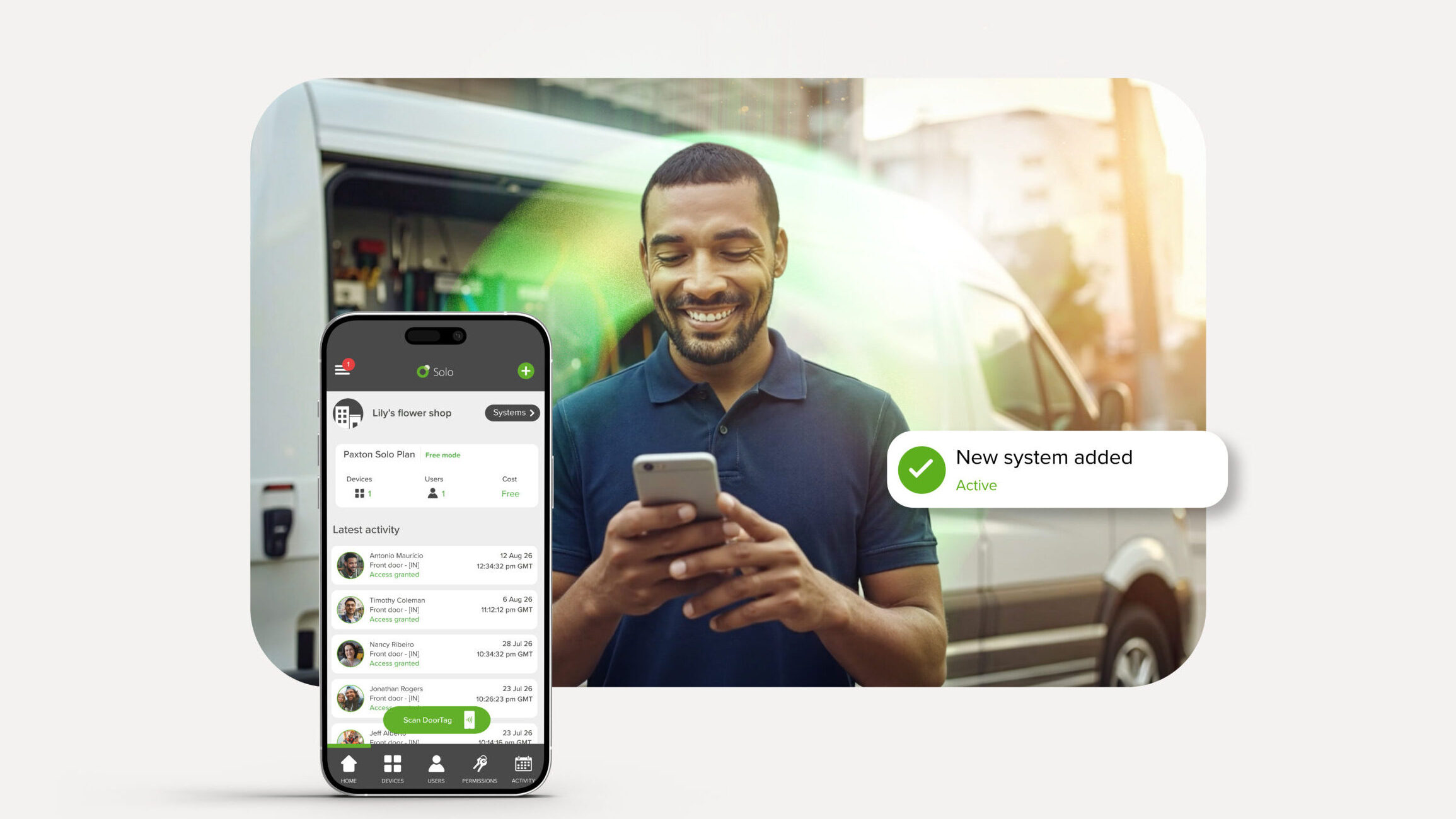
The system combines a Solo Controller, passive NFC DoorTag and the Paxton Solo app. Administrators can create and manage the system from a smartphone, issue or revoke credentials remotely and review access activity without visiting individual doors. For users, the same phone becomes the key.
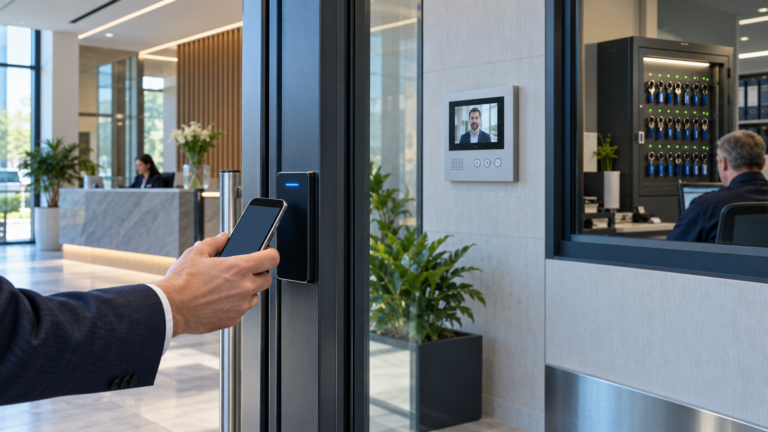
When an authorised smartphone is presented at a Solo-controlled door, the phone communicates with the controller using secure Bluetooth technology and instructs the door to open. Where mobile or Wi-Fi connectivity is temporarily unavailable, access credentials can remain available on the phone for a limited period, helping maintain practical access in areas with inconsistent connectivity.
This architecture is particularly relevant for smaller commercial sites, temporary locations, residential environments and remote buildings where traditional networked access control may be difficult to justify. Paxton has also developed Solo with cyber-security specialists, with the system carrying UL Verified IoT Device Security Diamond and IASME Level Two credentials and being designed in accordance with ETSI EN 303 645.
Proven in a demanding residential environment
Solo has already been deployed at One London Road, a student accommodation site in Newcastle-under-Lyme managed by Homes for Students. The property accommodates more than 500 residents across five blocks and uses 15 controlled doors.
Its previous standalone system relied on access codes and physical fobs, creating an ongoing administrative burden when credentials were lost or residents changed. JPR Fire, Security and Data introduced Solo alongside the existing system and migrated residents in phases.
Students now use their phones to enter authorised areas, while site management can create, amend and revoke access remotely. Access to common rooms can also be restricted to residents with the correct permissions, while event records provide the date and time of access activity to support site management and incident investigation.
The project demonstrates the practical value behind Solo’s architecture: centralised control without installing a conventional building network, reduced reliance on physical credentials and remote administration for a high-turnover user population. By combining standalone installation simplicity with cloud-hosted management and smartphone credentials, Paxton Solo presents a distinct approach to extending managed access control into sites that have traditionally relied on less flexible systems.