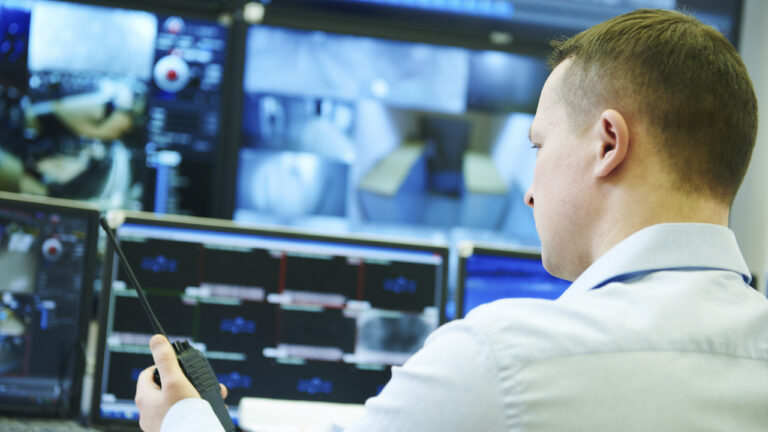
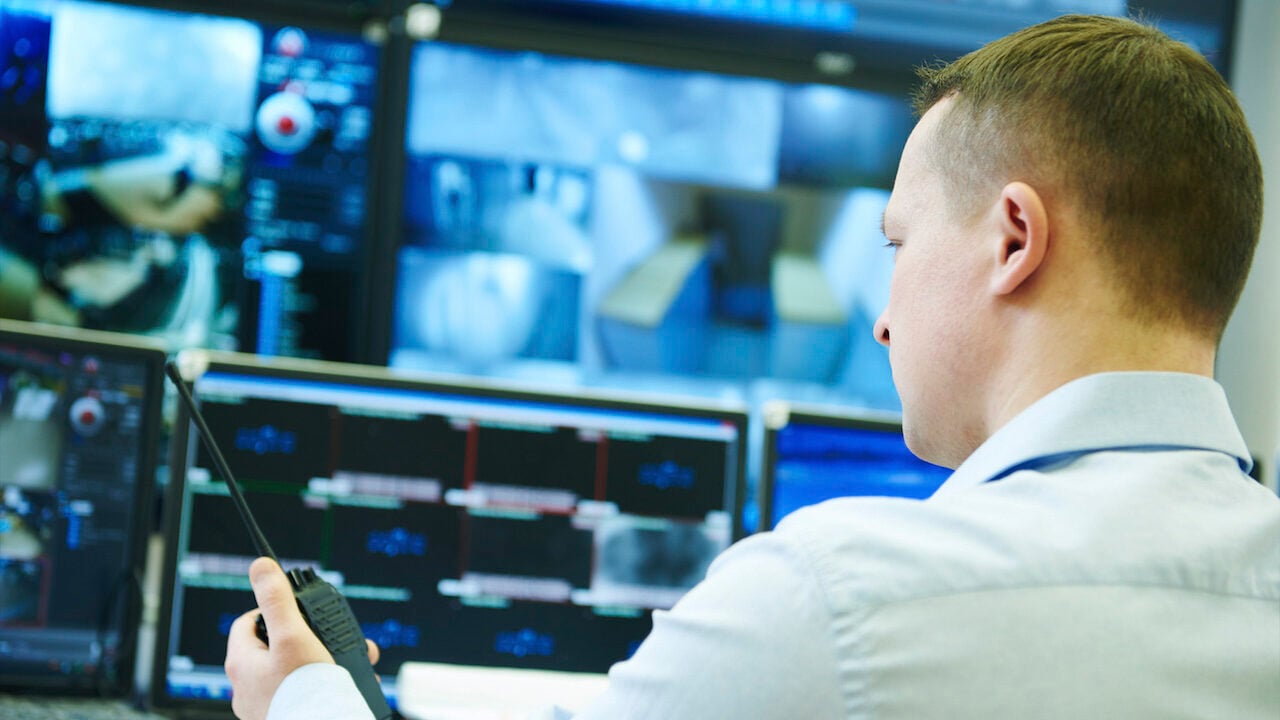

Control room operators face a tricky and ever-growing list of responsibilities. Every day, they’re expected to monitor dozens, sometimes hundreds, of camera feeds, identify suspicious behaviour, and respond quickly when something goes wrong. Add in a constant stream of alerts, many of which turn out to be false alarms, and it’s easy to see how even the most experienced security professionals can become overwhelmed.
Indeed, in the UK alone, there are an estimated six million CCTV cameras, with around one in 70 publicly owned. A human, or team of humans, cannot possibly be expected to keep on top of every single one of those devices without missing something.
Recently, the UK’s Centre for the Protection of National Infrastructure (CPNI), now part of the National Protective Security Authority (NPSA), uncovered a challenge faced by many security operators known as the vigilance decrement, where concentration can begin to decline after just 20 to 30 minutes of continuous monitoring. A study of 42 professional CCTV operators, published in Applied Ergonomics, found that they detected only around half of the target behaviours during a 90-minute video review task.
For security teams working long shifts and monitoring multiple locations, this presents a significant challenge. Missing an incident can have serious consequences, yet expecting operators to maintain the same level of concentration throughout an entire shift simply isn’t realistic.
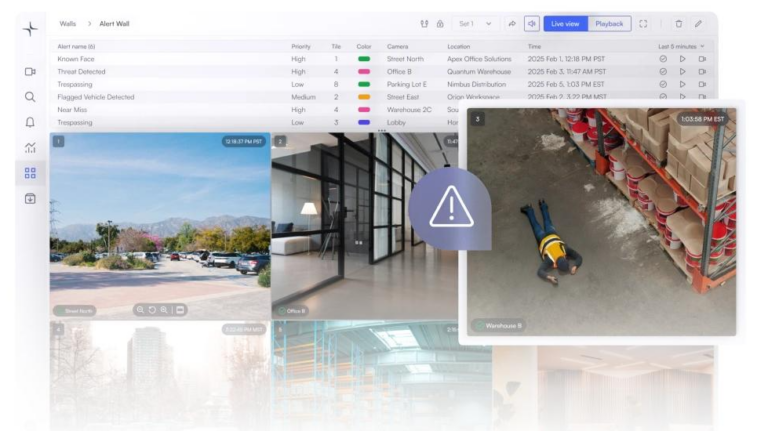
This is where AI-powered video analytics makes a huge difference. By automatically identifying unusual activity, filtering out unnecessary alerts, and highlighting events that require attention, AI can help operators work more effectively and focus on what matters most.
The result is that operators spend less time reviewing routine activity, have faster responses to potential threats, and there are more opportunities for security professionals to apply their experience and judgement where it’s needed.
Breaking the cycle of alarm fatigue
Traditional video surveillance systems have often relied on motion detection and basic rules to identify potential security incidents. While useful, these technologies can also generate large volumes of unnecessary alerts. A tree branch moving in the wind, an animal crossing a perimeter, or a delivery vehicle stopping near a building can all trigger a false alarm.
Now imagine this happening across hundreds of cameras, throughout an eight- or twelve-hour shift. Operators can quickly find themselves dealing with a seemingly endless queue of notifications, most of which turn out to be harmless.
Over time, this can lead to alarm fatigue. When operators are repeatedly presented with false alarms, they may become less responsive to new notifications, increasing the risk of a genuine threat being overlooked. This isn’t a reflection of their professionalism or experience, but a natural response to information overload.
The consequences extend beyond missed incidents. Persistent alarm fatigue can contribute to stress and burnout, slow response times, and place additional pressure on security teams that may already be stretched. It can also make it harder for organisations to demonstrate the value of their security investments.
Simply adding more cameras, hiring more operators, or increasing training isn’t necessarily the answer. Instead, organisations need to consider how technology can reduce the volume of information operators must process and ensure that the alerts reaching them are genuinely useful.
Smarter alerts, faster responses
AI-powered video analytics is helping to address this challenge by making surveillance systems more intelligent and proactive. Rather than simply detecting movement, modern analytics can identify objects, recognise patterns and provide greater context around what’s happening within a camera’s field of view.
For example, a traditional system might generate an alert every time something moves near a perimeter fence. AI analytics can help distinguish between an animal passing through, an authorised vehicle following its usual route, and someone loitering near a restricted entrance. Operators can then focus on the activity that warrants further investigation, rather than spending valuable time reviewing harmless events.
Advances in vision-language models are taking this a step further. These technologies can interpret and describe activity within video footage, helping operators understand what’s happening without having to manually review every camera feed.
This shift is gaining momentum across the industry. The Security Industry Association’s 2026 Security Megatrends report identifies the automation of security operations centres as a leading trend, highlighting opportunities for AI to support activities such as incident reporting and filtering lower-priority alarms.
Importantly, the aim isn’t to remove operators from the process. Much of this technology takes an agentive AI approach, where AI assists human decision-making rather than acting independently. The system identifies potential concerns and provides relevant information, while operators remain responsible for assessing situations and deciding how to respond.
For security teams, this creates an opportunity to improve situational awareness while reducing the pressure of constant monitoring.
Identifying threats before they escalate
One of the most valuable capabilities of advanced video analytics is its ability to identify unusual behaviour and patterns over time.
Consider a vehicle driving slowly around a business park. On its own, this might not appear suspicious. However, if the same vehicle returns on three consecutive evenings, stopping near a restricted entrance before leaving, it could indicate someone assessing the site’s security arrangements.
An operator working a single shift might not notice the connection, particularly if the activity occurs across several days. But AI analytics can help identify recurring patterns and flag them for further investigation.
The same principle applies to other scenarios. Someone repeatedly approaching a restricted area, a person remaining in an unusual location for an extended period, or a vehicle travelling against the normal flow of traffic could all trigger an alert based on predefined rules or patterns of behaviour. With the right information available, security teams can investigate potential threats earlier and respond before an incident escalates.
These capabilities also offer benefits beyond immediate security monitoring. Analytics can help organisations identify recurring incidents, understand how spaces are being used and make more informed decisions about patrols, staffing and security resources.
For multi-site organisations, this can be particularly valuable, allowing security teams to identify trends across locations rather than treating each incident in isolation.
Making investigations faster and more effective
AI can also significantly reduce the time required to investigate incidents after they occur. Reviewing hours of recorded CCTV footage has traditionally been a painstaking process. Investigators may need to search through multiple camera feeds to identify a person, vehicle, or sequence of events, often under considerable time pressure.
Advanced video search and synopsis technologies can simplify this process by condensing lengthy recordings into a much shorter visual summary. Events and objects captured at different times can be presented together, allowing investigators to identify relevant activity quickly while retaining links to the original footage and timestamps.
For example, an investigator looking for a particular vehicle can search footage based on characteristics such as colour, type, or direction of travel, rather than watching hours of recordings manually. For police forces, local authorities and private security teams, these capabilities can make a substantial difference to investigations, reducing the time spent searching through footage and helping important evidence reach the right people sooner.
Demonstrating the value of intelligent video
Alongside the operational benefits, AI-powered video analytics can also deliver a measurable return on investment.
An Omdia survey of 140 end users across North America and Europe found that more than 85% of organisations achieved a return on investment from their video analytics deployments within one year. More than half reported seeing returns within the first six months, with banking and manufacturing reporting particularly strong results at 95% and 90%, respectively. Evidently, intelligent video can deliver value far beyond traditional surveillance.
Reducing false alarms can help operators use their time more effectively, while faster investigations can lower the resources required to review footage. Improved incident detection and response can also help organisations minimise disruption, protect assets and strengthen their overall security posture.
There are benefits for installers and integrators too. By introducing advanced analytics into existing video management systems, they can help customers get more value from their security infrastructure, while offering additional capabilities that can evolve alongside operational needs.
Rather than viewing video surveillance solely as a cost centre, organisations can increasingly use the intelligence it provides to improve security performance and inform wider operational decisions.
Keeping people at the heart of security
As AI becomes more capable, questions around human oversight and decision-making will become increasingly important.
There is a distinction between AI that supports operators and fully autonomous systems that can independently make decisions and take action. While more agentic AI capabilities are emerging, many of the most practical applications in video security today are designed to assist people, not replace them.
For instance, AI might identify a person behaving unusually near a restricted entrance, but an operator can assess the wider context, determine whether there is a genuine threat and decide on the appropriate response. Similarly, analytics can highlight a vehicle that has repeatedly visited a site, but it takes human judgement to establish whether that behaviour is suspicious or entirely legitimate.
This combination of machine intelligence and human experience is where the greatest value lies. AI can continuously analyse large volumes of footage, identify patterns across different cameras and shifts, and highlight events that deserve attention. Operators bring the contextual understanding, professional judgement and accountability needed to make informed decisions.
An operator reviewing five relevant alerts, each supported by useful information, is in a much better position to respond effectively than someone attempting to process 50 notifications with little context.
The goal is therefore not to automate every aspect of security, but to create a more effective partnership between people and technology.
A smarter approach to security operations
The demands placed on security teams are unlikely to decrease. Organisations are managing larger sites, more cameras and increasingly complex security environments, often without equivalent increases in staffing or resources.
At the same time, the limitations of human attention remain unchanged. No matter how experienced or well-trained an operator may be, maintaining constant concentration across dozens of video feeds is an unrealistic expectation.
AI-powered video analytics offers a way forward. By reducing unnecessary alerts, identifying suspicious patterns, and accelerating investigations, these technologies can help security teams become more proactive, efficient, and effective.
Most importantly, they allow operators to concentrate on what they do best: understanding situations, making informed decisions and protecting people and places.
The future of security isn’t about replacing the people behind the screens. It’s about giving them the intelligence and tools they need to do their jobs better.