
St. Louis Lambert International Airport has expanded its video surveillance infrastructure using Dallmeier Panomera multifocal sensor technology, reducing the number of cameras and supporting infrastructure required to monitor large operational areas.
The airport handled more than 15 million passengers during 2025 and operates across more than 70 million square feet of infrastructure. Its surveillance requirements include surface parking, runways, taxiways, terminal buildings and other areas where maintaining situational awareness across significant distances presents a challenge for conventional camera deployments.
Dallmeier reports that the completed design has resulted in approximately 90% fewer cameras and 75% less infrastructure than originally proposed.
Fewer cameras across large areas
The airport initially considered a design combining PTZ and single-sensor IP cameras. According to Dallmeier, that approach would have required more than 130 cameras and over 42 new camera poles, together with the necessary network, cabling and power infrastructure.
Following testing with systems integrator Tech Electronics, the airport instead selected Panomera multifocal sensor technology.
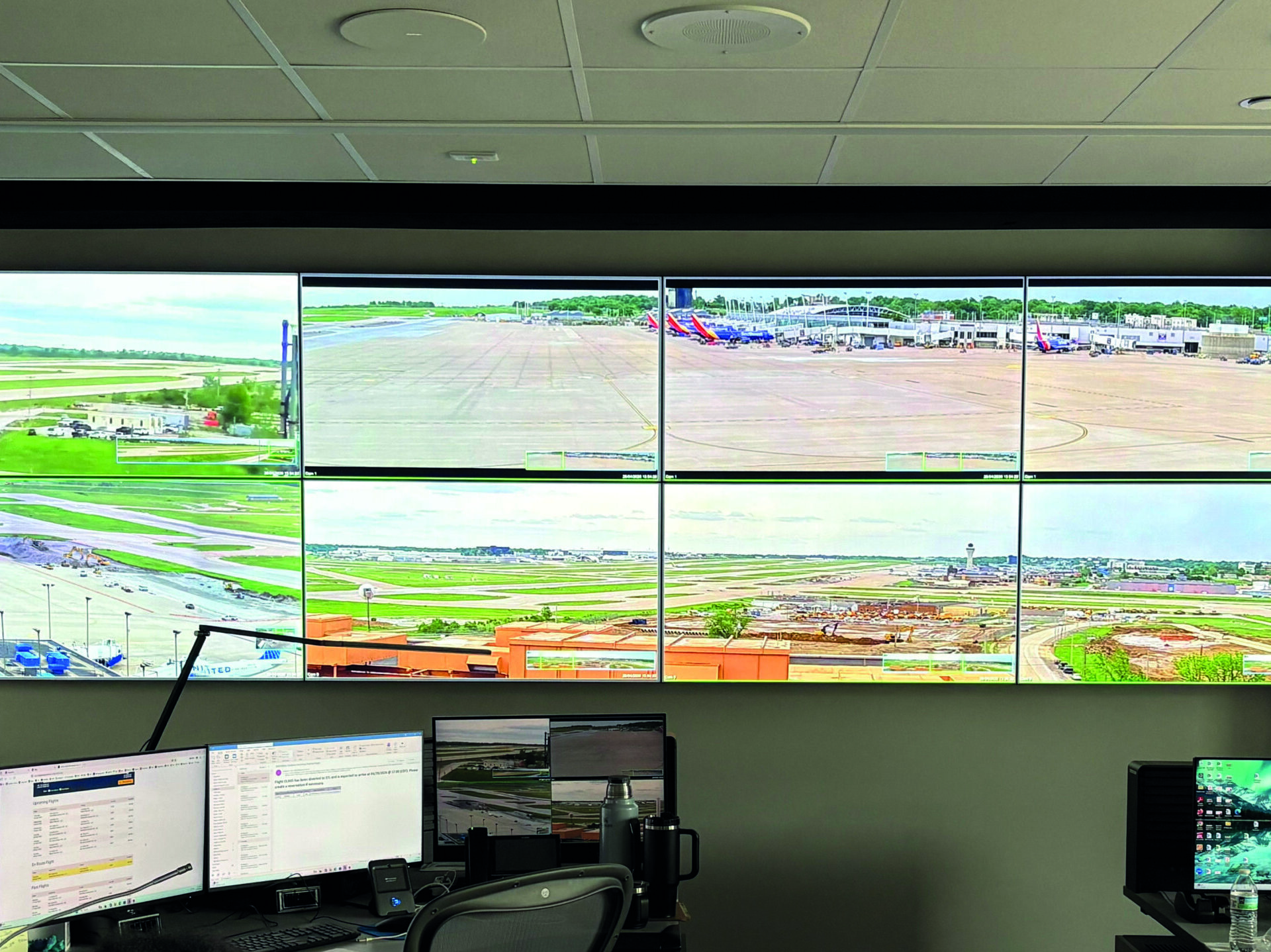
More than 27 Panomera cameras are now installed, supported by Dallmeier IPS 10000 recording appliances and SeMSy Compact video management workstations. Ten Panomera cameras provide the airport’s digital 360-degree surveillance of large airside areas including runways, taxiways and apron operations.
The approach allows operators to maintain an overview of the wider scene while digitally examining particular areas in greater detail. This differs from traditional PTZ operation, where physically moving the camera changes the field of view being recorded.
Reducing camera numbers can also affect the wider economics of a project. Every additional device can require mounting infrastructure, networking, power, licences and maintenance throughout its operational life.
AI moves beyond security
The airport is also exploring how the same video infrastructure can support operational applications beyond conventional security.
Dallmeier said a planned Panomera V8 deployment within the ticketing area will support AI-based video analysis, including passenger flow and waiting-time measurement. The objective is to provide information that could support check-in management and wider operational efficiency.
This reflects a wider trend within enterprise video surveillance. End users increasingly expect cameras to provide information that can support operations as well as incident investigation.
Airports are particularly suitable environments for that development because security, passenger movement, vehicle activity and operational processes overlap across large areas.
For security buyers, the St. Louis deployment also highlights the importance of considering total system architecture rather than comparing camera specifications alone. Device numbers, network requirements, storage, installation and maintenance can significantly influence the lifetime cost of a large surveillance deployment.
As video analytics become more widely adopted, infrastructure capable of supporting both security and operational intelligence may also provide greater value from the same camera estate.