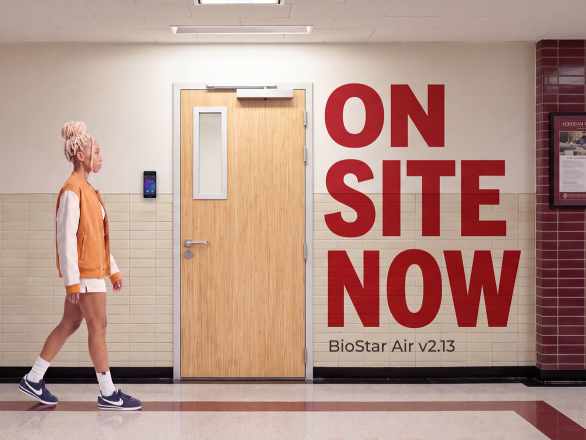

Suprema has expanded its BioStar Air cloud access control platform with new functionality designed to manage occupancy, movement and emergency response across larger and more complex sites.
BioStar Air v2.13 adds zone-based anti-passback, real-time presence monitoring, enhanced Roll Call functionality and integrations with Microsoft Entra ID and Okta.
The update broadens the platform beyond controlling whether an individual is permitted through a particular door. Administrators can now gain greater visibility of where credential holders are considered to be within a site and establish rules governing how they move between controlled areas.
Applications identified by Suprema include schools, campuses, laboratories, manufacturing facilities, warehouses and multi-building corporate environments.
Access events become presence data
A significant addition is the new Presence engine and On Site Now functionality.
The system uses access events and configured perimeter zones to determine whether active credential holders are currently considered on or off site. Administrators can view the number of people present and examine information including their most recent entry and last recorded door.
This data also feeds into BioStar Air’s Roll Call capability. During an emergency, the platform can create a muster list based on users considered to be on site when the event began, rather than requiring teams to interpret raw access logs manually.
Anti-passback functionality adds another security layer. Organisations can establish valid entry and exit sequences, helping prevent practices such as credential sharing or repeated entry using the same credential.
Suprema provides both hard and soft anti-passback options. Hard enforcement rejects an invalid movement, while soft enforcement permits access but records the violation for subsequent investigation.
Physical and digital identities converge
The addition of SSO and SCIM support also reflects the increasingly close relationship between physical and digital identity management.
Integration with Microsoft Entra ID and Okta enables identity information to be synchronised with the access control environment. This can reduce duplicated administration when employees join, change roles or leave an organisation.
For security buyers, these developments are important because access control is increasingly expected to answer questions beyond simply who can open which door.
Organisations may need to understand who is currently on site, where they last authenticated, whether they followed an approved route through a controlled facility and who needs to be accounted for during an evacuation.
Bringing these workflows together can provide security and facilities teams with more useful operational information while reducing reliance on separate databases or manual processes.
The challenge for buyers will be ensuring that the increased collection and use of identity and presence information is matched by appropriate governance, cybersecurity and data-retention policies.
As cloud access control develops, the value of the system will increasingly depend on how effectively it manages the relationship between identity, location and access, rather than individual door events alone.