

Hospitals and other healthcare facilities are there for when our health is compromised, so cross-contamination needs to be kept at a minimum at all times. Hospitals, in particular, need to maintain strict sterile environments to prevent unnecessary germs being spread to vulnerable persons.
Karen Trigg, business development manager of Allegion UK, discusses why it’s time we started tackling the problem at its source.
Cleanliness in healthcare facilities is not only fundamental to the health and safety of patients, it’s also a basic standard set by the Care Quality Commission (CQC).
In fact, maintaining cleanliness in hospitals, GP surgeries, dental surgeries and other care facilities is the linch pin in the system – without it, the highest level of care cannot be provied.
The NHS alone deal with over 1 million patients every 36 hours.
With constant foot traffic within their facilities, healthcare officials should give appropriate thought to how they can minimise the risk of infection spreading.
The weight of importance behind door hardware should hold a firm position at the centre of every medical facility and nursing institution from the point of specification.
From considerations into ease of use, to security and safety, nothing should be taken lightly or overlooked.
This includes additional features designed to help the fight to minimise the threat of cross-contamination.
The place where bacteria thrive
Contact surfaces in medical and nursing facilities is one of the prime causes of the spread of infection. In fact, Around 80 percent of infections are transmitted through our environment, whether that’s in the air we breathe or the surfaces we touch.
Combatting cross-contamination is a constant battle within healthcare facilities.
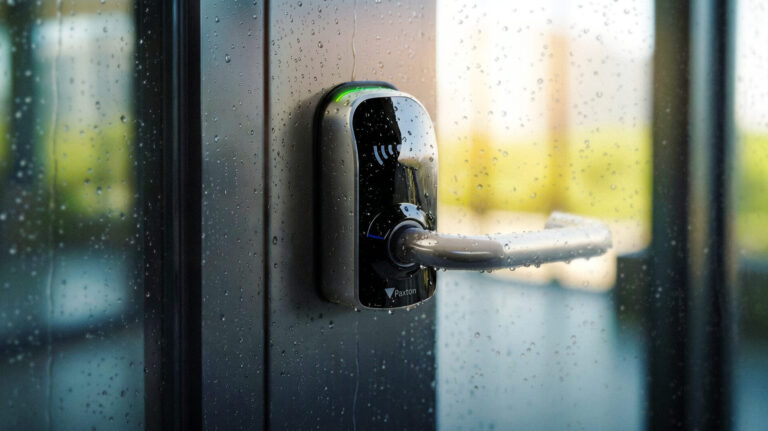
Unsuprisingly, door hardware – whether handles or the door itself – is one of the most common harbourers of harmful bacteria. Touched hundreds of times a day by staff, visitors and patients alike – and encouraged by warm surroundings – bacteria can thrive on door handles, grabrails and other contact surfaces.
Whilst washing hands or using hand sanitizer helps this problem to some extent, it’s not enough to keep the spread of harmful bacteria under complete control.
Mirco organisms are known to survive on surfaces like handles for extended periods of time. This can be especially worrying in hospital enviroments where some patients have immune dificiencies.
Anti-microbial door hardware ultimately tackles the problem at the source, helping to eliminate the issue at the point where it’s most likely to snow-ball.
The science behind the solution
The introduction of door hardware with in-built anti-bacterial protection such as exit devices, door handles and sanitary fittings is helping the healthcare sector in the battle against the spreading of germs and bugs.
So how do these incredibly convenient solutions work?
Nutrients made available in the environment provide bacteria the materials needed to form new protoplasm, helping them to multiply.
Anti-microbial door hardware solutions use an anti-microbial coating to prevent the multiplication of bacteria. Made using ionic silver (AG+), the coating used on these solutions are specially formulated to inhibit the growth of bacteria by interrupting their cell multiplication.
The ionic silver coatings interact with the bonding sites on the microbe surface. The result being that the silver ions surround bacterial cells, blocking food and slowing the growth of bacteria, mold and mildew.
Alternatively for nylon products, antibacterial protection is either incorporated into the scratch-resistent powder coating or impregnated into the polymer structure of the nylon during manufacture, meaning it cannot be wiped or washed off, and remains active for the lifetime of the product.
Put simply, the anti-microbial materials engrained into the hardware are used as a way to reduce the spread of infectious bacteria, lowering the risk of infection via cross-contamination.
Safe and accessible environments
It’s clear that healthcare providers have special requirements when creating safe and secure envionments for the people that visit or work in their facilities.
Fitting door hardware with anti-microbial protection can optimise a safer and cleaner environment by inhibiting the growth of bacteria on high-touch surface areas, and when antibacterial technology is combined with conventional cleaning methods, it helps to improve standards of hygiene and offers added protection whenever it is used.
Whilst hospitals put particular emphasis on maintaining a clean environment via hand-sanitisers and routinely cleaning, it can be difficult to keep track of the places susceptible to high levels of bacteria build-up.
What’s more, when it’s something you can’t physically see, it can often be mistaken as not being there.
Ultimately, a cleaner and healthier facility is likely to provide added benefits of improved patient outcomes, patient satisfaction and even staff satisfaction and productivity.