

Yoyo Hamblen presents Dr Birgit den Outer who examines how growth and professionalisation in private security contrast with persistent workforce precarity, exposing structural challenges shaping the industry’s long-term sustainability
In an industry built on protection, resilience, and trust, one uncomfortable truth often goes unspoken but who is protecting the protectors?
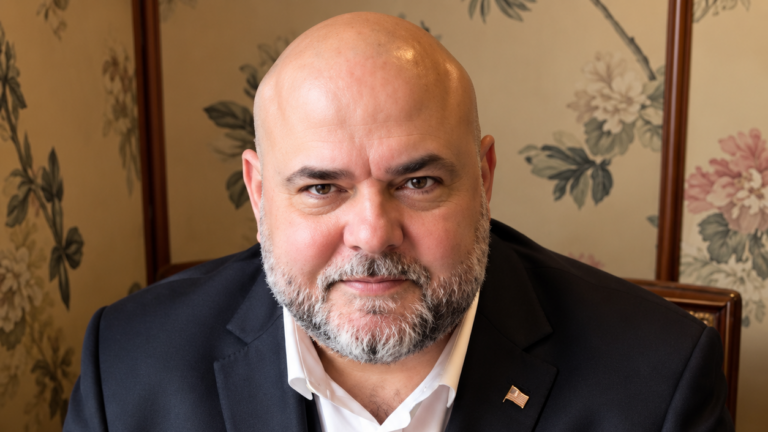
For this issue of International Security Buyer, I’m proud to introduce the work of Dr Birgit den Outer, Senior Lecturer in Organisational Studies at Oxford Brookes University and a respected researcher specialising in security precarity and professionalisation. In this thought-provoking piece, Dr den Outer explores the growing paradox at the heart of the UK private security industry: while the sector continues to expand and professionalise, many of its frontline workers still face insecure contracts, low pay, limited recognition, and uneven career opportunities.
This subject could not be more relevant today. As private security becomes increasingly embedded in public safety, critical infrastructure, and policing-adjacent environments, the sustainability and professionalism of the workforce matters more than ever. Dr den Outer’s research shines a light on the structural, cultural, and economic forces driving precarity and, importantly, the emerging signs of progress. It is an insightful and timely read for anyone invested in the future of our industry and for those continuously inspired and inspiring others about transformational change in this sector.
What makes work precarious?
In our research at Oxford Brookes University, we ask this question in relation to the UK Private Security Industry, notably regarding the frontline workforce. ‘Precarity’ in academic work is an umbrella term referring to non-standard forms of employment where contractual insecurity is often central, and where employees carry the risks of work and their employment. Precarity in work settings is not unusual and in contemporary economies, some precariousness characterises work everywhere.
However, how precarity is distributed over industries, organisations and job roles is uneven. Researchers think therefore, that precarity should not be thought of in essentialist terms via association with groups, professions, ethnicities and so on, but as a set of processes. Analyses should aim to identify and unpick the mechanisms and conditions that precaritise – sometimes explicitly, sometimes implicitly – to see the uneven effects, but also the route to resistance, actions and new possibilities. So, what are the mechanisms in the UK private security industry and what is particular, even unique to this industry? Our analyses combine broad trends in reports of labour conditions based on wider political and economic structures as outlined below; however, we also pay attention to the symbolic and cultural value to society of security work and how this value as well as material conditions affect lived experiences by speaking to a range of people, including frontline workers themselves.
Since the foundation of the Security Industry Authority (SIA) in 2003, the industry has been on a trajectory of growth and professionalisation; security functions are increasingly outsourced to the private sector, a shift further accelerated by economic recession, austerity policies, and terrorist incidents. Sources that present growth and turnover statistics do not always align, but in research carried out by Pazzona and White (2024), from 2008 to 2021, the number of licensed private security officers rose by nearly 60%, while the number of companies grew by 15%. Over the same period, sector turnover increased by 39% to £8.79 billion. With the now 450,000 registered frontline workers (SIA 2026), operating across public-facing, critical infrastructure, and policing-adjacent environments, the UK Private Security Industry represents a significant component of the UK’s wider public safety ecosystem.
Precarity and professionalism
It is no secret, indeed often acknowledged by the industry itself, that professionalisation has been uneven and frontline security work in particular is characterised by precarity: the workforce is disproportionately migrant (currently at 47%, SIA 2026) and often has limited voice, zero-hours contracts are widespread, while pay, training, and opportunities for career progression remain low (SIA 2020). Gender inequality is particularly pronounced, with women comprising just under 11% of the workforce (SIA 2026), and while the Equality Act 2010 is embedded in frontline training, it has had limited impact on improving gender representation. In addition, the fragmented and ad hoc deployment of personnel across multiple organisational settings heightens vulnerability. Frontline security officers often remain outside the formal networks of the organisations they serve, which can render them invisible and limit accountability, leaving client organisations less responsible for workforce practices. Training costs, including the SIA badge as sector entry threshold, as well as other training courses such as fire prevention, crowd control, or first aid training, are largely borne by individual workers. Addressing precarity at the industry level is reflected in, for instance, a recent SIA campaign targeting labour exploitation (SIA 2024) and in a Security Industry Federation-conducted survey on workplace discrimination and racism (n=370, SIF 2025).
Based on the evidence outlined above, it could be said that the private security industry precaritises in particular, explicit ways. However, there are other stakeholders that also precaritise, in implicit ways. For example, the limited recognition afforded by the public and client organisations reinforces these conditions. A BSIA-commissioned YouGov poll (2020) found that only 31% of the public view security officers as fundamental to keeping the UK safe. This perception contributes to client organisations’ reluctance to adequately fund security while buyers and consumers frequently lack the knowledge to distinguish high-quality security provision. As a result, private security companies – through “race to the bottom” practices – and client organisations, as well as other consumers of security, have contributed to conditions in which the workforce is treated as dispensable and labour becomes easily substitutable. In effect, the existence of the Security Industry Authority (SIA) can have an unintended sanctioning effect: client organisations may defer responsibility to the state regulator, using its presence to justify their own limited accountability for security employment practices.
The point is that security work is not inherently precarious – although those managing crowds in night-time settings might reasonably disagree. What is particularly striking is the paradox whereby those responsible for ensuring others’ safety often work under insecure and challenging conditions themselves. At the same time, in our conversations with a wide range of industry actors – including trade bodies, unions, editors, trainers, and frontline workers – we notice a growing commitment to addressing both material and symbolic forms of precarity.
There are, as many readers will recognise, emerging signs of change. Female participation has increased slightly, from 10% in 2020 to 11% in 2025 (SIA 2020; SIA 2026); the SIA now publishes monthly workforce statistics, including gender and nationality, supporting improved monitoring; there is a relatively new Union, the Security Industry Federation, founded in 2023 amplifying workers’ voices; industry-led initiatives demonstrate growing commitment to EDI, including industry-sponsored research (Howell et al. 2019) on barriers to women’s participation and EDI-focused panels at major industry events; the International Professional Security Association (IPSA) plays an active advocacy role in promoting inclusion and representation of frontline voices, as well as offering support pathways. Frontline workers talk about the need to navigate precaristing conditions such as insecure contracts, invisibility and the lack of recognition of their skilled labour. However, they also talk about the meaning they derive out of security work, by helping, understanding, and protecting their fellow human beings in need, often with notable dedication and pride.
We continue to collect frontline worker stories, experiences and perspectives, from women in particular – do get in touch if you’d like to contribute to our research: Dr Birgit den Outer and Dr Guy Huber, Oxford Brookes University, [email protected] and [email protected]