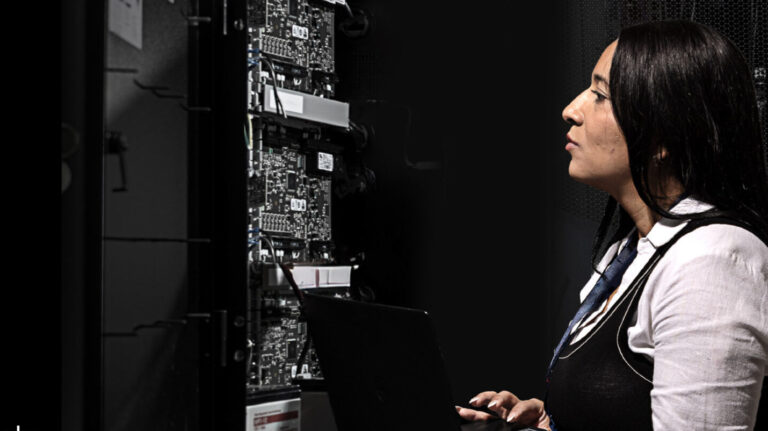


Joseph Clarke, Assistant Editor, analyses how biometrics is combining AI, multimodal identification, and privacy compliance into intelligent systems that enable secure, ethical, and adaptive identity verification
Biometric authentication has moved from the margins of access control to its strategic core. Once considered an emerging technology for high-security environments, biometric systems are now a mainstream component of enterprise identity infrastructure. The shift is being driven not only by advances in machine learning and sensor fidelity, but by broader pressures: the rise of hybrid work, the growing sophistication of physical-cyber threats, and the demand for secure, frictionless authentication across distributed environments.
Unlike traditional access credentials — which can be forgotten, lost, cloned, or stolen — biometrics offer an identity that is inherently bound to the individual. But the value of biometric systems extends well beyond convenience or anti-spoofing. Today’s technologies are enabling organisations to implement adaptive access models, enforce context-sensitive authentication, and ensure compliance with increasingly strict privacy frameworks.
This article explores how manufacturers and integrators are building biometric systems that are not only more intelligent, but more transparent, ethical, and interoperable. Across sectors — from education to critical infrastructure — biometrics are being deployed with a focus on edge intelligence, data minimisation, and multimodal authentication, transforming how organisations approach identity and access. This is the biometric moment: one defined not by novelty, but by trust, transparency, and strategic alignment.
Modalities in Motion
For many, biometrics is still synonymous with fingerprint recognition — a technology that has become ubiquitous across consumer electronics and enterprise access terminals. But today’s access control landscape reflects a far more diverse and sophisticated biometric ecosystem. Modalities such as facial recognition, iris scanning, vein pattern detection, and multimodal fusion are increasingly taking centre stage, offering improved flexibility, performance, and contextual security.
Each modality carries unique strengths. Facial recognition, for instance, enables fast, touchless verification ideal for high-throughput environments such as transportation hubs or corporate lobbies. Iris recognition, as advanced by companies like Princeton Identity, offers superior accuracy and is highly resistant to spoofing — making it well-suited to critical infrastructure and healthcare applications. Meanwhile, vein-based biometrics provide an internal, near-impossible-to-forge identifier with strong appeal in privacy-sensitive sectors.
What’s emerging is not a contest between these technologies, but a convergence. Multimodal systems, which combine two or more biometric identifiers, are growing in adoption due to their ability to enhance accuracy, mitigate false acceptance/rejection rates, and adapt to variable conditions — such as lighting, angle, or user mobility.
Manufacturers like IDEMIA and Suprema have pioneered systems that blend facial, fingerprint, and contactless recognition, enabling tiered authentication based on situational needs. A staff member accessing a general office may require facial recognition alone, while entry into a restricted server room may trigger a requirement for dual-modality verification.
Edge Processing and Real-Time Decisions
The speed and reliability of biometric authentication are directly influenced by where and how the data is processed. Historically, biometric systems relied heavily on central servers for enrolment, comparison, and decision-making — resulting in latency, bandwidth strain, and exposure to network failures or cybersecurity risks. Today, however, biometric manufacturers are investing in edge processing to bring intelligence closer to the point of interaction.
Edge-enabled biometric devices are equipped with onboard processors capable of executing algorithms locally, without needing to transmit sensitive biometric data to external servers. This architecture significantly improves response times, enhances privacy compliance, and ensures continuity of service even when offline or disconnected from the cloud.
Manufacturers such as Suprema have developed facial recognition terminals that incorporate advanced neural processing units (NPUs) to perform AI-driven facial matching on-device. These systems can authenticate users in under 0.3 seconds, even in challenging lighting or crowded entry points. Similarly, Puretech Systems, traditionally known for video analytics and surveillance automation, has begun integrating biometric intelligence into edge video devices, enabling facial and behavioural recognition capabilities at the perimeter without relying on centralised resources.
The benefits of edge processing extend beyond speed. It also enhances data sovereignty, allowing sensitive biometric identifiers to remain under local control — a growing requirement under privacy regulations like the GDPR and CCPA. Additionally, edge systems are less vulnerable to spoofing attacks that exploit transmission paths or server vulnerabilities….