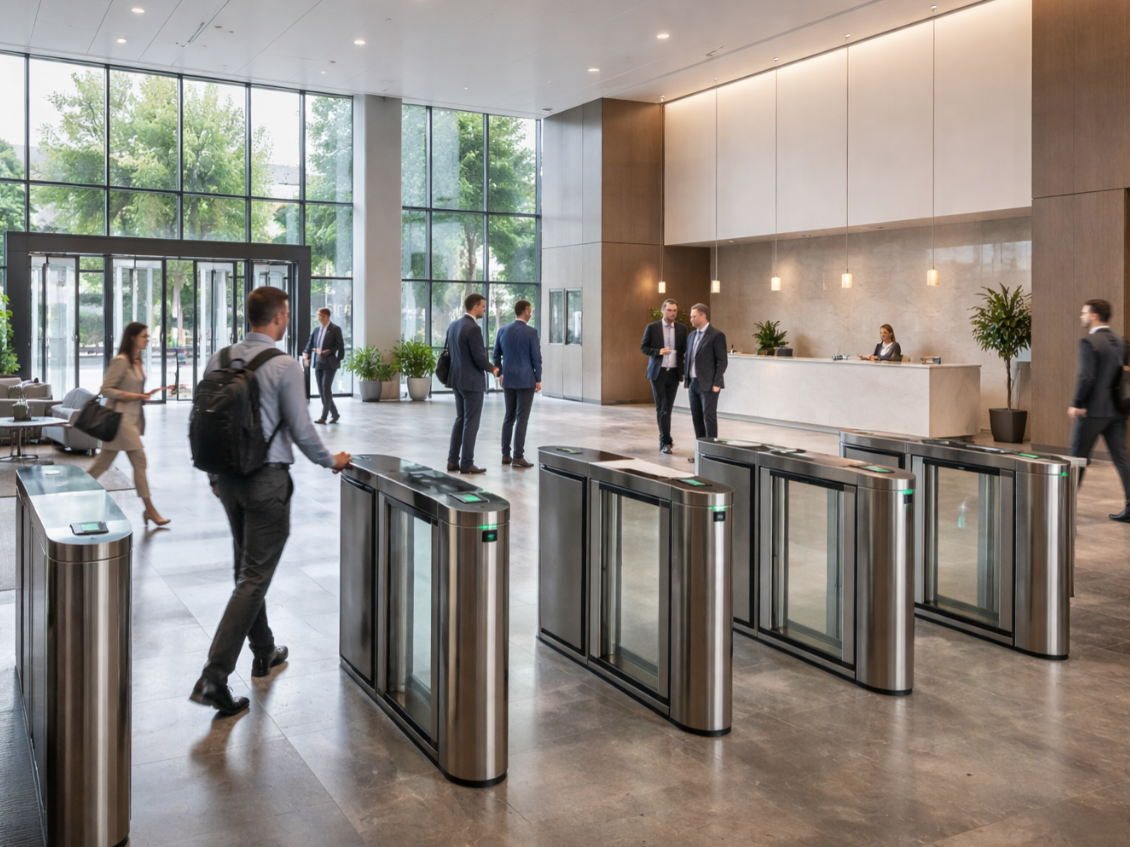

Corporate security is shifting to integrated intelligence as organisations confront geopolitical instability, hybrid work and rising accountability. By Rebecca Spayne
Corporate security strategy is undergoing structural change. For decades, enterprise protection focused on physical infrastructure. Security teams secured perimeters, monitored surveillance systems, controlled entry points, and documented incidents. The model was clear, linear, and location specific. However, the modern corporate environment no longer operates within those boundaries. Hybrid workforces, decentralised data storage, geopolitical instability, and increased regulatory scrutiny have expanded the definition of risk.
The World Economic Forum Global Risks Report 2025 places cyber insecurity, misinformation, and geopolitical conflict among the most pressing global threats to business continuity. Corporate security strategy is therefore no longer an operational afterthought. It is a board level discipline connected directly to organisational survival.
Modern corporate security must protect people, physical assets, intellectual property, data, brand reputation, and supply chain continuity simultaneously. The perimeter is no longer limited to the edge of a building. It extends to cloud infrastructure, third party contractors, remote employees, and mobile credentials. The transformation is not incremental. It is structural, and it demands a more integrated and intelligence driven approach to enterprise protection.
Identity Management at the Core of Corporate Security
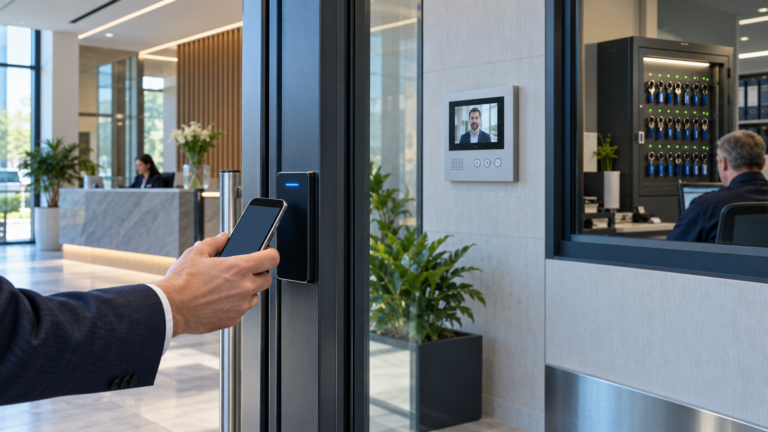
One of the most significant shifts in corporate security strategy concerns identity management. Historically, access control systems were deployed to regulate physical entry into buildings. Credentials opened doors, controlled turnstiles, and recorded visitor logs. Today, identity governs far more than physical movement. It determines access to networks, cloud environments, corporate data, and executive systems.
IBM’s 2024 Cost of a Data Breach Report confirmed that more than 80% of breaches involve the human element, often through compromised credentials or phishing. The badge, the mobile phone credential, and the network login are no longer separate domains. They represent interconnected risk points within a unified identity ecosystem. Corporate security strategy must therefore align physical and digital identity controls under a coherent governance framework.
Manufacturers such as HID have developed interoperable credential technologies that function across both physical and logical environments, while ASSA ABLOY Opening Solutions continues to expand integrated access solutions designed for complex enterprise estates. These technologies illustrate a broader industry movement towards unified identity platforms. However, the technology itself is not the primary issue. The governance structure surrounding identity data is now the decisive factor. Corporate security directors must collaborate with IT leaders and compliance officers to ensure identity credentials are encrypted, audited, and aligned with regulatory frameworks such as GDPR.
Effective corporate security strategy recognises that identity is no longer a door control function. It is the foundation of organisational trust. Without reliable identity governance, even the most advanced surveillance or monitoring systems become secondary.
Hybrid Workforces and Dynamic Risk Exposure
The hybrid workforce has fundamentally altered corporate security operations. Office occupancy is no longer predictable. Headquarters may operate at reduced capacity midweek and remain almost empty at other times. Contractors, consultants, and temporary staff frequently rotate across sites. This fluidity introduces complexity in managing permissions, monitoring activity, and maintaining audit trails.
Recent discussions with readers indicate that security managers identify hybrid workforce management as a large operational challenge. Over provisioning credentials increases insider risk, while under provisioning disrupts productivity and frustrates staff. Corporate security strategy must therefore incorporate flexible, remote credential management systems that allow rapid updates and granular permissions.
Cloud based access control platforms, including those developed by Brivo, provide enterprise level oversight with remote configuration capabilities and detailed reporting. Meanwhile, asset and key management solutions from providers such as Traka address often overlooked vulnerabilities associated with physical keys, high value equipment, and restricted storage areas. These systems demonstrate how corporate security is adapting to fluid workforce models without sacrificing accountability.
However, technology alone does not resolve behavioural risk. Corporate security leaders must also address culture, compliance awareness, and policy clarity. Employees must understand why identity controls matter. A security culture built on transparency and communication reduces friction and improves adoption of protective measures. Corporate security strategy in 2026 must balance flexibility with discipline, ensuring systems adapt to operational change without compromising governance…