

Rebecca Spayne of Security Buyer sits down with Jehan Wickramasuriya, Senior Vice President Security & Resilience Software, Motorola Solutions
What is the current landscape of technology in the security industry, including key trends and challenges?
The biggest challenge in the security landscape today is that traditional ways of looking at problems is making humans work for the system instead of the other way around.
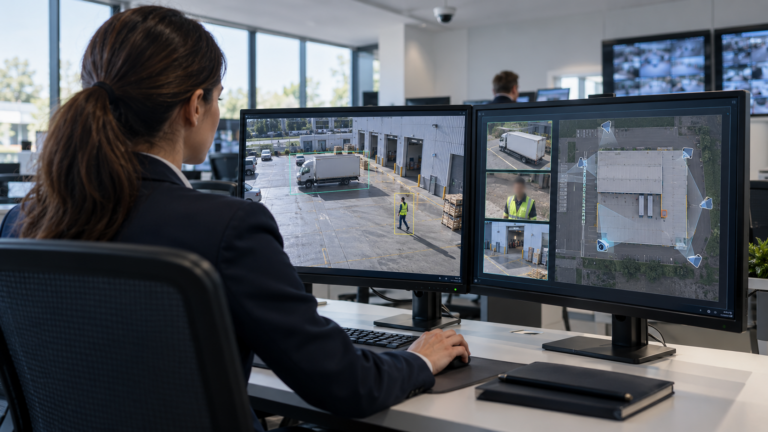
We have reached a cognitive and effort limit where human operators miss the majority of critical details they see after watching around 20 minutes of video content.
If “AI-powered” translates into generating more alerts, then it ends up exacerbating the problem by creating more noise instead of returning time back to the end user.
We believe that a shift in thinking from detecting incidents to managing responses will help security teams to use their time and resources in more meaningful ways to solve incidents.
The concept of making an enterprise “resilient” is a key part of Motorola Solutions’ strategy. This enables everything from redundancy and operational rigor to ensuring that every component of the systems we provide strengthens things like business continuity and risk mitigation, which improves over time.
In commercial security, what measurable value is AI delivering today, and what aspects of AI do you see as being oversold or misunderstood?
AI is delivering genuine value today by moving from reactive detection to orchestrated response. More specifically, the value proposition has shifted from receiving “more alerts” to accessing “more AI agents” that help to augment and amplify human intelligence.
This applies both to core security teams as well as adjacent teams – such as compliance, risk management and business continuity – that need information in order to take actions and solve more events along the incident timeline.
To address this, we’ve developed solutions like Avigilon Visual Alerts which we launched at Intersec 2026. This solution brings more capable, generative models directly on-premise, turning cameras from passive recorders into a powerful, site-specific operational engine.
Visual Alerts augments camera systems with truly intelligent infrastructure that eases the burden on humans interacting with the system. Simply by describing what you are looking for and the system will find it – for example; ‘show me if there’s an unauthorized vehicle near the shut-off valve’. It also serves as an intelligent node in a customer’s site which can then help interpret things like Standard Operating Procedures (SOPs) and turn that into actionable alerts.
We believe this and other solutions are enhancing our portfolio by alleviating cognitive load and reducing the mean time-to-respond (MTTR) to an incident by 30-50%. That’s critical for making security systems actually work for our users.
One misunderstood aspect of AI is the misconception that AI replaces human judgement, when in fact the opposite is true. Applied in the right way, AI delivers a truly assisted experience that strengthens connections between individuals, teams and data to deliver clearer, more decisive safety and operational outcomes.
What specific claims should security buyers be skeptical of when evaluating “AI-powered” solutions?
Buyers should be highly skeptical of AI solutions that ignore the physics of bandwidth and data privacy. For example, one simply cannot stream 24×7, high-resolution video from thousands of cameras to the cloud to run analytics. That breaks the network and exposes sensitive data.
Motorola Solutions has always adopted a distributed compute approach. That means we put the AI “brain” directly on the camera to process video locally and we leverage near-edge and cloud compute as appropriate for the customer and infrastructure to maximize that compute pipeline.
Buyers must also demand ethical transparency. We were the first in the industry to introduce AI labels — similar to food nutritional labels — that plainly explain how our AI works, what data it uses, and how it is trained. This helps to ensure there are no hidden algorithms making unchecked decisions.