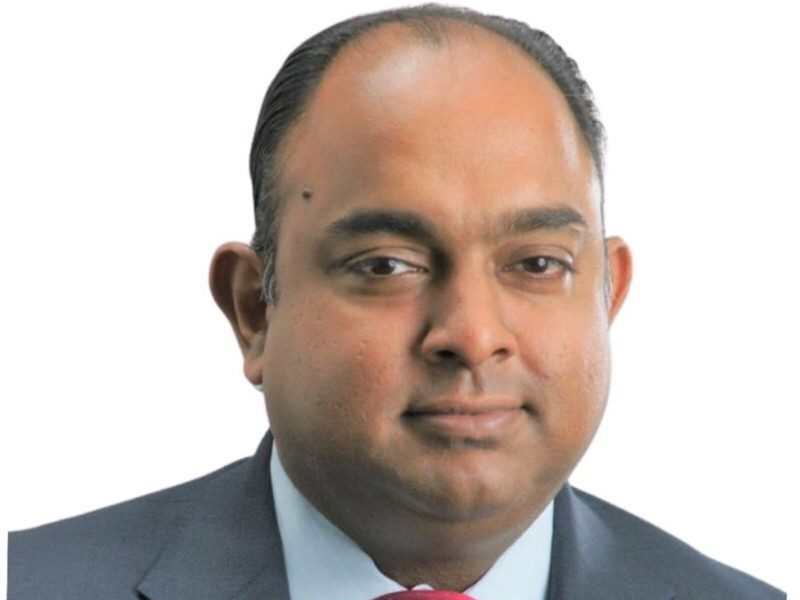

Roland da Silva is Managing Director at Strategy ARX Advisory, specialising in AI strategy and cybersecurity transformation.
Artificial Intelligence (AI) is transforming cybersecurity—but not without consequence. While AI promises faster detection, smarter prevention, and autonomous response, it simultaneously introduces complex, systemic risks. This paradox lies at the heart of the future of security: AI is both our strongest defence and our most dangerous vulnerability.
Six Paradoxes Redefining Security:
The Scale Paradox: AI enables mass-scale attacks at marginal cost, allowing threat actors to target thousands of systems simultaneously—vastly outpacing traditional defence mechanisms.
The Trust Paradox: As we rely on AI to detect AI-generated threats like deepfakes and synthetic content, our trust in digital communications weakens, creating a recursive loop of uncertainty.
The Knowledge Paradox: AI democratizes access to powerful attack tools for low-skilled actors, while defenders require increasingly specialised expertise to respond.
The Speed Paradox: AI can adapt attacks in real time, outpacing human response—but also offers defensive capabilities that react faster than humanly possible.
The Autonomy Paradox: The more autonomous our security systems become, the more vulnerable they are to manipulation by adversarial AI targeting decision-making logic.
The Psychological Paradox: AI’s deep understanding of human behaviour enables it to exploit our cognitive biases—turning the human element into both the last line of defence and the easiest target.
Evolving Threat Landscape
In the immediate term, from now until 2026, AI-driven social engineering is already reshaping attacks. Coordinated campaigns across email, voice, and social media are building long-term trust before striking, while polymorphic malware adapts and learns, making traditional detection methods increasingly obsolete.
Looking ahead to 2026–2027, AI will begin integrating cyber, physical, and psychological attacks into unified operations. Autonomous threat systems will identify and exploit vulnerabilities without human input, rendering current patching processes ineffective.
Beyond 2027, emergent behaviours in AI systems—unpredictable and unprogrammed—will introduce threats that today’s frameworks cannot anticipate. The rise of brain-computer interfaces may even open the door to attacks on human memory and decision-making itself.
Economic Disruption in Cybercrime
AI is fundamentally altering the economics of cybercrime. Attacks have become ten times cheaper to carry out, enabling 100 times more attack volume and impacting up to 1,000 times more victims. Criminals can now access AI-as-a-Service platforms to launch sophisticated campaigns on demand. To counter this, the security industry must rethink its own business models in order to stay ahead of adversaries.
Strategic Defence: Embrace the Paradox
Security professionals must adopt dual “Zero-Trust” frameworks—one tailored for AI systems and another for human users.
Zero-Trust AI Principles
For AI, the guiding principles are uncompromising. AI systems should never be trusted without verification, and compromise must always be assumed as a possibility. Their authority and impact must be strictly limited, the entire AI development lifecycle secured, and all activity continuously monitored for anomalies.
Zero-Trust Human Principles
For humans, defence requires preparation and resilience. Training should focus on resisting emotional manipulation and ensuring that relationships and communications are thoroughly verified. Ongoing monitoring for cognitive manipulation is essential, decision-making should be distributed across trusted stakeholders, and organisations must build psychological resilience to withstand increasingly sophisticated social engineering.
Security vendors must also evolve from toolmakers to orchestrators of AI conflict. This requires transparency, explainability, and strong governance to manage AI-versus-AI scenarios. Strategic priorities include AI-powered and explainable threat detection, deepfake and synthetic media identification, quantum-safe cryptography, and effective human-AI collaboration interfaces. Meanwhile, service providers will need to expand into AI security audits, psychological defence training, and real-time AI incident response capabilities.
The Path Forward
This shift is more than technological; it represents a fundamental redefinition of security itself. The organisations that succeed will be those that balance automation with human oversight, combine technical rigour with psychological insight, and prepare for a future where AI is both ally and adversary.
At its core, the future of security will not depend on choosing between human and artificial intelligence, but on orchestrating their collaboration—amplifying strengths, mitigating weaknesses, and ensuring resilience in an AI-driven world.