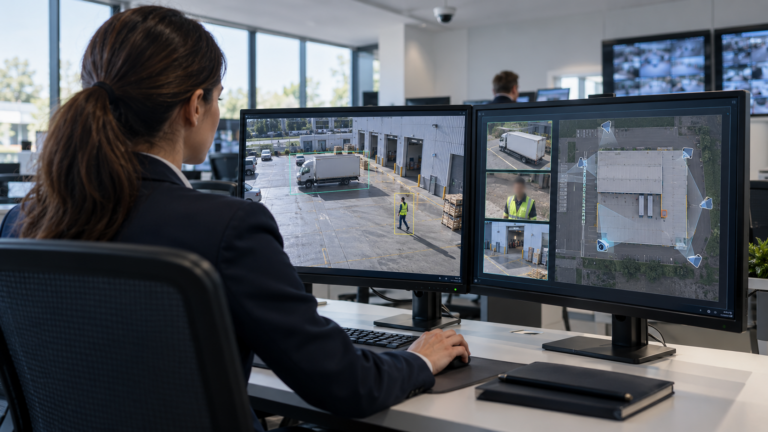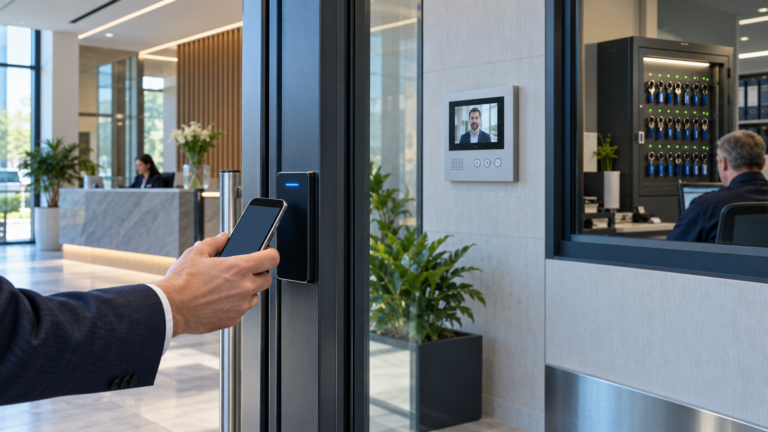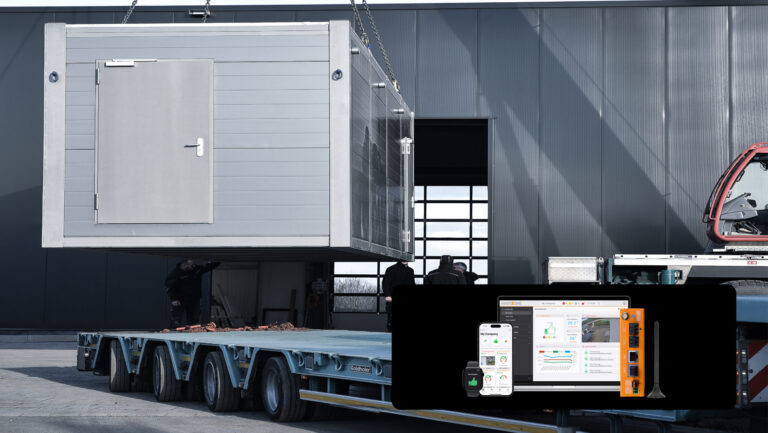


Leo Levit, Chair, ONVIF Steering Committee discuses interoperability across the GCC region in light of Intersec Saudi Arabia.
Cities across the gulf are expanding at a pace that demands a rethink of how infrastructure is built, connected, and secured. In Saudi Arabia, Vision 2030 is transforming not only the built environment, but also the expectations of what a city must deliver. From NEOM to The Line and Red Sea Global, tomorrow’s cities will be data-driven, decentralized, and deeply integrated. Achieving this vision requires more than advanced tools. It requires interoperable systems designed to work together from the ground up.
Physical security is no longer just about surveillance or access control. It plays a critical role in enabling urban resilience, managing large-scale public spaces, and ensuring fast, coordinated responses to incidents. However, too many urban security environments still struggle with outdated, siloed systems that delay response times and increase both cost and risk. According to industry research, 60 percent of organizations have experienced physical security breaches, while 57 percent point to outdated systems as their biggest challenge. Only one in four organizations has fully integrated its security infrastructure. The average cost of a breach now can start from a few hundred thousand dollars up to several millions of dollars.
Together, these figures point to a deeper issue, which is fragmented systems that limit responsiveness, scalability, and long-term value. Without interoperability, even the most advanced technologies fail to deliver at scale. Proprietary systems often lock cities and developers into single-vendor ecosystems, reducing flexibility and increasing upgrade costs over time. In contrast, open standards provide a neutral foundation that allows systems from different vendors to operate as one. This creates a unified layer of intelligence across a city’s security architecture enabling faster responses, broader coverage, and long-term cost efficiency.
Open standards refer to publicly available specifications that define how devices and systems can communicate, regardless of brand. In the context of physical security, this includes video streaming, alarm events, access control, and analytics integration. The role of open standards is not theoretical. It is increasingly central to how urban security is being deployed, for example, national highway infrastructure in the UK and city-level deployments in Australia have implemented open, multi-vendor approaches to reduce complexity and future-proof their systems. While each project is different, the principle remains the same, vendor-neutral flexibility allows for smarter investments and scalable growth.
Saudi Arabia’s smart city ambitions are emerging at a time of global transformation. The region’s urban population is projected to grow by 30 percent between 2020 and 2030. Today, 80 per cent of the population already lives in one ten major cities in Saudi Arabia. Meanwhile, the smart cities and digital transformation market is forecast to grow from $145.54 billion to $907.12 billion by 2032. As urban systems become more connected, so too must their security infrastructure. Fragmentation is not just inefficient but very dangerous.
Interoperability is a strategic requirement for building security systems that can keep up with the pace and complexity of modern urban development. Open standards support rapid emergency response through system automation. They enable better compliance through standardized data exchange. They allow cities to evolve their systems gradually rather than replacing them wholesale. And most critically, they allow public and private sector stakeholders to collaborate more effectively, using a shared language of technology.
As an industry, we must resist the temptation to view urban security as a collection of tools. It is a living, evolving system that must adapt as cities grow, risks shift, and technologies advance. Open standards offer a practical way to design these systems with long-term resilience and flexibility in mind.
To build safe, connected cities, we must prioritize interoperability not as a technical feature, but as a foundation for progress.