
Places of leisure, where we spend our downtime, are public by design. Unlike a bank vault or power plant, they actively invite visitors. You can’t just lock them down and hope no one turns up.
Equally, to ensure user and property safety, access must not be a free for all. Managing risk — separating authorised from unauthorised people and locations — is part of every site manager’s daily routine. Intelligent locking makes this workload a whole lot easier.
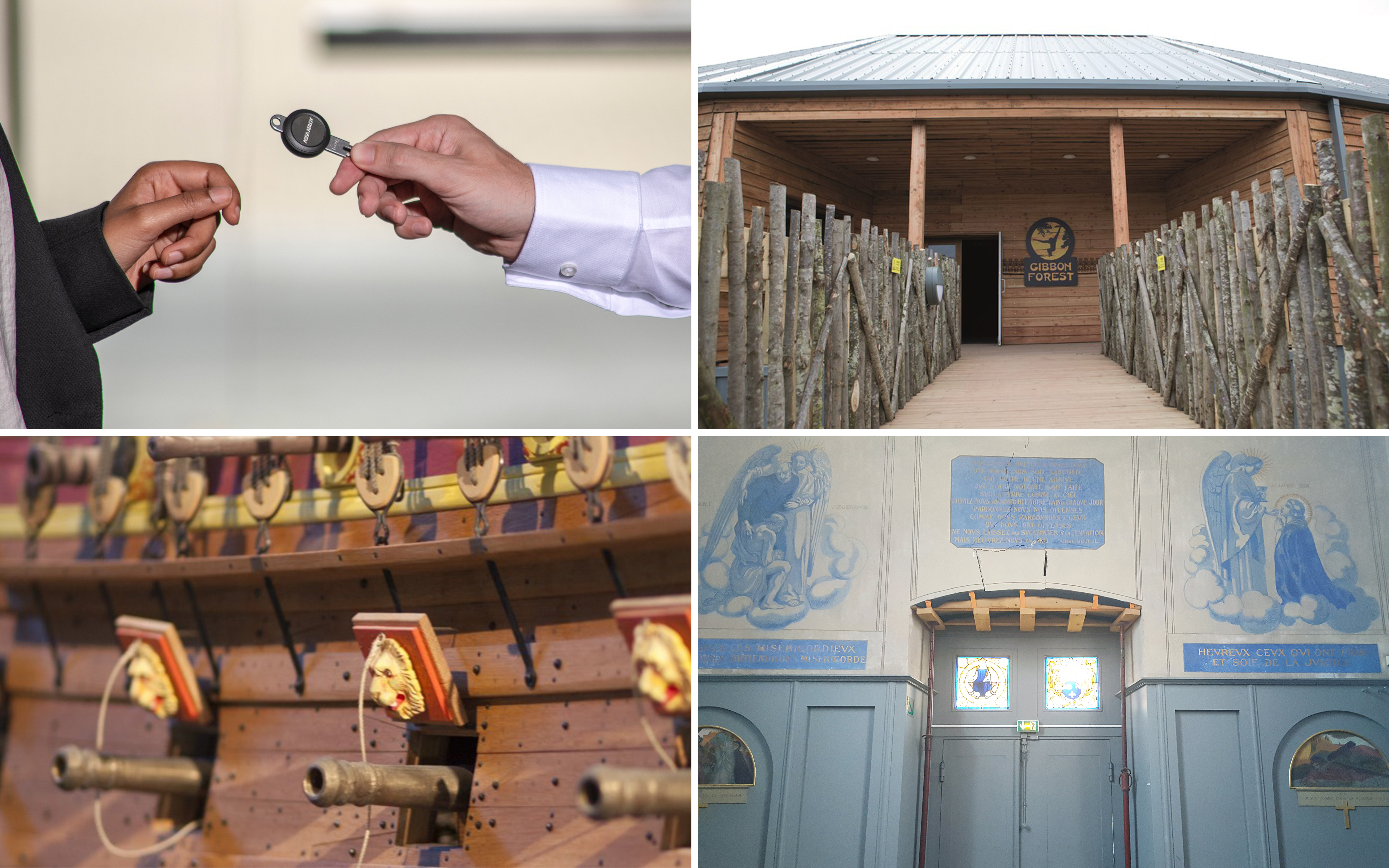
Intelligent keys combine the powerful features of electronic access control with the convenience and familiarity of mechanical keys. In hugely diverse leisure settings across Europe, they already help managers do more with less.
We treasure our leisure. The right access solution can help us do it safely without putting a burden on those responsible for our security.
Controlling access to outdoor sites and visitor attractions
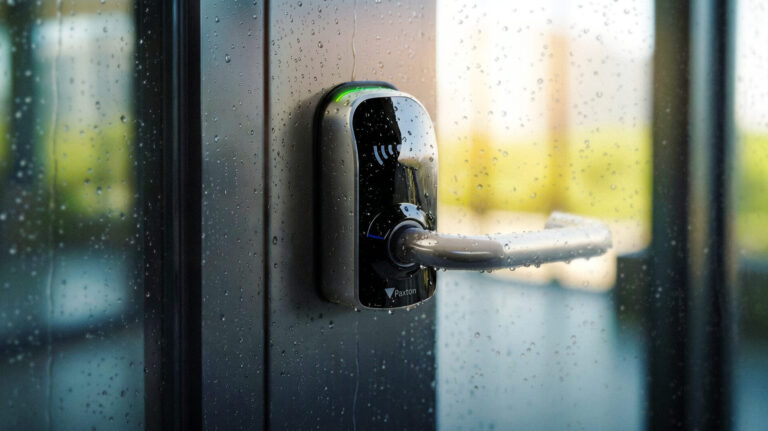
Obviously, for many leisure attractions, wired electronic security is not an option. Locations may be remote — far beyond the reach of mains electricity. Assets themselves may be outside. Thankfully, cabling is not essential for effective intelligent access control. Robust, battery-powered locking, backed by intuitive admin software you can access from anywhere, matches or exceeds the functionality of traditional wired access control. Padlocks built to withstand climate extremes integrate within your system exactly like standard interior locks.
Intelligent electronic key systems are also budget friendly. Making the switch from mechanical security is not an all-or-nothing decision. The best intelligent key systems let you roll out gradually, as needs evolve and budgets allow. For example, the Llyn Brenig Reservoir and Visitor Centre in Wales attracts tens of thousands of tourists every year*. Both mechanical and electromechanical locking protect a site which houses critical infrastructure and watersports facilities — with disparate security needs. Here electromechanical locking brings long-term cost savings to site owners Welsh Water, because locks no longer need to be changed when keys are lost. Permissions are simply deleted from the system software.
In 2015, Twycross Zoo launched a £55 million, two-decade development plan. High on the agenda was a new intelligent key solution to replace a mechanical master-key system which was labour-intensive to administer. The new system’s flexibility has put zoo security managers in full control of their site. Only staff with the necessary authority and training can access animal enclosures.
It’s simple for system administrators to issue time-defined user keys. These can permit vets or zookeepers access to enclosures for a specific time period outside regular hours — for example, in an emergency. When the period expires, the key no longer works and site integrity is automatically restored.
Access control in the museum sector
When Edvard Munch’s painting “The Scream” was stolen from an Oslo museum in 1994, thieves left a note which read: “Thanks for the poor security”**. Securing museums — open spaces with priceless contents — presents one of security’s biggest challenges. Around 50,000 artworks are stolen every year, according to some estimates***.
Adding further complexity, many museums are located within historic properties. The building itself may be integral to the attraction — and come with strict heritage protections. Any new locking installation must make minimal mess. For this reason, wireless is increasingly the preferred choice.
Wireless access systems based on robust, key-operated locking, rather than cards and other keyless credentials, combine a familiar technology (the metal key) with the intelligence to keep staff and collections safe. Carrying one programmable key able to open doors, cabinets, windows and padlocks makes the security team’s rounds easier. It also minimises the number of keys in circulation — with obvious security benefits.
Companion software makes key tracking straightforward: you always know who exactly is carrying credentials, can refine or amend those permissions quickly and order a full audit trail on demand. And these locks are discreet enough to maintain the property’s appearance.
Museum access control in action
London’s Design Museum needed access control designed to protect high-value assets and exhibits. Devices here protect a contemporary site with three galleries, a restaurant/café and an events space, with 100 permanent staff and hundreds (sometimes thousands) of daily visitors. The building has multiple door sizes and must meet British Standards compliance.
Electromechanical locks now control access through 56 doors, forming part of a security ecosystem which incorporates traditional mechanical locks, too. Using intuitive management software, security managers ensure every staff member accesses only the right areas. Contractors are issued with temporary programmable keys, which saves time formerly wasted escorting them around the building. The system the Design Museum chose — CLIQÒ from ASSA ABLOY — also enables integration with third-party cloud-based solutions, for control via a single, central management interface.
The delicate balance between protecting a precious building and guarding its contents sets a major challenge. Security and access control must be “subtle, but ever present,” according to one former moderator of the Museum Security Network****. Invasive installation, showy or inappropriately designed devices and components cannot be considered. This was the checklist facing France’s Musée Maurice Denis: the museum is inside a listed 17th-century monument, so they turned to CLIQ access control technology for a solution.
Drawing on extensive experience in the heritage sector, ASSA ABLOY delivered class-leading security without disrupting the building aesthetic. Installation was easy and wire-free, because encrypted electronics inside CLIQ locks are powered by the standard batteries inside every programmable key. No further power supply is needed at the door.
Around 70 robust, hard-wearing cylinders and padlocks now secure doors and windows inside and outside the main building; waterproof padlocks protect CCTV camera housing on the exterior. Every employee receives access to relevant areas via a single CLIQ key, which administrators program with only the appropriate permissions.
Insurance compliance is another major concern in the heritage sector. Indeed, insurers for 17th-century warship Vasa demand Sweden’s highest level of locking: Class 3. Yet the Vasamuseet’s access system must also allow 1.2 million annual visitors to move around freely, while keeping exhibits safe.
To upgrade an existing mechanical system, around 700 interior door cylinders were equipped with CLIQ Remote electromechanical technology. Museum staff used to carry heavy chains with ten or more keys. Now facility managers can amend the access rights of everyone’s single CLIQ key at any time, even remotely, using the CLIQ Web Manager. It’s easy to issue contractors such as carpenters with access rights scheduled to end automatically as soon as their work is complete.
Security for shopping and indoor leisure sites
According to one study completed two decades ago, we spend 87% of our time indoors*****. The number is probably higher now — and includes a huge chunk of our leisure time. Large retail multiplexes like Festival Place in the UK are a popular destination. Here over 170 shops, a cinema, sports centre and restaurants have an ever-changing roster of permanent staff, cleaners and out-of-hours contractors. Every person requires secure entry on demand. The public also needs open access for 18 hours every day.
Yet a single lost mechanical key could become a security problem for all users and tenants. Installing 100 CLIQ electromechanical cylinders drastically cut the burden of mechanical key management.
Now, cleaners and maintenance workers carry an intelligent key which unlocks specific doors for a pre-defined time period. Using simple online admin software, site managers can immediately de-authorise and reissue a lost key or amend any key’s permissions. Generating a comprehensive audit trail — who accessed which lock, and when — takes a couple of mouse clicks.
CLIQ also cuts Festival Place operational costs. The electronics inside CLIQ locks are powered by the standard battery inside every key, not mains electricity. Installation was wireless, a huge saving on potentially expensive electrical work.
At Festival Place and wherever we gather to enjoy leisure — indoors or outside — CLIQ enables easy access control for all openings with just a simple, single, programmable key.
Share this article on Twitter or LinkedIn.
See more news here.