
Joseph Clarke, Assistant Editor advocates for a hybrid approach to balancing physical and technological barriers in perimeter security for resilience against evolving threats
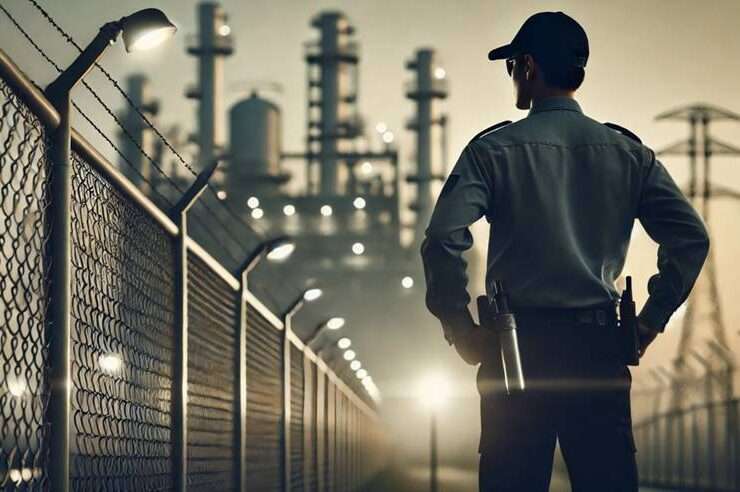
Perimeter security stands as the first line of defence for critical infrastructure, industrial facilities, and high-value sites. From airports to power plants, the perimeter is not just a physical boundary but a symbol of resilience against potential intrusions. Wide-scale complexes, such as oil refineries, power grids, and transportation hubs, face a myriad of threats—ranging from physical breaches to cyber-physical attacks. Intruders may attempt to cut through fencing, evade detection systems, or exploit human error, while more sophisticated adversaries could deploy drones, disable systems remotely, or launch coordinated attacks.
Each type of facility comes with its unique challenges. For instance, oil and gas sites often span vast, remote areas, making it difficult to monitor every point of access. At airports, the sheer volume of daily traffic introduces additional complexities, requiring systems that can differentiate between authorised personnel, passengers, and potential threats. Meanwhile, power stations face the dual challenge of protecting their physical infrastructure and safeguarding against cyberattacks that could disrupt services.
Historically, this role has been filled by physical barriers such as fences, gates, and bollards, which offer tried-and-true deterrents. However, as threats evolve and become more sophisticated, these static solutions alone are no longer sufficient. Technological advancements in detection systems, thermal imaging, and radar have introduced dynamic capabilities, but they too are not without limitations.
This evolving landscape demands a rethinking of perimeter security strategies, moving beyond reliance on either traditional physical barriers or advanced technology. Instead, a hybrid approach that leverages the strengths of both offers the most comprehensive solution. By exploring the capabilities and limitations of each, and examining the contributions of key players in the industry, this article argues for a balanced strategy that adapts to modern threats while maintaining cost-effectiveness and operational practicality.
The Strengths and Limitations of Physical Barriers
Physical barriers have long been the backbone of perimeter security, offering a tangible deterrent to would-be intruders. Industrial fencing, for example, provides a clear boundary while delaying unauthorised access. Products like those from A-1 Fence cater to large-scale complexes such as industrial sites, where robust, corrosion-resistant materials can withstand environmental wear and tear. Similarly, Hill & Smith Infrastructure offers bollards and crash-rated gates designed to prevent vehicular access, providing critical protection for facilities at risk of ramming attacks.
These solutions excel in their simplicity and reliability. Fences don’t require a power source, and bollards aren’t vulnerable to cyberattacks. For many organisations, these attributes make physical barriers an attractive choice. However, they are inherently static and reactive. While they can delay intrusions, they cannot identify or track intruders, nor can they adapt to changing conditions or new threats.
This static nature can become a liability in environments where threats are dynamic, such as airports or border crossings. Physical barriers can also be bypassed if an attacker has sufficient time, tools, or insider knowledge. Thus, while they remain an essential component of any perimeter security strategy, relying solely on them creates significant vulnerabilities.
The Rise of Technological Solutions
Technological advancements have introduced dynamic capabilities to perimeter security, enabling organisations to detect, track, and respond to threats in real time. Solutions such as radar systems, thermal imaging cameras, and smart sensors have revolutionised how facilities monitor their perimeters.
For instance, Thermal Radar offers 360-degree detection systems that provide real-time alerts for intrusions, even in complete darkness or adverse weather conditions. These systems can cover vast areas with minimal human oversight, making them invaluable for facilities like oil refineries or solar farms. Similarly, Teledyne FLIR‘s thermal imaging cameras excel in detecting heat signatures, allowing operators to identify potential threats concealed by foliage or low visibility.
The adaptability of these technologies is a significant advantage. Unlike physical barriers, which remain fixed, technological solutions can be recalibrated or upgraded to meet evolving security needs. They also integrate seamlessly with other systems, such as video analytics platforms or access control systems, creating a cohesive security ecosystem.
However, technology is not without its drawbacks. Cybersecurity vulnerabilities pose a significant risk, as attackers can potentially disable or manipulate systems remotely. Moreover, these systems are often reliant on power and network infrastructure, making them susceptible to failures during critical moments. Maintenance costs and the need for skilled operators further complicate their deployment, particularly for organisations with limited resources…..
To read the full feature, see our latest issue here.
Never miss a story… Follow us on:
LinkedIn: Security Buyer
Twitter (X): @SecurityBuyer
Facebook: @Secbuyer
Media Contact
Rebecca Morpeth Spayne,
Editor, Security Portfolio
Tel: +44 (0) 1622 823 922
Email: [email protected]