
Retail security: securing self-service checkouts.
Tim Compston of SecurityNewsDesk finds out how the latest technology is helping to assist with loss prevention at self-service checkouts.
As retailers seek to ring the changes with self-service checkouts to keep a lid on their operational costs, this is opening up new loss prevention challenges. In such a scenario staff may struggle to pick out suspicious activity, and the automatic systems built into the checkout can generate too many false alarms, so when a real incident happens it may simply fall under the radar.
Tackling theftAccording to Daniel Wan, channel marketing manager at Honeywell, a large proportion of all stock losses are a result of theft or fraud by customers: “These come from a wide range of sources from simple shoplifting to fraud at point of sale, either with or without the collusion of retail staff.”
Wan says that the key to successful prevention of this is to identify and tackle theft as it happens, with strong evidence to support any conviction: “This not only prevents the event from happening but also discourages others to try when word gets around.”
Henrik Høj Pedersen, business development manager – corporate products business unit – at Milestone Systems offers his thoughts on the growing footprint of self-checkouts and criminal actions. The problem, suggests Pederson, is it is difficult to monitor several stations at the same time, and many people can be tempted to sneak away with that little bit extra which isn’t picked-up.
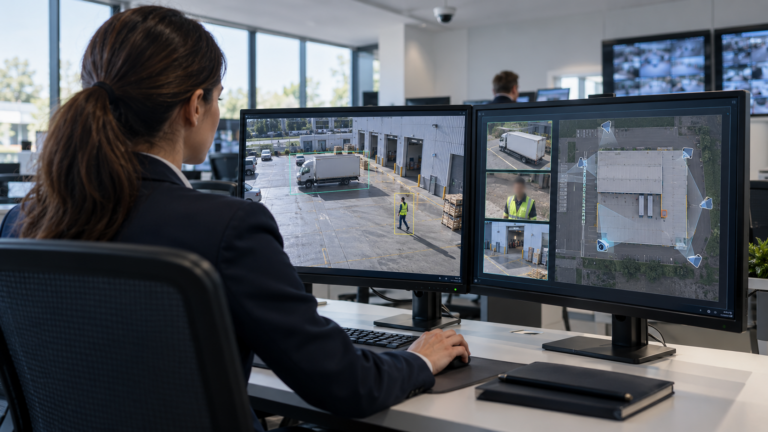
So how can this be addressed? Well, in the case of trying to get through self-service without even paying at all, with video monitoring, Pedersen agrees with other commentators that linking the video system to the POS (Point Of Sale) system and then analytics makes sense here: “With analytics you can go in and mark a certain area in the camera view surrounding the POS system so you know there is a person in there who has left the box without paying with their credit card.”
Project StopLiftAnother potential answer to the rapid rise of self-checkouts is to refine video analytics even further to the point where it canflag up specific criminal behaviour around scan avoidance, with a high degree of accuracy, something which one of the vendors engaged in this explains is no easy task.
Interestingly, StopLift Checkout Vision Systems – the leading player in this field – has benefited from a background in intelligent video content analysis. In fact Malay Kundu, founder and ceo of StopLift Checkout Vision Systems, cut his teeth on facial recognition systems to identify terrorists in airports and StopLift itself grew out of Kundu’s Harvard Business School research study ‘Project StopLift’ on Retail Loss Prevention.
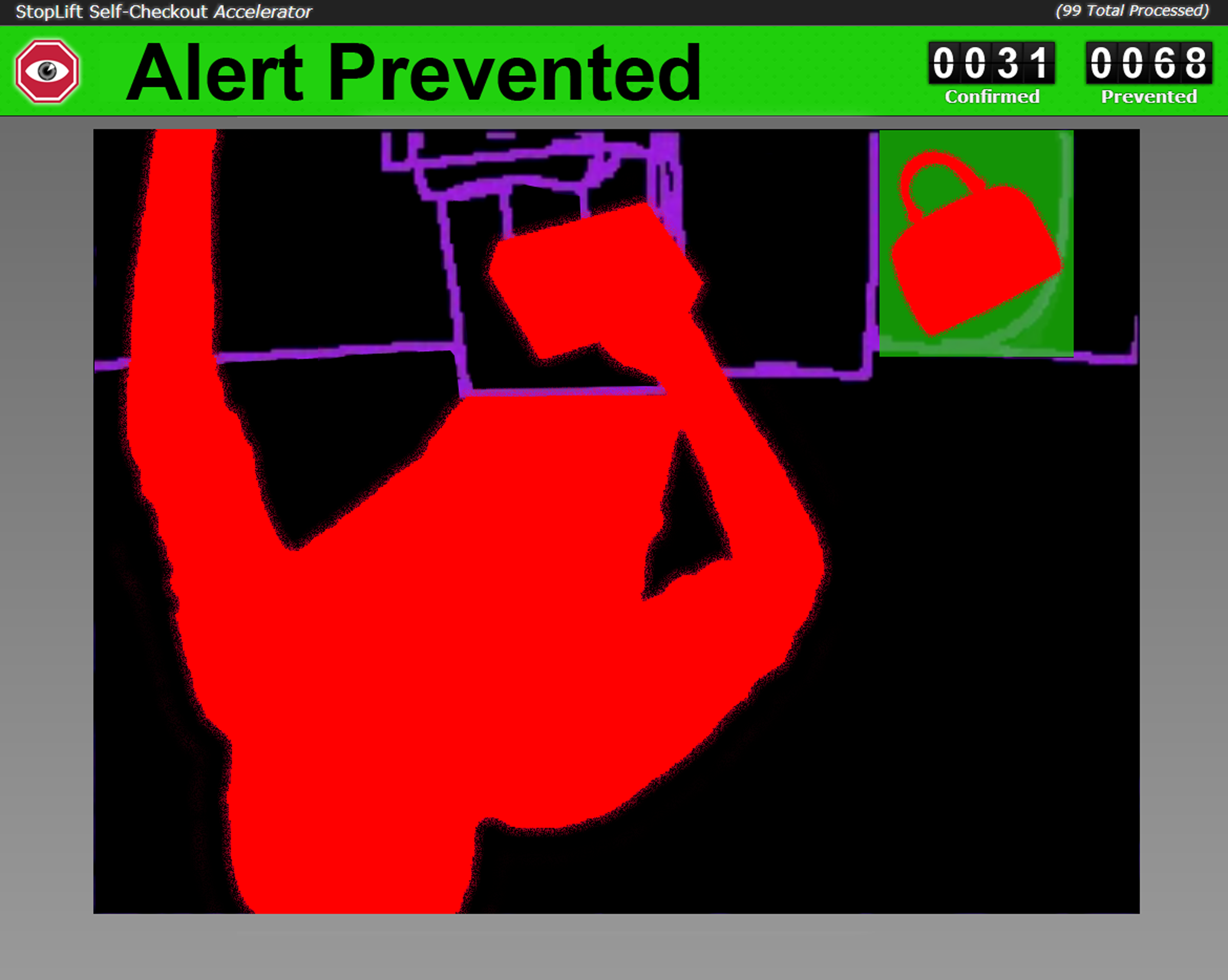
Already many big name retail chains have installed StopLift Checkout Vision Systems’ Scan-It-All video recognition technology at both manned and self-checkouts. The scale of the rollout is certainly impressive with, Kundu, confirming that at last count StopLift has already detected and confirmed more than 1.2 million incidents.
The latest innovation from StopLift – called StopLift Accelerator – is reportedly able to detect and notify a store about self-checkout theft in real-time, and, even distinguish whether it is someone’s purse or mobile phone on a conveyor belt rather than a stolen item.
Checking on the challengesFrom his experience talking to retailers who are putting in self-checkouts, Kundu says that they are certainly not blind to the challenges: “They are being very deliberate about testing these [self- checkouts] in their stores and making sure that staff know how to attend to them and that their customers are able to have a good experience. At the same time as doing that we are finding now that they are reaching out to us. They have realised that an inventory shrinkage increase, unfortunately, does often accompany putting in self-checkouts.”
To put the vulnerability of self-checkouts into some sort of context, Kundu reveals that StopLift’s state-of-the-art technology has found shoplifting to be as much as five times more likely to happen in the self-checkout lane – a dramatic difference: “If people don’t have an enhanced security solution, like ours, they are opening themselves up to that sort of inventory shrinkage.”
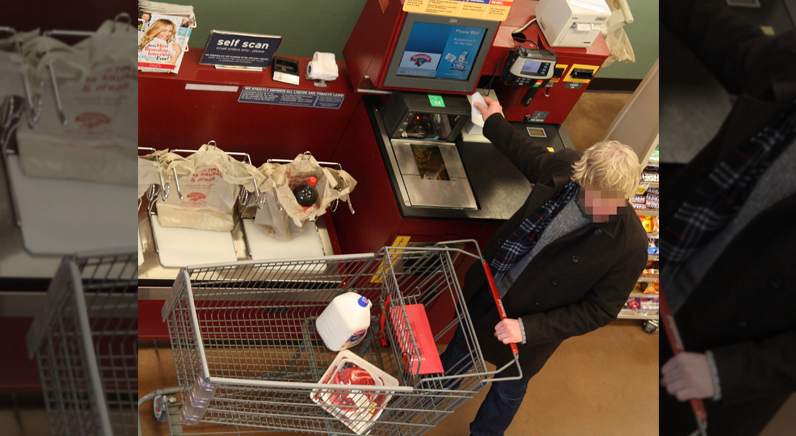
Going weightlessDrilling down to some of the practical issues retailers are experiencing, according to Kundu, self-checkouts which don’t have video enhanced security in place are very prone to weightless theft: “Weightless theft is where the customer basically avoids the weight sensor. There is a whole variety of ways they can do that. They can just leave the items in the cart. They will sometimes pretend to scan an item but as they put it in the bag they will actually pick-up the bag so it never touches the weight scale. The weight sensor, understandably, is blind to anything which doesn’t touch it.” For Kundu this stacks-up as the number one issue from an inventory shrinkage standpoint.
Although Kundu does acknowledge that self-checkouts with their weight-based security do actually catch some instances of fraud, or theft, he tempers this by saying that, invariably, they are still spotlighting more false than actual incidents: “This annoys customers because they are always being beeped at. What happens in the end is the attendants become accustomed to the fact that, more likely than not, this is a false incident so just clear it without even going into more detail.”
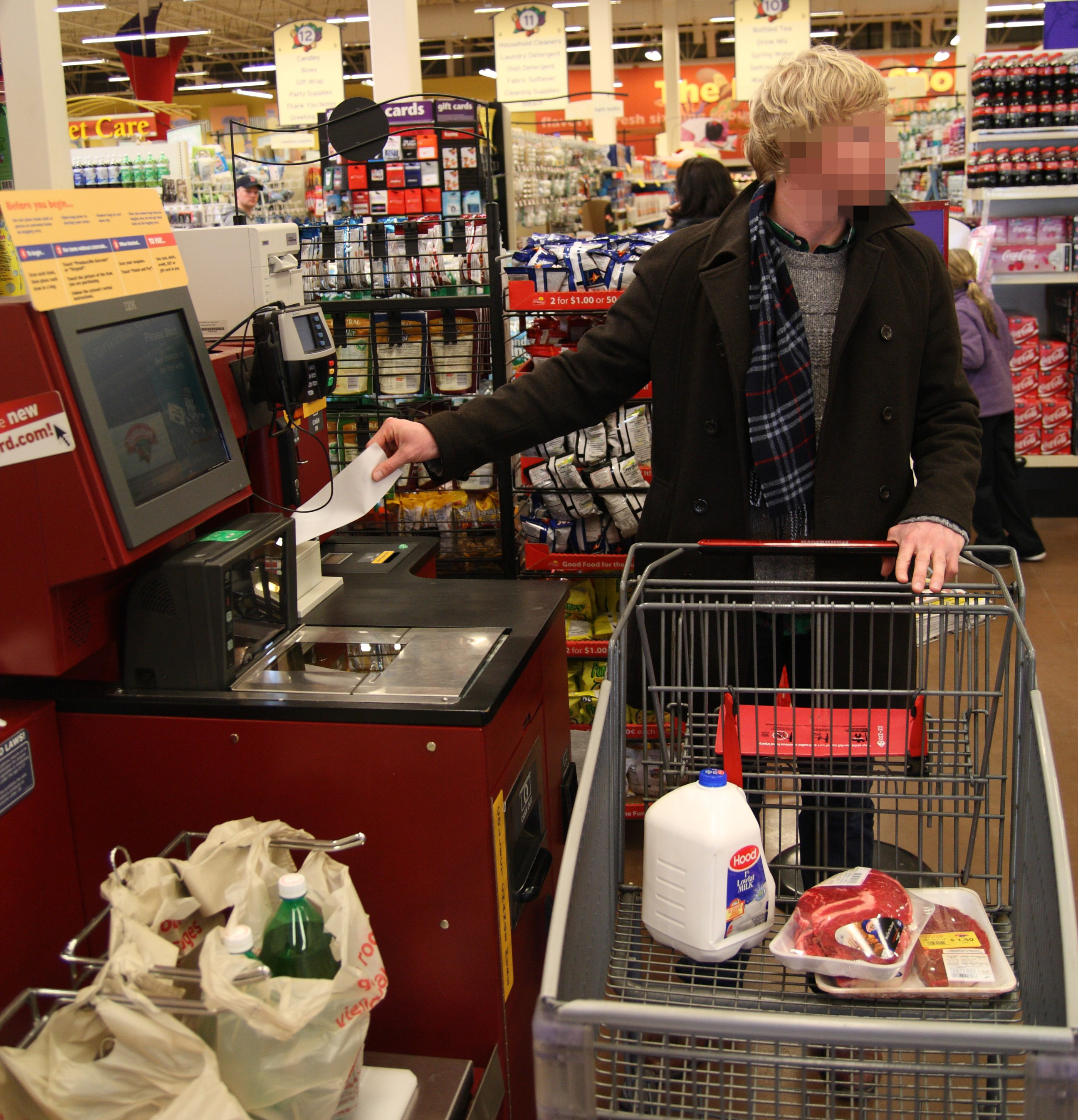
Added to this, Kundu says that for human attendants not only is it very difficult as they don’t know exactly what to look for but, crucially, there is a duality of roles coming into play as well: “People are conflict adverse. The attendant in a sense wears two hats, they have customer service but they are also wearing a loss prevention hat. As people are conflict adverse the customer service one is an easier hat to wear but, what our system does, by automating the finding of theft, is now give the attendant a license to approach that customer.”
Andy Martin, business development manager at Axis Communications is in agreement regarding the dilemma faced by self-service attendants when dealing with self-checkout issues: “Against opportunist theft there is no doubt at all that self-checkout operators are not really policing the area, they are there to make sure that a customer’s shopping experience isn’t a poor one because they haven’t got staff contact.”
Added to this, Martin explains that there is quite a bit of evidence to suggest that making the checkout alarm and having it reset is a diversionary tactic criminals are turning to: “While the alarm is being alarmed, and the time it takes the unwitting member of staff to react – and reset the system, they may already have four or five items in their bag that they haven’t scanned.”
Martin also flags up the economic imperative for the emergence of self-checkouts which doesn’t look like it is going to change course anytime soon: “This ties in very much with a drive amongst retailers to get the maximum bang for their buck in terms of productivity and a resource point of view: “You have a situation, especially in grocery, where there is a real push for self-serve, self-scan, to become the norm and there are definitely some risks associated with it.”
Industry opportunityWith the self-service checkouts now very much part of the retail landscape the expectation has to be that security solutions providers will be seeking to work ever more closely with the major retailers to deploy, and trial, highly capable technology-based solutions. While video analytics seems to have the edge at the moment in this regard it will be interesting to see if anything else emerges to set the pace for self-service checkout security.
[su_button url=”https://www.securitynewsdesk.com/newspaper/” target=”blank” background=”#df2027″ color=”#ffffff” size=”10″ radius=”0″ icon=”icon: arrow-circle-right”]For more stories like this click here for the SecurityNewsDesk Newspaper[/su_button]