

With the various threats and risks that we face day to day in modern society, it has become increasingly more important for us to feel safe and secure in all aspects of our lives. As such, hotel owners have a duty of care to their employees as well as their guests to make them feel protected. In challenging economic times, the need for affordable robust security measures in order to minimise potential risks has never been greater. Here, James Kelly, Chief Executive of the British Security Industry Association, discusses just some of the security solutions available to help hotels get secure for the New Year.
The most effective security strategies tend to be those that integrate various different aspects of security systems and technologies, thus ensuring that all possible threats are accounted for.
Physical Security
Perhaps one of the most essential parts of any integrated approach is that of physical security measures, particularly when placed at the perimeter. As the first layer of a security plan, effective perimeter security measures can make it extremely difficult for intruders to breach the perimeter and enter the site – providing peace of mind that hotel equipment is secure on the premises around the clock. Effective perimeter security can be as simple as ensuring that doors and locks within the premises are of a high standard. Good quality five-lever mortise locks should be fitted to doors, along with high quality locks fitted to all windows of a premises. Doors should be strong and in good condition, complying with British Standard PAS 24-1 ‘Doors of Enhanced Security’. It is important that hotel owners regularly review their locks and doors to ensure that they are meeting with the necessary standards.
Access control
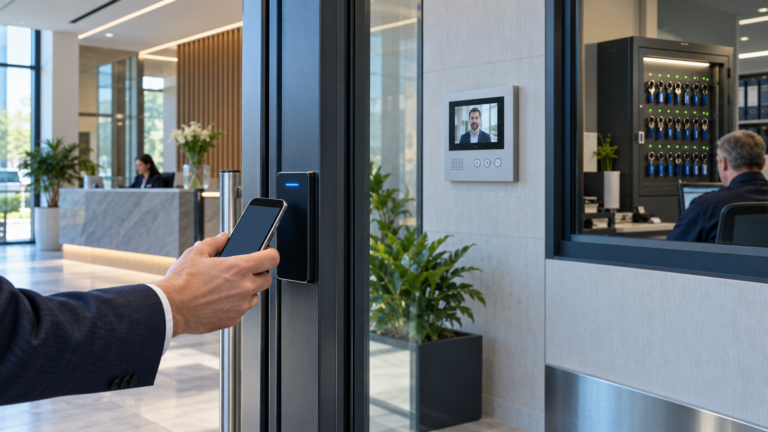
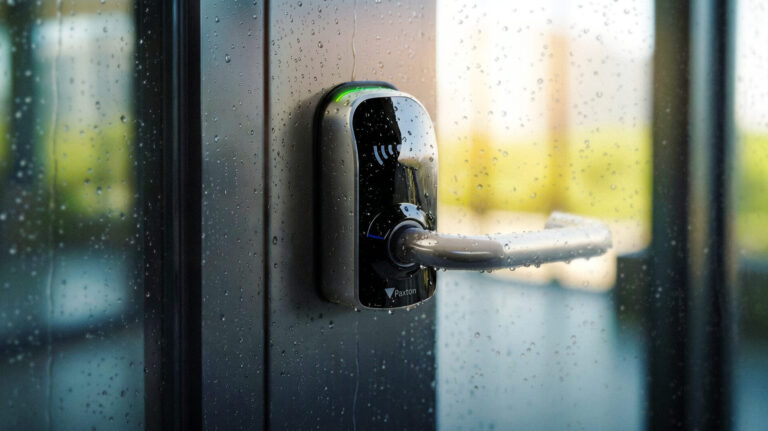
While physical security solutions can help keep a hotel safe round the clock, access control measures are also vitally important. Monitoring and controlling who can actually gain access to hotels and indeed hotel rooms is extremely important. Access control systems provide the ability to control, monitor and restrict the movement of people, assets, or vehicles, in, out and around a building. The average hotel will experience a regular footfall of people coming in and out of the premises. In larger hotels, intruders could potentially fall under the radar and blend in with regular visitors, giving them an opportunity to steal valuable equipment, gain access to confidential information or guests belongings. Access control systems, therefore, are designed to allow access only to authorised people – whether it be into the entire building or specific areas. Such measures can be as simple as paper-based logging systems that grant access for temporary visitors or more advanced cards that utilise radio frequency identification (RFID) chips for proximity reading of card details and subsequent activation of gates, turnstiles and vehicle barriers on the premises.
Alongside security, access control systems can have further added benefits. From a human resources point of view, the information gathered from the badge/token technology can be used to record employee hours. Such information can be processed against working hours – useful for both temporary and permanent staff – in real-time to feed transactions through to the company’s payroll. Time and attendance software can also help employers keep in line with European Working Time regulations, plan holidays and record absences.
CCTV
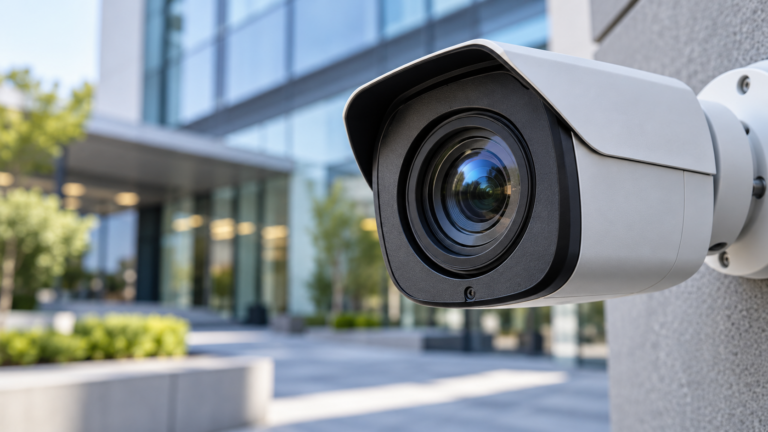
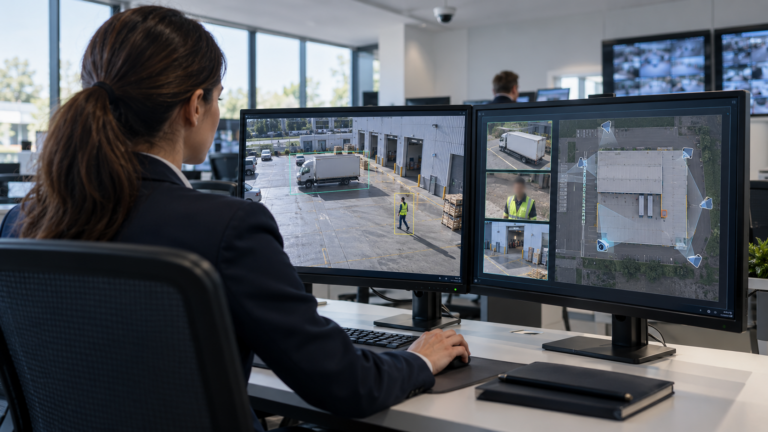
Another method to ensure around the clock protection at hotels is through the employment of CCTV systems, whether it be inside or outside of a building. Simply having a CCTV camera visible on-site can act as a successful deterrent for thieves or trespassers, while monitoring the activity of personnel and visitors. The CCTV sector is constantly changing and improving in order to meet consumer requirements. One particular advancement that can be useful to a hotel manager is that of IP technology. By linking cameras to IP networks through an Ethernet – whether it be Large Area Network (LAN), a Wide Area Network (WAN) or a Virtual Private Network (VPN). By using secure internet and Ethernet connections, managers can use their own laptops in order to monitor a property should they have to leave it for any significant length of time, thus eliminating the cost of having to employ someone to monitor the cameras at the property at all times.
In fact, IP cameras carry various benefits, a significant one being the way in which they can deal with difficult lighting conditions. Advances in IP technology have made way for clearer, crisper images by combining normal shutter speeds in dark areas with high shutter speeds in light areas into a single high quality image, avoiding any under or over exposure.
In terms of cost efficiency, CCTV cameras do not always have to be switched on 24-hours a day. When used in conjunction with motion sensors, CCTV cameras can only start rolling when movement is detected. For particularly large hotels, this can be especially useful in areas that are not often in use and may not need to be monitored so closely during all hours of the day.
Information destruction
While ensuring the protection of people and valuable assets is at the forefront of any comprehensive security plan, one aspect that can sometimes be overlooked is the safe disposal of confidential information, whether it is regarding an employee or a particular aspect of a business. If confidential information falls into the wrong hands, it could be detrimental to a business’s reputation and can even result in fraud. As such, it is extremely important that organisation waste paper and data-processing products – such as hard drives, CDs, memory sticks and DVDs are destroyed safely and efficiently by a professional firm.
In early 2013, research by accountancy firm KPMG revealed a startling rise in identity fraud over the previous year, with the value of the crime more than doubling in value to £26.3million. The research also disturbingly suggested that insider fraud was to blame for more than 80% of fraud-related financial losses in 2012.
Simply disposing of information via municipal refuse collection or waste paper reprocessing is not good enough, as neither method generally involves any kind of secure handling. As such, it is extremely important to choose an information destruction company that meets with certain specific standards, guaranteeing that the service being provided is secure and professional. One such standard is that of the key European standard for information destruction, EN151713. The standard outlines a range of requirements that an information destruction company must meet, including having an administration office on-site where records and documentation are kept for conducting business. The company’s premises should also be isolated for any other business or activities operating on the same site.
Along with meeting with the key European standard, companies and hotels should also comply with the essential British Standard BS8470. This details the secure destruction of information and includes the identification of product specific shredding sizes, guaranteeing that information is destroyed to the point of irreparability. BSIA information destruction companies are inspected to both of these standards, amongst many other important principles, thus making them reliable service providers.
Security Consultancies
It can be a difficult process deciding on the best security strategies to put in place in any building. The nature of the work conducted onsite and the individual threats and risks that a hotel may face determines what security measures will be required for each individual premises. Making the most informed choices when choosing different technologies and security methods can be a daunting task, particularly for those who are not familiar with all the different technologies available on the market. Specialist security services – such as security consultants – can help with this.
Security consultancies can guide whoever is in charge or procuring the security solutions and advise them on the best security measures that will be most useful. A consultant will conduct a thorough risk assessment of a premises, allowing them to provide essential advice on security reviews and audits, the development of security policies and strategies, system design, tender management and security awareness training. Working closely with their clients, consultants are able to identify threats and ensure that business continuity is addressed and possible detrimental corners are not cut.
Sourcing a Supplier
Whether choosing just one security measure or a multitude of solutions to secure a hotel, the most important factor is that products and services are chosen from a reputable supplier. Members of the BSIA offer a high quality service and all meet with the essential British and European standards for their product or service. To find out more, or find a supplier near you, visit: www.bsia.co.uk