
Brian Mallari, Director of Product Marketing, Smart Video, at Western Digital discusses the evolution of smart video and the edge.
By 2025 the global market for video surveillance cameras will grow to nearly $50 billion, according to the latest estimates by IDC. As the demand for smart video grows, paralleled by an increase in the use of Artificial Intelligence (AI), this will drive the development of data architectures at the edge.
AI is excellent at doing specific, narrow tasks incredibly well. The aim of AI is not to teach technology to see the world as humans do, but instead to enable computers to capture, analyse, and learn about the human world, in rapid and accurate ways.
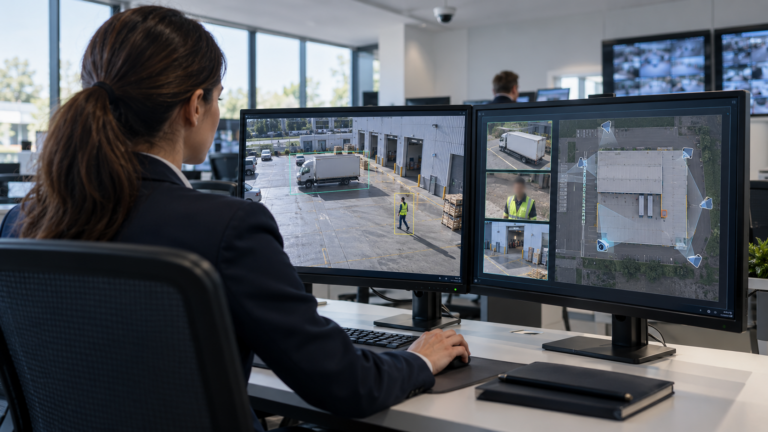
The profound value of AI comes from taking computer intelligence capabilities – such as object recognition, movement detection, and tracking or counting objects/persons – and using these in the right application. Given the utility of these applications, it’s not surprising that the amalgamation of video, artificial intelligence and sensor data is a hotbed for new services across industries.
Larger and smarter use cases
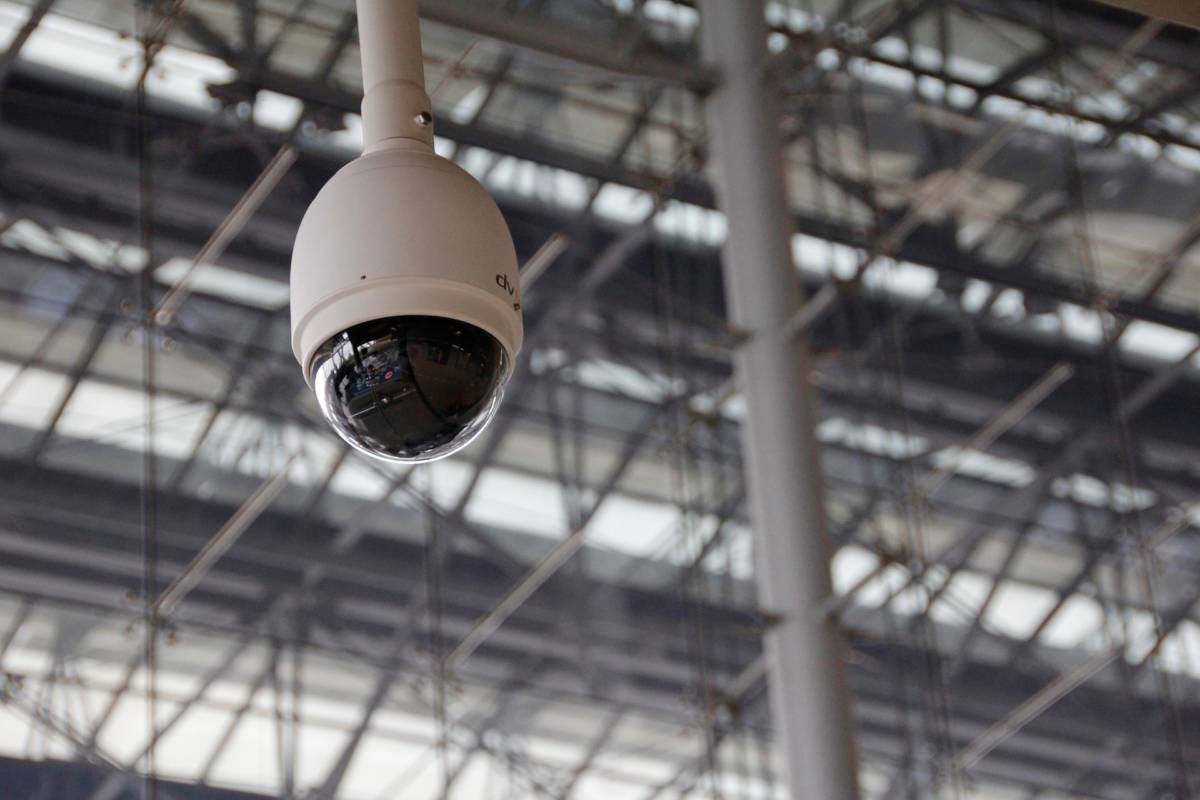
Smart video is a keystone of modern security and surveillance activity. However, it should also be recognised that the market is expanding through a growing amount of use cases. These include medical applications, sports analysis, factories, traffic management, and even agricultural drones.
Intelligent technology is making these use cases “smart”, i.e. devices deploying intelligent insights. For example, in “smart cities”, cameras and AI analyse traffic patterns and adjust traffic lights accordingly to improve vehicle flow, reduce congestion and pollution, and increase pedestrian safety. Another example of this is “smart factories”, which implement the type of narrow tasks AI excels in, such as detecting flaws or deviations in the production line in real-time and adjusting to reduce errors. Smart cameras can be very effective in this use case at the level of quality assurance, keeping costs down through automation and earlier fault detection.
Changes at the edge
As smart video evolves, it’s developing in parallel to other technological and data infrastructure advancements, such as 5G. As these technologies come together, they’re impacting the architecture of the edge, and what we require from data storage. More specifically, they’re driving a demand for specialised storage. Here are some of the biggest trends currently developing:
1. Strength in numbers
Having more cameras means there is more media-rich data to be captured and analysed. This means it can be used to train AI.
Simultaneously, cameras are supporting higher resolutions (4K video and above). The more detailed and sharp the video, the more insights can be extracted from it, and thus the more effective the AI algorithms can become. In addition, new cameras transmit not just a main video stream but also additional low-bitrate streams, perfect for low-bandwidth monitoring and AI pattern matching.
Some of the biggest challenges for these types of workloads is the fact that they’re always on. Especially necessary in the case of security, many smart cameras operate 24/7, 365 days a year, as is needed for their role.
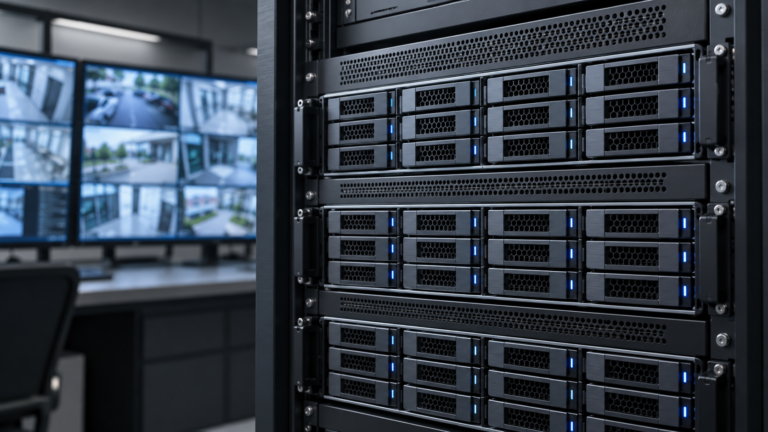
The challenge here is that storage technology must be able to keep up. One way in which storage has evolved to meet this challenge, is the development of the ability to deliver high performance data transfer speeds and data writing speed, to ensure high quality video capture. Furthermore, on-camera storage technology that can deliver longevity and reliability has become even more critical, in comparison to storage technology at a remote data centre.
2. The rich variety of endpoints
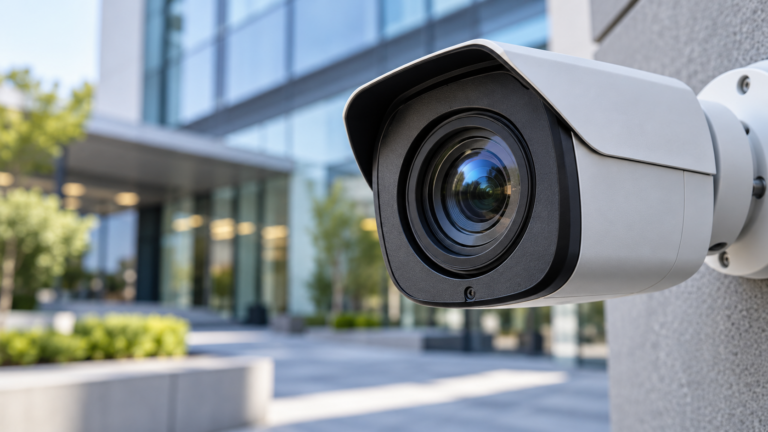
The realm of security relies on more than just visual data. New types of cameras are being developed with new types of data to be analysed. Cameras can be found everywhere – atop buildings, inside moving vehicles, in drones, and even in doorbells.
The location and form factor of smart cameras impacts the storage technology required. The accessibility of cameras (or lack thereof) needs to be considered – are they atop a tall building? Maybe amid a remote jungle? Such locations might need to withstand extreme temperature variations. For example, security drones monitoring a location of extreme heat. All of these possibilities need to be considered to ensure long-lasting, reliable continuous recording of critical video data.
3. AI chipsets
Increasingly real-time decisions are being made at the edge at device level, due to improved compute capabilities in cameras. New chipsets are arriving for cameras that deliver improved AI capability, and more advanced chipsets offer deep neural network processing for on-camera deep learning analytics. AI keeps getting smarter and more capable.
As the innovation within cameras continues, there is a rising expectation that deep learning – requiring large video data sets in order to be effective – will happen on-camera too, driving the need for more primary on-camera storage.
Even for solutions that employ standard security cameras, AI-enhanced chipsets and discrete GPUs (graphic processing units) are still being used in network video recorders (NVR), video analytics appliances, and edge gateways to enable advanced AI functions and deep learning analytics. With NVR firmware and OS (operating system) architecture evolving to add such capabilities to mainstream recorders, the implications for storage are large, having to handle a much bigger workload.
For example, there is a need to go beyond just storing single and multiple camera streams. Today, metadata from real-time AI and reference data for pattern matching needs to be stored as well.
4. Don’t say goodbye to the cloud
The majority of the video analytics and deep learning for today’s smart video solutions is completed by discrete video analytics appliances or in the cloud. Similarly, broader Internet of Things (IoT) applications that use sensor data beyond video are also tapping into the power of the deep learning cloud to create more effective, smarter AI.
To support these new AI workloads, the cloud has gone undergone a transformation. Neural network processors within the cloud have adopted the use of massive GPU clusters or custom FPGAs (field programmable gate array). They’re being fed thousands of hours of training video, and petabytes of data.
This cloud activity still requires specialised and robust storage: these workloads depend on the high capacity capabilities of enterprise-class hard drives (HDDs) and high performance enterprise SSD flash devices, platforms or arrays.
5. Reaching for the stars with 5G
Wired and wireless internet have enabled the scalability and ease of installation that has driven the explosive adoption of security cameras – but it could only do so where LAN and WAN infrastructures already exist. However, 5G is a game changer here.
5G removes many barriers to deployment, allowing more options for where a camera can be installed and easily used in metropolitan locations. With this ease of deployment comes new greater scalability, which increases use cases and encourages further advancements in both camera and cloud design.
For example, cameras can now be stand-alone, no longer dependent on a local network and instead using direct connectivity to a centralised cloud. Emerging cameras that are already 5G-ready are being designed to load and run 3rd party applications that can bring broader capabilities. With 5G behind it, the sky’s the limit on smart video innovation.
The flipside is that with greater autonomy, comes the need for even more dynamic storage for these cameras. They will require new combinations of endurance, capacity, performance, and power efficiency to be able to handle the variability of new app-driven functions.
The edge frontier
Whilst the future of smart video is exciting, it’s equally as complex. Architectural changes are being made to handle new workloads and prep for even more dynamic capabilities at the edge and at endpoints. Simultaneously, deep learning analytics continue to evolve at the back end and cloud.
As AI-enabled video develops, it’s crucial to understand how architectures must change in turn. Understanding workload changes – whether at the camera, recorder or cloud level – is critical to ensuring that any new architectural changes are augmented by continuous innovation in data storage.
Storage technologies must not only keep apace with the already growing demands of smart video, but they must also enable and encourage new capabilities and smart use cases. As the proliferation of smart video throughout the security space only continues, the hidden storage complexities shouldn’t be forgotten.
To stay up to date on the latest, trends, innovations, people news and company updates within the global security market please register to receive our newsletter here.
Media contact
Rebecca Morpeth Spayne,
Editor, Security Portfolio
Tel: +44 (0) 1622 823 922
Email: [email protected]