

Rainer W. Kaese, Senior Manager Business Development, Storage Products Division, Toshiba Electronics Europe GmbH discusses energy efficiency in data centres
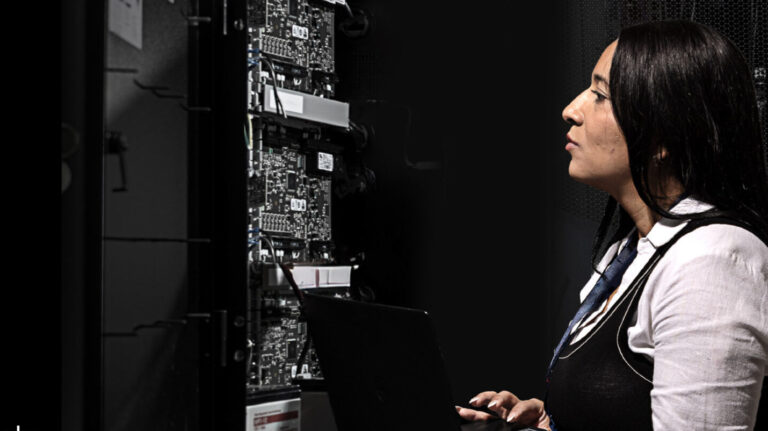
Data centers are the backbone of our digital infrastructure. However, they do use a lot of energy. The push toward sustainability and net-zero goals is, therefore, a major concern for modern data center operations. The goal of these green initiatives dictates that minimising power consumption is a top priority, even while processing vast amounts of data, most of which is stored on hard disk drives (HDDs). Toshiba established its HDD Innovation Lab in Düsseldorf, Germany, to assist data center architects and other IT professionals in identifying optimal HDD-based storage configurations.
Benchmarking for a greener future
Toshiba’s HDD Innovation Lab provides a platform for proof-of-concept activities and the configuration of unique architecture setups. A key feature of the facility is its ability to conduct benchmarking across various HDD storage architectures. Crucially, the facility is equipped with accurate power analysing equipment for energy consumption benchmarks. These detailed measurements form the foundation of Toshiba’s Lab Reports.
The lab’s experts support HDD evaluations based on the specific requirements of the customer. By bringing together essential components, including various servers, JBoDs (Just a Bunch of Disks), chassis, controllers, cables, and software, the lab enables partners to refine performance and efficiency. The overall goal is to help businesses unlock the full potential of their storage solutions.
Evaluating a ‘Green JBOD’
An example of the lab’s work in saving energy involved evaluating the PROMIS VTrak J5960 4U 60-bay top-loader JBOD – a system promoted for its ‘green DNA’. Previously, Toshiba evaluated this JBOD using 60 Toshiba Enterprise SAS 18TB HDDs, totalling 1080TB in a dual I/O module (IOM) configuration. Since then, HDD capacity has increased to 24TB per unit.
The lab’s focus was on functionality, performance, and power consumption, validating PROMISE’s ‘green JBOD’ claims. This test was significant as large-scale storage systems in the petabyte range are increasingly adopting SATA drives over SAS to optimise cost and energy efficiency. The setup used 60 Toshiba 24TB SATA Enterprise HDDs (Model MG11ACA24TE) in a single IOM version of the JBOD (J5960sS). This configuration achieved a capacity of nearly 1.5PB.
With a 4U height and a chassis length of just 666mm, the J5960 is extremely compact. It is as short as a typical 2U server chassis and fits easily into standard racks – unlike many JBODs that exceed 1,000mm and require extended racks or complex cabling. The hot-swappable IOMs are accessed from the front, while cabling remains connected at the rear. This design simplifies field replacements, avoiding the hassle of navigating through power and signal cables.
A distinct mechanical feature of the JBOD is its lid, which remains attached to the rack when the unit is pulled out for servicing. This allows for easy access for drive replacement even when installed high in a rack. Each HDD is secured in a metal tray with four screws to ensure stable and reliable mounting, preventing vibration and movement. The status LEDs remain off during normal operation and only activate when the lid is opened, thereby minimizing power consumption.
The tests were conducted using a Linux Host OS (Red Hat 9.5) and a Broadcom host bus adapter (HBA9500-16e). The single IOM was connected to the HBA using two mini-SAS HD cables. Power measurements were performed using a high-precision Rohde &Schwarz HMC8015 power analyser.
Key findings
The JBOD, with raw drives, demonstrated an idle power draw of 286W. Drawing under 300W at idle is exceptional, as most 60-bay JBODs typically start at 400W or more. Under workload, the power draw remained relatively low, staying below 611W even with a mixed workload, which confirms the PROMISE’s ‘Green JBOD’ energy efficiency claim.
| Workload | Power (W) | IOPS | Bandwidth (MB/s) |
| Sequential write (1024k) | 528 | 6169 | |
| Sequential read (1024k) | 546 | 7395 | |
| Mixed workload | 611 | 6310 | 1869 |
Figure 3: Key power and performance measurements under load
The testing also confirmed a high Lambda factor of 0.96, indicating that the ratio of reactive power generated by the power supply units is extremely low (equating to 4% of the total power) – a crucial factor for large-scale data centers.
Despite using cost-effective SATA drives, the system demonstrated strong throughput. Using the flexible I/O test tool (fio tool), the tests yielded significant bandwidth results. This achieved throughput of between 6GB/s and 7GB/s is sufficient for applications connected to 10/25/40GbE.
Thermal metrics were also impressive, ensuring optimal cooling necessary for HDD longevity and reliability. The maximum HDD temperature reached was 36°C under a mixed workload, ensuring a maximum temperature delta of just 14°C above the ambient 23°C.
Conclusion
The Toshiba Lab Report confirms that the PROMISE VTrak J5960 is a compact, energy-efficient, and service-friendly 60-bay top-loader JBOD. When fully populated with Toshiba 24TB SATA drives, the system delivers nearly 1.5PB of capacity while maintaining extremely low idle power consumption (under 300W) and consuming only 611W under a mixed workload. This combination of density, performance (6–7 GB/s throughput and 6k IOPS in mixed workloads), and efficient cooling positions the configuration as a powerful solution for enterprises seeking to optimise both cost and energy efficiency in their large-scale storage systems.