

Lumana has established a partnership with security systems integrator Convergint to expand the availability of artificial intelligence-enabled surveillance technology to enterprise and public-sector customers.
Announced on 14 October 2026, the agreement will see Convergint’s Technology Centers support the design, deployment and servicing of Lumana’s video security platform.
The collaboration is intended to help organisations introduce advanced video analytics into existing surveillance environments without necessarily replacing their installed camera infrastructure.
Integrating AI with existing cameras
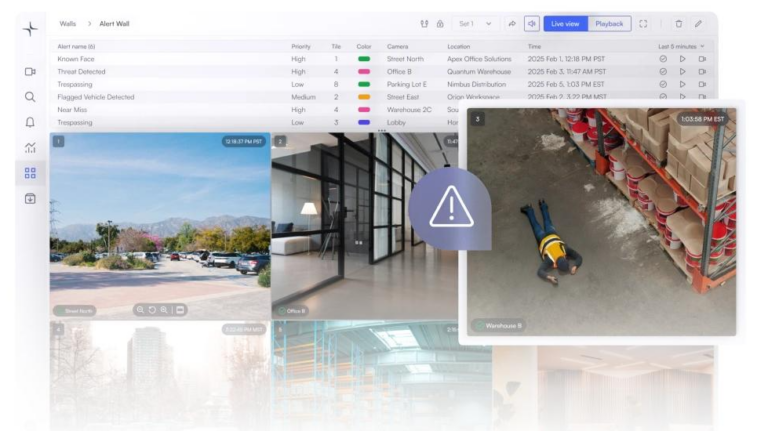
Lumana develops video security technology that uses artificial intelligence to analyse camera footage and provide information to security and operational teams.
The company’s platform is designed to improve the identification, investigation and management of events captured by surveillance systems.
Under the partnership, Convergint will make Lumana’s technology available through its established integration and service network.
This will provide customers with access to system design, installation and ongoing technical support, combining the manufacturer’s software capabilities with Convergint’s experience in large-scale security deployments.
A significant element of the collaboration is the ability to work with existing surveillance infrastructure.
Many organisations have invested substantial resources in cameras, network equipment and security management systems, making complete replacement programmes expensive and operationally disruptive.
The integration of AI-enabled software with installed camera networks could allow these organisations to introduce additional analytical capabilities while retaining suitable existing equipment.
Such capabilities may support the investigation of security incidents, monitoring of facilities and identification of operational events across multiple locations.
Implications for security integrators
For systems integrators and security procurement teams, the agreement reflects growing interest in upgrading surveillance capabilities through software and analytics rather than relying solely on new camera installations.
AI-enabled platforms can provide opportunities to extract additional operational value from existing video infrastructure, particularly in organisations managing large numbers of cameras.
However, the effectiveness of analytics depends on several factors, including image quality, camera placement, network performance and the suitability of the analytical functions for the intended application.
Customers must also assess data governance, privacy requirements, cybersecurity and the integration of analytical alerts with existing security workflows.
The involvement of an established systems integrator could help address deployment challenges by bringing together software, infrastructure and ongoing technical support.
For enterprise and public-sector buyers, this may provide an alternative route to modernising surveillance systems while maintaining continuity with existing equipment.
The Lumana-Convergint partnership highlights the continuing convergence of video surveillance, artificial intelligence and managed security services.
It also demonstrates how specialist software manufacturers are using partnerships with established integrators to expand the deployment of emerging security technologies across larger customer environments.