
Rick Winter of HID explores how mobile credentials and the OMNIKEY Mobile ecosystem are helping organisations unify physical and digital access across today’s connected workplaces.
As organisations continue to embrace hybrid working and digital transformation, the role of identity has expanded far beyond traditional access control. Businesses are increasingly looking for seamless, secure ways to manage both physical and logical access, while reducing complexity for users and administrators alike. Mobile credentials are emerging as a key enabler of this shift, allowing employees to move effortlessly between buildings, workstations and digital applications using a single trusted identity.
At the same time, installers and systems integrators are being tasked with delivering solutions that can integrate with existing infrastructure while remaining flexible enough to support future technologies. In this interview, Rick Winter, Mobile Solution Sr. Pre-Sales Engineer – Americas, Enterprise Authentication Readers Business Line, HID explores how its OMNIKEY Mobile ecosystem is helping organisations unify identity and access management, the factors driving wider adoption of mobile credentials, and the practical considerations for deploying scalable, future-ready authentication solutions across today’s increasingly connected workplaces.
The workplace is becoming increasingly hybrid and interconnected. How are customer expectations around identity and access management changing, and what role does mobile authentication play in meeting those expectations?
As systems become increasingly interconnected, there is a growing demand for a single source of truth across identity and access management systems. Businesses are looking to simplify operations without compromising security by consolidating identity data and enabling a single credential, whether physical or mobile, to be used across multiple systems and applications.
At the same time, the evolution of smarter workplaces and the widespread adoption of mobile technologies are accelerating the shift toward mobile credentials. As employees increasingly rely on smartphones for everyday interactions, using mobile devices for secure authentication and access is becoming a natural extension of the modern workplace experience.
Many organisations still operate separate systems for physical access, workstation login and application authentication. How does the OMNIKEY Mobile ecosystem help bring these traditionally siloed environments together?
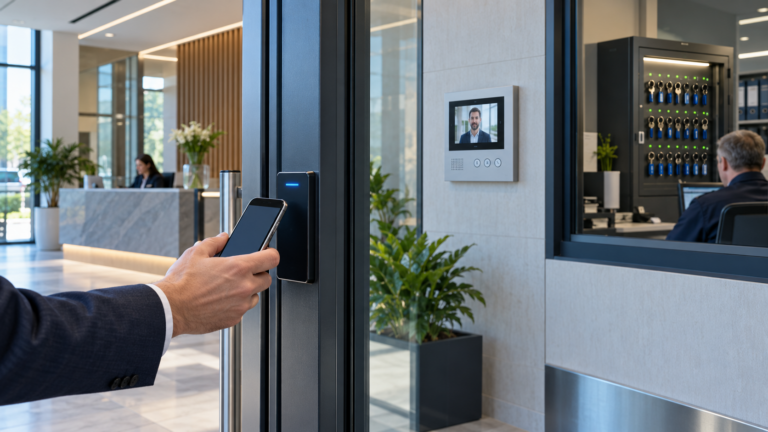
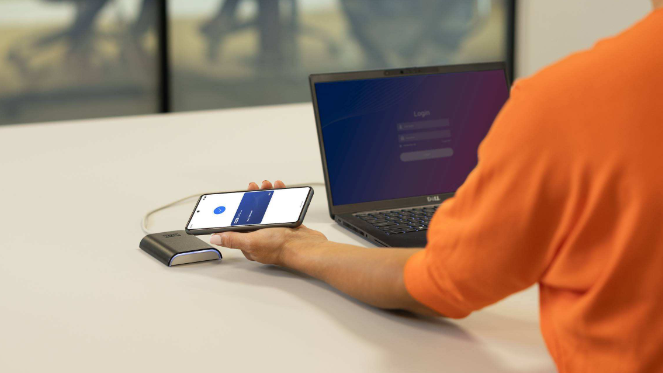
HID is one of the few companies that can deliver a truly seamless “door-to-desktop” experience. From HID access control devices to the HID chips and embedded modules integrated into partner solutions, employees can use a single HID mobile credential to move securely from the building entrance to their workstation and everywhere in between. Our broad ecosystem of mobile-enabled solutions and partnerships provides a unified experience, allowing customers to use a single trusted credential across their entire workplace.
From an installer and systems integrator perspective, what are the biggest considerations when deploying a mobile credential ecosystem across both existing and new infrastructure?
There is no one-size-fits-all approach to implementing mobile access. Every organisation has unique requirements, so installers and system integrators need to work closely with end users to understand their goals and priorities.
Key considerations include:
- The type of mobile access experience the organisation wants to deliver.
- The systems that need to be integrated, whether it is only the access control system (ACS) or a broader ecosystem that may include turnstiles, elevators, secure printing, logical access, and other third-party solutions.
- Budget requirements and the stakeholders involved in funding the project.
- The implementation timeline, as some deployments can be completed quickly while others require a more phased approach.
The industry has been discussing mobile credentials for several years. What developments in technology, standards or customer demand are now accelerating real-world adoption?
Two key factors have accelerated the adoption of mobile credentials.
First, modern identity and credential management platforms have significantly simplified credential issuance and provisioning. In the past, enrolling users and distributing credentials across multiple systems was often a complex and time-consuming process. Today, integrations between HID and its technology partners have streamlined these workflows, making deployment faster and reducing operational challenges for customers.
Second, the growth of HID’s OMNIKEY-enabled partner ecosystem has expanded the number of applications that support mobile credentials. As a result, employees can use a single credential across more touchpoints throughout the workplace, eliminating the need to carry multiple cards or credentials.
How important is open compatibility within the OMNIKEY Mobile ecosystem, and how does this help future-proof deployments?
Before discussing open compatibility, it’s important to recognise that different organisations define it in different ways. For some, it means support for multiple credential technologies; for others, it means seamless integration across a wide range of systems and applications.
This is where the OMNIKEY mobile ecosystem stands out. HID takes a credential-agnostic approach, enabling organisations to support a variety of physical and mobile credentials. This flexibility helps customers adapt to evolving requirements while maintaining compatibility with the solutions and technologies they rely on today and may adopt in the future.
What opportunities does a unified mobile credential create beyond simply opening doors? Are you seeing demand for credentials that also support secure printing, workstation login, time and attendance or other workplace services?
Absolutely. This is where HID OMNIKEY readers, chips, and embedded modules truly differentiate themselves. HID technology can be deployed across virtually every touchpoint in an employee’s workspace, enabling a seamless “door-to-desktop” experience.
Whether accessing a building, authenticating to a workstation, or interacting with other physical and digital systems, employees can rely on a consistent and secure mobile credential experience. This capability is being adopted across a wide range of industries, including higher education, commercial real estate, technology, financial services, and legal services, supported by the broad HID OMNIKEY ecosystem.
If an organisation is considering moving from traditional cards to a mobile-first credential strategy, what practical advice would you give installers and security professionals to ensure a successful migration with minimal disruption?
One of the most important factors for a successful mobile credential deployment is securing stakeholder buy-in early and establishing a cross-functional project team. Organisations that focus on planning from the outset are far more likely to deliver a seamless user experience.
Before implementation begins, it’s essential to map how credentials are used across the organisation today and identify every touchpoint where a mobile credential may need to work in the future. This helps avoid unexpected challenges late in the project, such as integration requirements, budget impacts, or changes in scope. A thorough assessment upfront provides a strong foundation for both project planning and budget allocation.
Anything else to note?
Organisations don’t have to navigate the transition to mobile credentials on their own. Bringing in experienced partners and subject matter experts early in the process can help reduce risk and accelerate deployment.
HID and its partner ecosystem have worked with organisations across a wide range of mobile credential projects and have developed proven best practices along the way. By leveraging that expertise, customers can avoid common pitfalls, simplify implementation, and create a smoother transition for both administrators and end users.