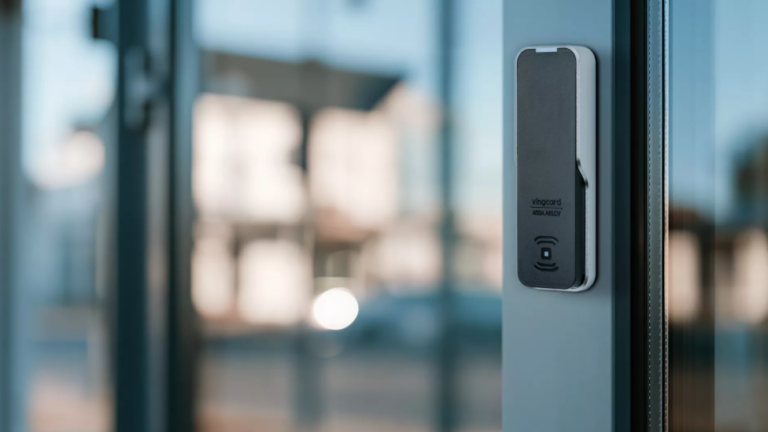


Vingcard has introduced its R-Series door reader, extending mobile credential compatibility to a wider range of entry points within hotels, residential developments and managed properties.
Announced on 13 October 2026, the reader has been designed for applications where conventional electronic door locks may not be suitable, including building entrances, lifts, parking barriers and gates.
The product forms part of Vingcard’s access control portfolio and is compatible with the company’s cloud-based Vostio Access Management platform.
Flexible access control applications
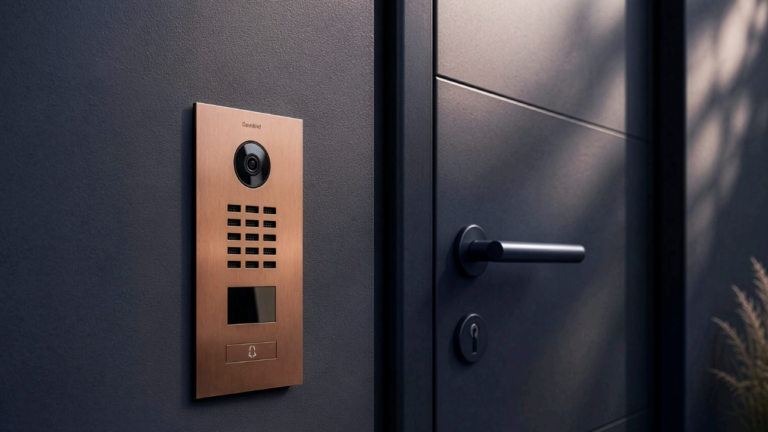
The R-Series has been developed for indoor and outdoor installations and is available in narrow and wide configurations to accommodate different mounting requirements.
Its applications include revolving doors, sliding entrances, parking facilities, lift systems and other access points where conventional electronic locks cannot easily be installed.
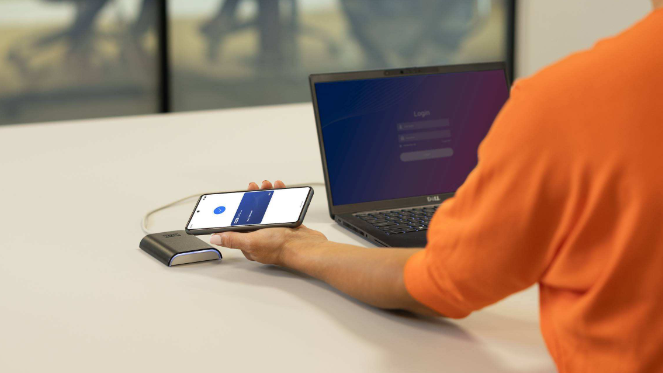
The reader incorporates Bluetooth Low Energy (BLE) and Near Field Communication (NFC) technology, allowing it to support mobile credentials and compatible digital wallets.
This enables authorised users to access designated areas using personal devices rather than relying exclusively on physical keycards.
According to Vingcard, mobile keys can also be issued and used without requiring guests or residents to download a dedicated application.
Compatibility with Vostio Access Management provides centralised credential administration and supports software updates intended to maintain current credential encryption protocols.
These capabilities are particularly relevant to properties where access permissions must be managed across several building areas.
For example, a hospitality operator may need to coordinate access to guest accommodation, parking facilities, shared amenities and restricted operational spaces.
The R-Series provides an additional reader option for extending electronic access control beyond individual room doors.
Supporting connected property security
For property owners, security consultants and systems integrators, the introduction of the R-Series reflects growing demand for consistent access control across entire buildings.
Hospitality and residential developments frequently operate several entry technologies, potentially creating separate administrative processes for credentials, permissions and maintenance.
Using compatible readers across different access points may help simplify management while providing users with a more consistent entry experience.
However, system designers must consider installation conditions, mechanical compatibility, network connectivity and the security requirements of individual locations.
Mobile credential deployments also require appropriate policies for device loss, credential revocation and user identity management.
The ability to update software through a central management platform may be relevant to organisations seeking to maintain equipment over extended operating periods.
For security buyers, the R-Series provides another option when specifying electronic access control for hotels, student accommodation and build-to-rent developments.
Its introduction illustrates the increasing importance of combining physical entry management with cloud administration and smartphone-based credentials.
The development also highlights how access control manufacturers are extending mobile entry technologies into building infrastructure beyond conventional doors.