

David Moser, of ASSA ABLOY Opening Solutions EMEIA explores how mobile digital access unlocks new possibilities for organizations everywhere.
“Mobile-first” is becoming an overarching ethos in so many industries and almost every region. What does the mobile phone bring to access management specifically?
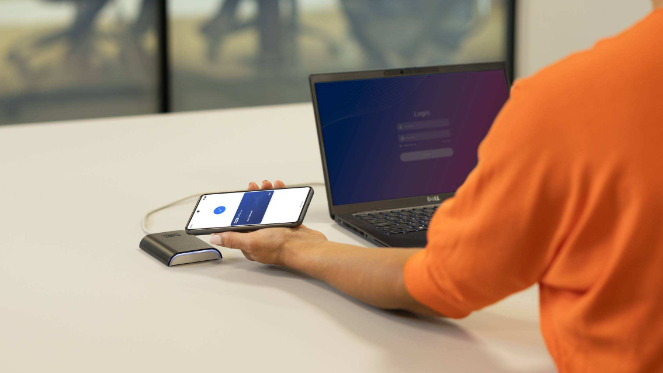
Mobile credential adoption has been growing fast and this will continue, perhaps at an even greater pace. According to one recent forecast, the mobile credential access market will experience CAGR of 23.5% through 2030. This rapid growth seems only natural: in terms of access, it is more secure and more convenient, for both building users and managers, when the user’s smartphone also becomes their key. The smartphone’s convenience benefits have already transformed banking, travel, and much more into mobile-first services. With mobile access, staff no longer carry or keep track of physical keys, fobs, badges, or cards. No more time-wasting handover meetings are scheduled when a tenancy, employment contract, or office visit ends.
The security benefits are also significant. Mobile credentials are easier to amend or de-authorize than a mechanical key. Changes to access permissions are made over the air, without dedicated readers or any need to ask a user to check-in their credential. Mobile access is an ideal option for authentication in a 2FA/MFA environment, alongside credential readers with PINpads or biometrics. Indeed, mobile credentials are inherently more secure: phones are almost never loaned out and much harder to lose than a keycard or fob. If someone does lose their smartphone, an administrator simply cancels and blocks its mobile key. On-device security – PIN or face-recognition – adds yet another layer of safety for any lost or stolen credential.
But there’s more to mobile access than just security and convenience. In addition, by placing innovative mobile access solutions at the heart of a digitalization strategy, businesses can generate ongoing ROI.
The security and convenience benefits of a mobile credential are increasingly well known. As you mention, ASSA ABLOY has also showcased some of the digital transformation possibilities of mobile access. Perhaps you can explain a little more?
A mobile access solution makes possible two completely different operational transformations: mobile work and smarter workflow management. Both are equally valuable in helping businesses meet their evolving challenges. Firstly, for site users, mobile access empowers smarter working. Accessing buildings or other openings with a mobile key helps users to act faster, work smarter, and collaborate better. Moving from place to place becomes efficient and transparent.
Secondly, mobile access streamlines the working day for facilities and security managers by simplifying the filtering and logging of movement into and through their premises. Mobile remote management can free security teams from being tied to their desks. They can manage even granular access permissions from a portable device, leaving more time to interact with other areas of the business or to travel between locations. Thus, remote access management saves hassle and helps facilities staff work more flexibly, benefitting both their well-being and their organization’s productivity.
Innovative mobile solutions may also offer protocol benefits tailored to the specific premises. For example, at UK luxury car dealer H.R. Owen, the Parking Mode feature in one ASSA ABLOY mobile solution enables drivers to unlock car park barriers from 3m–5m away. They don’t need to get out of a car to open the barrier. This reduces the risk of opportunist theft or unauthorized access, critical for sites with high-value goods inside.
Are there sectors where the prospects for mobile access seem particularly exciting to you?
The scope is vast – although, of course, not universal. Mobile phone access is not appropriate in every property. However, one report suggests that 30% of commercial office buildings in Germany already offer mobile digital access, with growth continuing. In the corporate and office sector, a professional welcome is vital. Mobile provides this, which is why the founders of ULab, a flexible office space in Alicante, chose an ASSA ABLOY wireless digital access solution with a mobile key app.
Digitalizing access gave ULab staff real-time control via credentials which are easy to program and reprogram. Workspace users carry virtual keys on their smartphone inside the secure app. ULab’s security team update access rights over the air, anytime and from anywhere. In case of an emergency, they could also lock or open doors, for example. Alongside offices like ULab, businesses in the multi-residential housing, logistics, remote infrastructure, and hospitality spaces are increasingly adopting mobile as their digital access technology of choice.