

New developments in AI-powered scanning enable security teams to quickly and easily detect threats that can be undetected by conventional checks in critical infrastructure.
Strengthening Physical Security
In a world where cyber threats often dominate news headlines and public consciousness, buildings and their occupants still need effective protection against direct action. Physical assets such as power stations and high-profile buildings such as embassies, national parliaments, and even museums all face security threats that can disrupt or disable their activities. Perpetrators may be seeking to gain publicity by damaging famous exhibits, steal assets or information, or cause actual destruction.
The first line of defence, and the most obvious, is to deny access to any unauthorized parties and prevent anyone from smuggling prohibited objects into the building. Items like weapons, tools, spray paints or placards, and media such as tiny memory cards, can be hidden about the person in ways that are difficult to detect using conventional techniques. Metal detectors, sniffer dogs, pat downs, and “instinct” all have their limitations.
Defending buildings against physical threats is a stressful challenge with weaknesses that are known to both sides. Physical searches can be invasive or unpleasant, although necessary to provide the level of security expected. On the other hand, there can be high numbers of false alarms, and there is a constant risk that items may not be detected. Moreover, protection can be expensive, especially if services such as armed police or animal units are engaged.
Turning to Technology
New technology that combines millimetre-wave scanning and AI could offer a solution by automating threat detection with extremely high accuracy and minimal false alarms. The technique has already been proven in airports, where it is now widely used for passenger security screening upon entering the departures area.
Millimetre-waves are known to be harmless to the human body. The waves from the scanner are 1000 times less intense than those from a mobile phone and are reflected by the skin instead of being absorbed. In fact, this is also the property that enables object detection by letting the digital processing system analyse the reflected signals for any unexpected disruptions.
The team at Rohde & Schwarz that created the system, known as R&S QPS (Quick Personnel Scanner), initially aimed to offer a high-tech solution for places like airports, where passengers can be asked to pause and pose for scanning. The engineers then developed a new version that scans as people walk through, which allows screening to become even more natural and free flowing. This evolution, called R&S QPS Walk, can operate effectively at entrances to buildings and other spaces such as shopping malls and sports or entertainment venues. Minimal supervision is required and staff only need to intervene if an unusual result is flagged. It’s also a great way for organisations to tackle issues such as stock loss and theft of equipment or data by preventing employees, visitors, or customers taking valuable items as they leave.
New Security for Critical Infrastructure
Now, the development team has moved the design another step forward by introducing a gating system capable of protecting entrances to critical infrastructure and other sensitive buildings. If the scanner detects an unusual result, the automated gating guides the subject safely to an area where security staff can perform further checks.
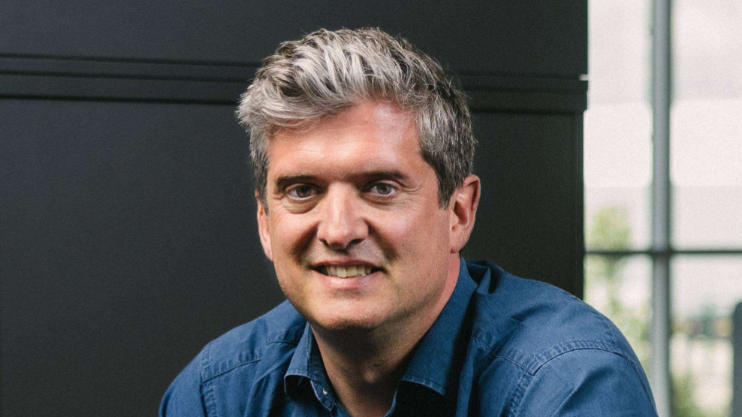
“By continuing to develop R&S QPS, building on the millimetre-wave scanning technology at its heart, we can extend the benefits into many new application areas,” explains Gary Mackay, Managing Director, Rohde & Schwarz UK. “The informal, pose-free scanning now possible, combined with the new automated gating, makes security procedures at entrances easier and relieves stresses on all involved.”
As well as being safe, the security scanner system also safeguards the privacy of individuals. Although the waves can penetrate clothes to detect unusual objects hidden underneath, this is not a digital imaging system. It works with signal processing, using AI to distinguish between the normal and the unusual. “Say somebody walks in with a USB thumb drive in their back pocket,” volunteers Gary Mackay. “The system can easily detect an item like this. Staff looking at the monitor will see an image of an avatar, with the location of this unusual item highlighted. They can then stop that person and perform further checks in an appropriate way, as they are trained to do. Ensuring privacy has always been a fundamental principle in the development of the scanner technology.”
Gary Mackay goes on to explain that the system detects many less obvious threats and can find tiny items like electronic components and memory cards. Moreover, any type of material can be detected including, for example, metal, ceramic or plastic blades so it’s effective against all sorts of weapons, from improvised and basic to highly professional. It can also detect liquids, powders, even organic materials like fruit, plants, or food.
The AI Effect
The scanning system captures all the waves returning from the subject, regardless whether they are reflected normally or affected by any type of object. It could be harmless, such as a clothes button or a zipper, or could be a weapon or similar threat, or any other type of item that may be of interest. The AI then takes over, with models that are pre-trained to recognize the digital footprints of items that are designated as threats and those that are not.
Training the AI models involves the development team in performing large numbers of scans, analyzing scenes with and without hidden contraband until the machine has learned to tell the difference on its own. This is an ongoing activity that builds a growing library of references. Regular software updates ensure the system is always aware and up to date with the latest trends.
Gary Mackay adds that ensuring accuracy involves not only training with the latest threats but also training with different types of clothes and the latest fashions, to determine how new fabrics and features affect the millimetre waves. Minimizing the false alarms that these could cause is as important as maximizing threat detection, to ensure the staff remain always on their guard and are not fatigued by performing large numbers of unnecessary manual searches.
Opportunities to Evaluate
As the variety of potential applications for security scanning systems has expanded to include the protection of critical infrastructure, Rohde & Schwarz offers opportunities for users to evaluate the capabilities in a controlled and realistic environment. The company is a founder member of the consortium that set up the Human Centered Security Lab in Berlin in 2024. The lab helps users develop secure access processes using R&S QPS together with other specialized equipment such as biometric systems. The facilities allow modelling the entire security journey of employees and visitors, from entering the building and verifying their identity to logging in at their desk or workstation, as well as leaving the building.
Buildings such as government offices and commercial data centres are now officially regarded as critical infrastructure, confirming the fundamental importance of providing safe and secure building environments. These physical assets face an evolving set of threats that are increasingly difficult to detect using conventional approaches. While labour intensive and costly on the one hand, checks such as physical searches also fall short of convenience and privacy expectations in today’s world. The latest systems, which allow easy walk-through checks and come with new and more powerful AI models, can now meet the requirements for protecting critical infrastructures.