

Security Buyer catches up with Jason Ouellette of Johnson Controls, Chairman of the Board for Physical Security Interoperability Alliance
The Physical Security Interoperability Alliance (PSIA) seeks an improved regulatory environment for private sector PSI reusers across Europe. It was founded in 2008 to give a voice to reusers and to give expert advice on PSI to the European Union – both through direct engagement with EU Institutions and through expert groups such as LAPSI and Share_PSI.
The PSI Alliance is relaunching as the European Commission publishes its proposal to revise the PSI Directive for the European Parliament and Council of the EU to amend.
The PSIA is a global consortium of more than 65 physical security manufacturers and systems integrators focused on promoting interoperability of IP-enabled security devices and systems across the physical security ecosystem as well as enterprise and building automation systems.
The PSIA promotes and develops open specifications, relevant to networked physical security technology, across all industry segments including video, storage, analytics, intrusion, and access control. Its work is analogous to that of groups and consortia that have developed standardised methods that allow different types of equipment to seamlessly connect and share data, such as the USB and Bluetooth. Security Buyer Editor, Rebecca Spayne, catches up with Chairman of the Board, and Director of Technology & Business Innovation, ACVS, Building Technologies and Solutions at Johnson Controls, Jason Ouellette.
You recently announced the Secure Credential Interoperability (SCI) initiative, could you tell us more about what this involves?
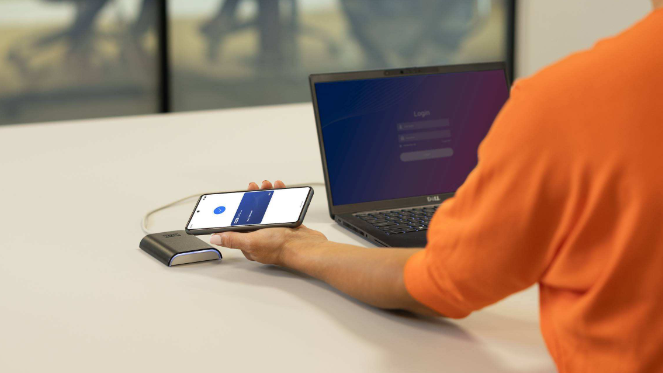
The SCI initiative involves taking solid industry open standards in an application to address the common need to support mobile credentials in a highly secure way. This includes the best practices of Public Key Infrastructure (PKI) for digital certificate management along with open standards and secure communication practices as successfully used in our industry with the Open Supervised Device Protocol (OSDP) developed by the Security Industry Association (SIA). This enables a common and open standards way of utilising a device Public Key as a credential that can be used across reader, lock and physical access control manufactures reducing the complexity and multi-credential challenges of enterprise environments.
I think the world has changed as a result of COVID, and the Access Control market is certainly no exception
Do you think the access control market has changed post Covid?
I think the world has changed as a result of COVID, and the Access Control market is certainly no exception. Non-contact biometrics, contact tracing, social distance and occupancy monitoring/alerting, thermal temperature measurement, sanitation, mask detection and mobile / remote management are just some of the areas that have become the focus of our industry in a post COVID world. I think some of these are here to stay while others will fade away as we get to the clarity of what a new normal looks like in the post COVID world. Open standards certainly help to reduce the level of complexity and the technical stack required to support enterprise environment which is something that the PSIA helps to create.
How do your working groups develop specifications?
By openly discussing the real challenges of the industry across manufacturers, integrators and end customers. This kind of collaboration leads to being able to understand the core and common requirements that lead to the basis of the development of an open standard such as PLAI or SCI which also seamlessly work together. Without a common problem, it would be difficult, if not impossible to get collaboration and an open standards approach that can solicit wide adoption.
How important is it to have quality control and standards regulated across the industry?
Quality controls are table stakes. This is how solutions and products have the backing that they can deliver the specified solutions and meet scale, performance and security needs. Standards help to guide the best practices and simplification of support and maintenance. One-off and customer are hard to scale and only make ongoing support and maintenance more complex and costly to manage. In my humble opinion, they are both greatly important for our industry.
What part does interoperability play in society and the move towards smart cities?
When I hear interoperability, I immediately think Plug-And-Play. In a world that is moving towards the wider Internet Of Things (IoT), integration is common and creates interoperability. The challenge is that everyone has an API and/or SDK but that means writing new code to get API/SDK’s to share and create interoperability. This is where open standards like PLAI and SCI can reduce the complexity where by simply supporting one API/SDK, you get a much larger number of devices/software that can become the Plug-And-Play taking interoperability to a much more powerful impact.
What experience do you bring to the PSIA board?
I have 23+ years of physical access control and video solutions experience that range from software and hardware development, product management, commercial and advanced research with a significant amount of direct customer engagement. This provides a wide level of experience of going from ideas all the way to commercial solutions that I can draw upon and share with the PSIA Board and member companies.
What advice would you give to companies looking to upgrade their security systems?
Open standards are an important consideration in scale and supportably for any organisation. When considering upgrades, you want to look for solutions that will give you the biggest bang for your investment while helping to reduce your future maintenance requirements. You also want to make sure that you are looking for solutions that will provide you a strong cyber secure environment. Encryption and data privacy are core to protection both a company and those that interact with them. Lastly, I would be recommending that companies look out into the future from a technology perspective. Containers, microservices and open standards will be important for future proofing.
Anything else to note?
I would just like to emphasise the benefits of open standards adoption. I am a believer and advocate in how they can simplify and help to achieve real scale while ensuring that security is not a trade-off in a highly connected world.
To stay up to date on the latest, trends, innovations, people news and company updates within the global security market please register to receive our newsletter here.
Media contact
Rebecca Morpeth Spayne,
Editor, Security Portfolio
Tel: +44 (0) 1622 823 922
Email: [email protected]