

Cloud-enabled critical communication is reshaping resilience, giving organisations smarter oversight, faster response and integrated operational, says Zenitel
Stand: 5/H107
Website: zenitel.com
In environments where safety, security and operational continuity are non-negotiable, communication has evolved beyond simple message delivery. Whether in transport hubs, healthcare facilities, industrial sites or large commercial complexes, critical communication now plays a central role in enabling fast, informed and coordinated responses.
As operations become more distributed and complex, resilience is no longer defined by system uptime alone. It is measured by the ability to anticipate risk, maintain situational awareness and respond decisively — across sites, technologies and borders. This shift is driving a fundamental rethinking of how critical communication infrastructure is designed, managed and integrated.
From Infrastructure to Operational Intelligence
Traditional audio and public address systems have largely relied on local monitoring and manual maintenance. While proven, this model can limit visibility and delay response in high-risk environments.
Cloud based remote management and monitoring platforms offer a more resilient approach. By centralising oversight and enabling real-time diagnostics, organisations gain continuous visibility into system health and performance. Communication systems evolve from isolated endpoints into connected, intelligent networks that support proactive decision-making.
This approach also supports interoperability. Open, standards based platforms allow communication systems to integrate seamlessly with wider security and operational technologies, protecting existing investments while remaining future ready.
Making Audio Work Smarter
Advances in audio intelligence are transforming how sound is used as a source of insight. Audio analytics can identify abnormal events, verify intelligibility and detect issues before they impact operations. Natural language processing enables automated transcription and reporting of announcements and emergency communications, supporting compliance, accountability and post incident analysis.
Combined with predictive maintenance, these capabilities reduce unplanned downtime, optimise service cycles and minimise operational disruption. Communication systems become self-aware, continuously learning assets rather than static infrastructure.
Integrated Security, Coordinated Response
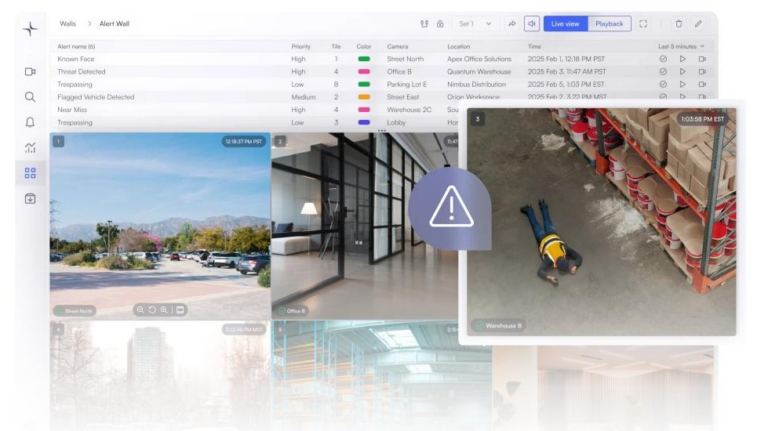
The true value of modern critical communication is realised when it operates as part of a wider ecosystem. Integration with IoT sensors, access control, video surveillance and environmental monitoring enables coordinated, automated responses — from triggering announcements based on events to escalating alerts across multiple domains.
For security and facility teams, this convergence delivers a unified operational view, faster incident response and improved safety for both people and assets.
A Strategic Perspective
Adopting a cloud first, intelligence-driven communication strategy is not simply a technology upgrade. It is a strategic investment in resilience, scalability and operational confidence. Vendor neutral design, strong cybersecurity principles and the ability to operate reliably in mission critical environments are essential considerations.
In a world where clarity, speed and reliability matter more than ever, critical communication is no longer just about being heard. It is about enabling informed action — consistently, securely and without borders.