

Frank Mueller, Director, Key Accounts – Physical Security, EMEA, for Hexagon’s Safety, Infrastructure & Geospatial division, presents a thought leadership perspective of the use of LiDAR in railway infrastructure.
In the old days, hopping onto the platform from a not-yet-stopped train was a commonplace stunt for daily commuters in a hurry. It was a thrilling, but dangerous part of railway travel. Today, rail travel is generally much safer, but thrill and fame seekers are finding new, creative ways to use the railway to court notoriety online. Earlier this month, a young man filmed himself laying on the tracks and allowing a train to pass over him. In another instance, two people were seen misusing a level crossing to get an ‘Instagram worthy’ picture. Meanwhile, the media has recently reported stories from Austria to Australia of people (and in some cases children) being seriously hurt or killed whilst attempting to train surf.
For rail companies, such incidents cause great distress and bring often unjust headlines that question the level of safety and security of the railway. Then, of course, there is the impact on the timetable when incidents cause significant delays. The ramifications of just one incident can be significant, as illustrated by a case in February when a track trespasser caused 16 trains to be cancelled and a further 54 to be partially cancelled at the cost of approximately 600,000 euros.
Despite the negative stories, safety and security have always been a top priority for railways and supporting agencies. The British Transport Police, for example, traces its origin back to 1830 when the force was established following the death of a member of Parliament, who was struck by a passing train after alighting onto the track of the newly opened Liverpool and Manchester Railway.
Modern surveillance
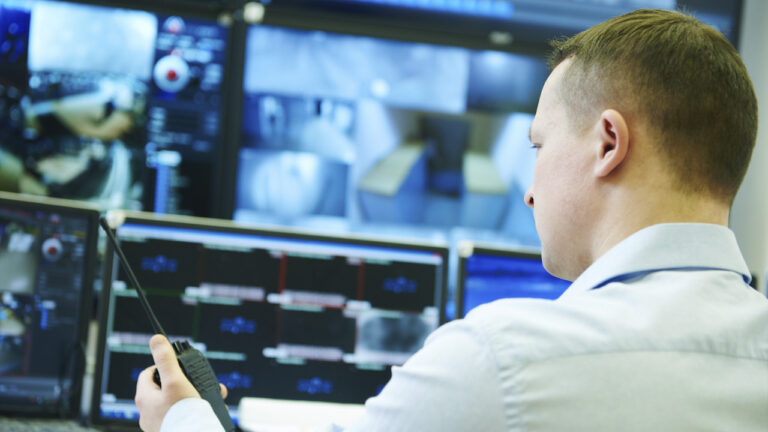
Today, trains, platforms, yards, level crossings and sections of track are monitored by some of the very latest technology hardware and software, from high-definition cameras with built-in advanced video analytics capabilities to PSIM (physical security information management) systems that can be used to orchestrate a response to anything from a trespasser on the line to a major derailment.
Even with all these systems, the sheer scale of rail networks means it is simply not possible to always have eyes everywhere. What’s more, whilst the technology continues to make huge leaps forward, affordability and usability can limit their effectiveness. This has been especially true of video analytics and object detection, where distinguishing between a human trespasser or an animal can be challenging, especially in low light (a particular issue with passenger and freight trains running round the clock).
With trains moving at a high speed, early detection is everything. If a driver spots someone or something on the line and immediately applies the emergency brake, it could take the train as much as one mile to come to a stop.
LiDAR to the rescue
So, what can be done to improve response times for drivers and other stakeholders?
One recommendation is to focus on key sections of the rail network that provide easier access for trespassers, such as stations, platforms, tunnels, bridges and level crossings, where more than a quarter of all significant accidents occur on EU railways. This is already standard operating procedure for most rail companies. However, a growing number are going beyond the ‘standard’ safety and security measures, with the introduction of high-tech solutions such as 3D LiDAR (Light Detection and Ranging) sensors.
This technology is already familiar to the rail industry. It has been used for some time in applications ranging from surveying environments in preparation for building high-speed rail networks to mapping railway tracks and surrounding infrastructure for ongoing maintenance works.
In the context of safety and security on the railway, LiDAR enables the creation and management of virtual perimeters and/or safe zones with pinpoint accuracy. A good example would be at level crossings where a high volume of vehicle and pedestrian traffic crosses the track when the barrier is raised, but it must be clear for rolling stock to pass safely.
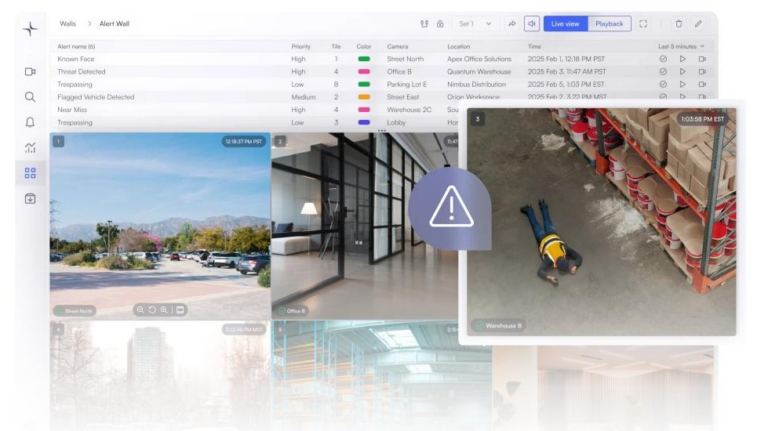
LiDAR sensors can be programmed to automatically switch on minutes before a train is scheduled to pass through the crossing and turned off after it has cleared the area. During this time, any movement detected with this ‘live zone’ would create an alert in the control room. The addition of cameras would provide a real-time feed of the situation, enabling the control room operator to act. That could involve sending a message via a public address system to clear the area, alerting the approaching train driver to take appropriate action, and alerting emergency services and maintenance teams if there is a vehicle, animal or other blockage on the track.
The investment many rail operators have made in PSIM and CAD (computer-aided dispatch) can add a further layer of protection. These systems provide the operator not only with guidance regarding the next best action but also automatically triggered responses to orchestrate the entire incident management process.
Protecting critical infrastructure
Level crossings are a good example of environments where it is not viable to have round-the-clock live surveillance, but monitoring is essential at key times. It is a similar case for stations late at night, bridges and depots, all of which are susceptible to acts of trespass, vandalism (particularly graffiti) and theft. All of these pieces of rail infrastructure and the collective network stand to benefit from the use of LiDAR, as incidents are prevented or their impact mitigated in terms of the effect on the timetable, negative publicity, fines and the costs of investigations.
The latest Report on Railway Safety and Interoperability in the EU stated that “European railways remain among the safest in the world, with major accidents becoming rare and significant accidents decreasing in the last two decades.” This good news is heightened by the fact that more people than ever in Europe are choosing to let the ‘train take the strain’, with passenger numbers reaching record levels.
However, whilst passengers may no longer be swinging open train doors and jumping from moving carriages just to get to work a few seconds earlier, the risks on the railways have evolved. With more rolling stock travelling at higher speeds on lines old and new, there is a need to revisit the traditional methods of safeguarding areas on the network, to deter, detect and protect against those seeking fame, infamy or gain.