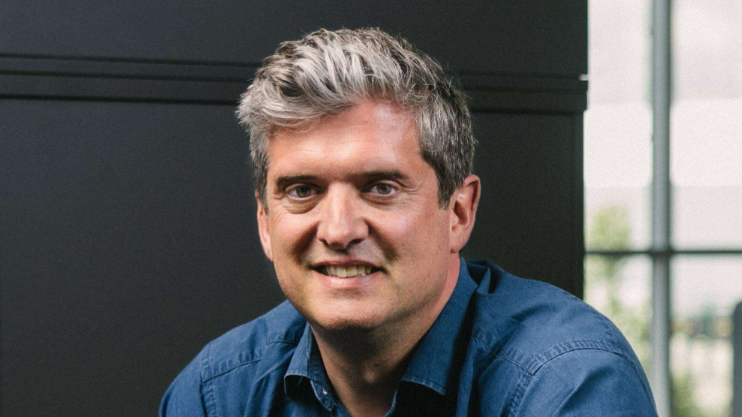

Tom Smith, Vice President and Head of EMEIA for Traka, discusses convergence and the expanding role of integrated key and asset management.
As the marketplace of security solutions continues to advance and end-users navigate an equally evolving atmosphere of threats, it’s critically important to understand how both physical and digital security systems are integrating to present a comprehensive infrastructure for a variety of industries.
Tom Smith, the new Vice President and Head of EMEIA for Traka, discusses the ongoing evolution of the access control industry and how end-users need to evaluate solutions like key and asset management technology as microcosms of their broader, integrated ecosystem.
Tell us about your 12+ years at Traka and what you’re most focused on achieving in your new role as VP & Head of EMEIA.
I’ve been incredibly fortunate during my time at Traka to have held a number of different roles across the business. I joined more than 12 years ago and during that time I’ve worked with different sectors, customers and vertical markets which has given me a really broad understanding of how security and operational requirements can vary from one organisation to another.
One of the things that experience has taught me is that there is rarely a one-size-fits-all approach. A hospital, distribution centre, data centre, airport, university or automotive business can all have very different challenges but there is a common requirement: making sure the right people have access to the right keys, assets and equipment at the right time.
In my new role as Vice President and Head of EMEIA for Key and Asset Management, I’m truly excited about the opportunity we have to grow this part of ASSA ABLOY across the region. There is significant potential in many of our markets, and my focus is on helping our teams translate our technology into real outcomes for customers.
For me that means demonstrating that key and asset management can deliver much more than security alone. Done properly it can improve process control, create accountability, increase operational efficiency and extend the value organisations are already getting from their access control infrastructure.
How has the approach to access control evolved over the past 10–20 years, and what new challenges are end-users facing as technologies and security threats continue to develop?
Access control has evolved enormously. Historically the conversation was predominantly about controlling a perimeter or a door: who is allowed through it and who isn’t.
Today organisations are thinking much more broadly. They want to understand identity, permissions, movement, assets and activity across an entire operation. At the same time businesses are increasingly connected and the distinction between physical security, digital security and operational technology is becoming less defined.
That creates opportunity but also complexity. Security teams are managing more systems, more data and often far more locations while organisations understandably want simplicity for their employees.
I think that changes the question from simply “Can this person enter this area?” to “What is this person authorised to do once they are there?” That is where key and asset management becomes a natural extension of access control. An employee might legitimately enter a building using their credential but that doesn’t necessarily mean they should have access to every vehicle key, master key, radio, scanner or device inside it.
By bringing those assets into the wider access control ecosystem organisations can apply much more granular permissions while creating an audit trail of who accessed what, when and where.
What role do physical keys continue to play in modern access control alongside the growing adoption of cards, fobs and mobile credentials?
Physical keys remain incredibly important and I don’t see that disappearing anytime soon.
There is understandably a lot of focus on mobile credentials, digital access and increasingly intelligent locking technologies. Those technologies will continue to grow but most organisations still have a significant physical key estate.
The challenge is that the physical key can sometimes become the weakest part of an otherwise sophisticated access control environment.
An organisation might invest heavily in controlling exactly who can enter a building but once someone is inside there could be a traditional key cabinet or manual sign-out process controlling access to some of its most sensitive areas, vehicles or equipment.
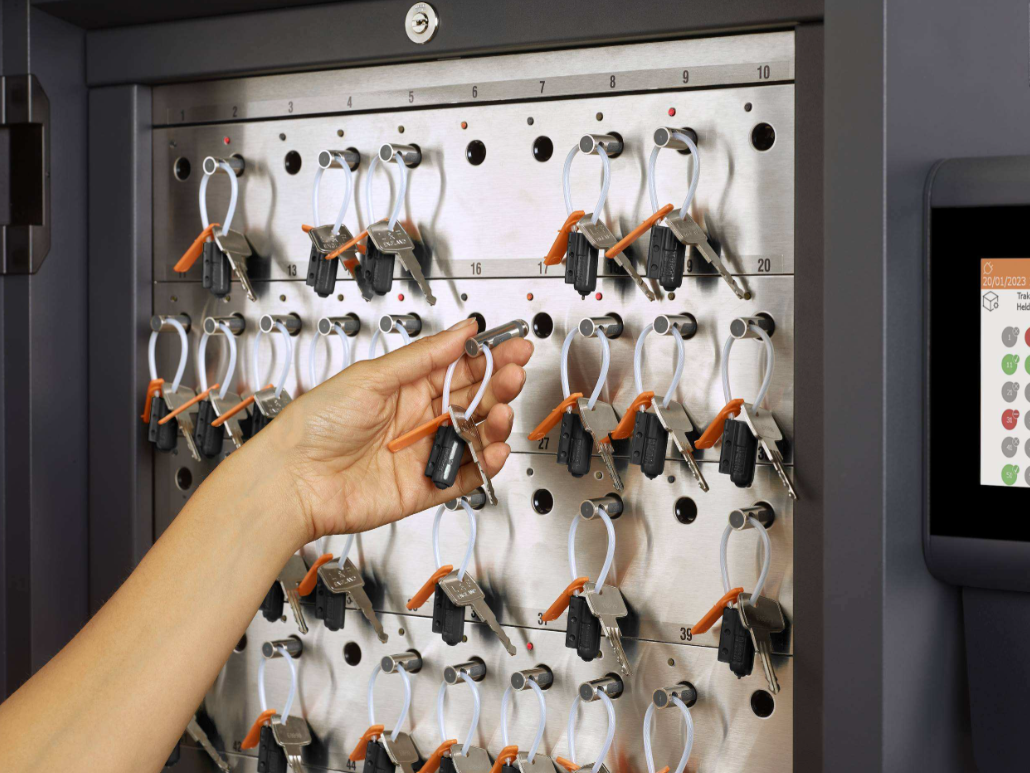
Electronic key management bridges that gap. Rather than removing the physical key it makes that key part of the digital security ecosystem. You can control who is authorised to take it, when they can take it, create a complete audit trail and generate alerts or actions when expected processes aren’t followed.
It is about applying digital intelligence and accountability to a very physical part of security.
How can modern software help organisations manage not only physical keys, but also shared assets such as tablets, scanners, radios and laptops?
This is an area where I think there is enormous potential because the same principles apply whether we’re managing a key or a high-value device.
Across many industries employees depend on shared equipment to perform their jobs. That could be a scanner in a distribution centre, a radio in an airport, a laptop within an organisation or another critical device. If that asset isn’t charged, available or where it should be when somebody needs it there is an immediate operational impact.
Modern asset management software gives organisations visibility and accountability around those items. Intelligent lockers can control who can access particular assets while software such as TrakaWEB provides centralised management, permissions, reporting and audit information.
The interesting part is what organisations can then do with that information.
Instead of simply securing an asset we can start helping customers improve the process around it: reducing time spent searching for equipment, improving utilisation, identifying recurring issues and ensuring critical equipment is available to the people who need it.
That is why I often see our technology as sitting at the intersection of security and operational efficiency.
How important is interoperability in modern access control, and how does Traka approach integration with existing security systems and other technologies, particularly as part of ASSA ABLOY?
Interoperability is absolutely critical.
Customers don’t want another isolated system that creates additional administration. They increasingly expect technology to work within their existing security and business ecosystem.
That philosophy is fundamental to our approach at Traka. Our technology can integrate with access control, identity management and other business systems so that organisations can use existing credentials, users and permissions while bringing key and asset activity into their wider security environment.
It also creates some really powerful workflows. Rather than integration simply meaning two systems exchanging data we can use information about a key or asset to influence another process. For example, an organisation can know whether a critical item has been returned or use asset status as part of a wider access control workflow.
Being part of ASSA ABLOY makes that conversation particularly exciting. ASSA ABLOY has an enormous breadth of access technologies and expertise globally. Traka’s role within that ecosystem is to help extend access control beyond doors and openings to the keys, equipment, vehicles and devices people interact with after gaining access.
Ultimately, the customer shouldn’t have to think about individual pieces of technology. They should experience one connected security ecosystem.
Looking ahead, where do you see access control heading, and how will Traka demonstrate its approach to these emerging requirements at GSX in September?
I think the future is increasingly connected, intelligent, and driven by data.
The next evolution of access control isn’t simply going to be about introducing another credential or another piece of hardware. It will be about how intelligently different technologies communicate and how organisations use the information those systems generate to make better decisions.
For Traka I think that creates a huge opportunity. Key and asset management can become an increasingly integrated part of the wider security infrastructure while also delivering measurable operational benefits outside the traditional security function.
We’re moving from thinking about access to a building towards thinking about access to everything someone needs to perform their role securely and efficiently.
At GSX, we want people to see that in practice. We will demonstrate how intelligent key and asset management can integrate into an existing security ecosystem and how the technology can help organisations move from simply securing an item to controlling and improving the entire process around it. We’ll be showcasing those benefits through our Traka Touch Core and Touch Pro key cabinets, plus our intelligent locker systems, including our modular locker that manages a variety of shared devices.
For me the most exciting part is that the technology becomes almost invisible. The employee gets the key, device or equipment they need quickly and easily while behind that simple interaction the organisation has control, accountability, visibility and data.
That’s where I see the future of access control heading and it’s where I believe Traka and the wider ASSA ABLOY organisation have an incredibly strong role to play.