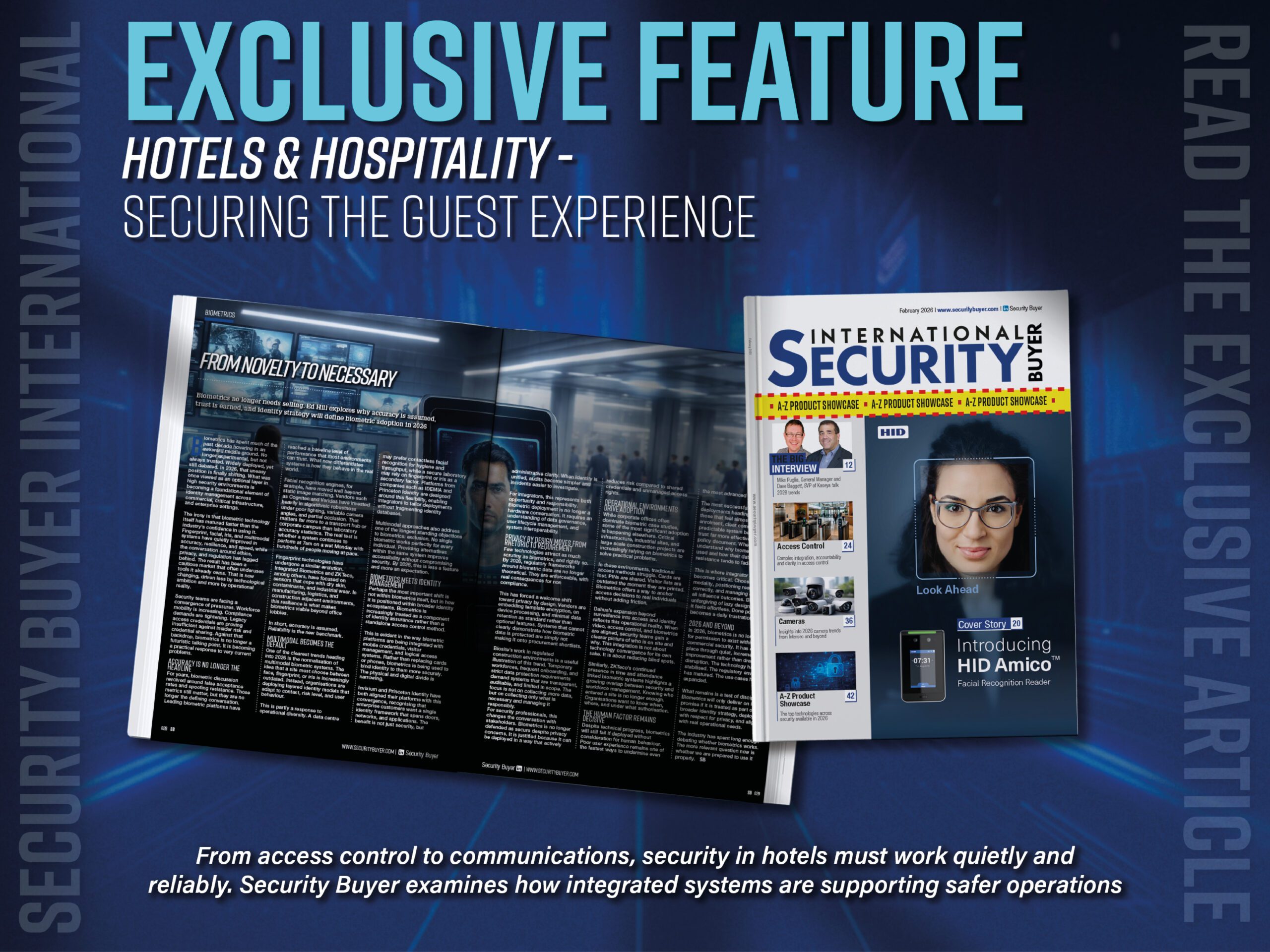

From access control to communications, security in hotels must work quietly and reliably. Joseph Clarke examines how integrated systems are supporting safer operations
Hotels and hospitality environments present a unique security challenge. Unlike offices, factories, or critical infrastructure sites, they must balance robust protection with an open, welcoming atmosphere. Security systems are expected to operate continuously in the background, protecting people, assets, and reputation without ever feeling intrusive to the guest.
Over the past few years, that balance has become harder to maintain. Staffing pressures, rising operational costs, evolving duty of care expectations, and increased reliance on temporary and contract workers have all added complexity. At the same time, guest expectations around convenience, speed, and digital interaction continue to rise. In response, security in hospitality is becoming more integrated, more intelligent, and more closely aligned with operational systems.
Rather than relying on isolated access control, key management, or intercom solutions, hotels are increasingly adopting integrated platforms that connect doors, credentials, communications, and monitoring into a single operational picture. The goal is not heightened visibility for its own sake, but smoother operations, reduced risk, and a more consistent guest experience.
Access control as a service layer
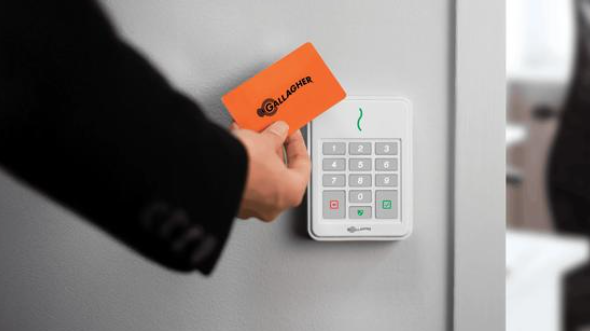
Access control has long been a core element of hotel security, but its role is changing. Traditional card-based systems are giving way to more flexible credential strategies that accommodate guests, staff, contractors, and third-party service providers with varying access needs.
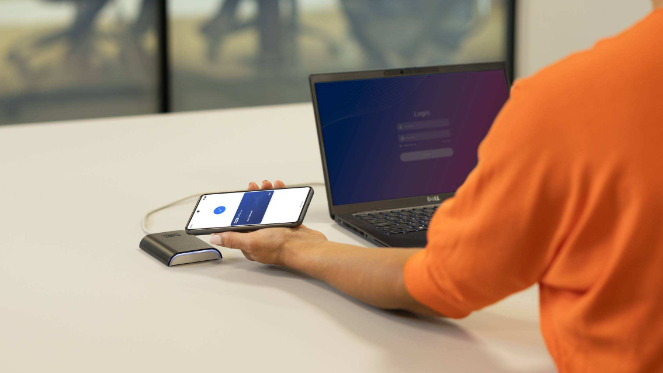
Dormakaba and Salto are both widely deployed in hospitality environments due to their focus on flexible access ecosystems. Their solutions support mobile credentials, time limited access, and integration with property management systems, allowing guest access to be provisioned and revoked automatically. This reduces reliance on front desk intervention and improves resilience during peak periods.
For larger or multi site hotel groups, the advantage lies in consistency. Centralised management enables policies to be applied across estates, while still allowing local operational control. The trade off is complexity. These systems require careful planning and integration to ensure access rules align with real world workflows, particularly in mixed use properties with leisure, conference, and back of house areas.
Nedap approaches hospitality access from a broader identity management perspective. Its platforms are often selected for environments where staff access, vehicle access, and perimeter control intersect. This is particularly relevant for resort style properties or mixed hospitality and leisure estates. While powerful, such systems are best suited to operations with the scale and governance structures to manage them effectively.
Managing keys, assets, and accountability
Despite advances in digital access, physical keys remain a reality in many hospitality settings. Plant rooms, maintenance areas, service vehicles, and legacy infrastructure often rely on mechanical keys, creating potential blind spots.
Traka addresses this challenge by treating key management as part of the security ecosystem rather than an administrative afterthought. Intelligent key cabinets provide controlled access, audit trails, and real time visibility of who has taken what and when. In hotels, this is particularly valuable for managing engineering teams, housekeeping supervisors, and external contractors.
The operational benefit is accountability. When keys are managed as assets rather than consumables, incidents can be investigated more quickly and disputes resolved with evidence rather than assumption. The consideration is cultural. Successful deployment depends on staff buy in and clear operational procedures, particularly in environments with high staff turnover….
Read the full feature here