
Joseph Clarke examines how surveillance technology is evolving beyond capture into intelligence, where interoperability, trust, and infrastructure now define performance
Surveillance has never been short of capability. What it has lacked, historically, is clarity around purpose. For decades, video systems have been deployed as a reactive measure, recording events for later review rather than actively informing decision making. That distinction is now changing, not because cameras have improved in isolation, but because the surrounding ecosystem has matured.
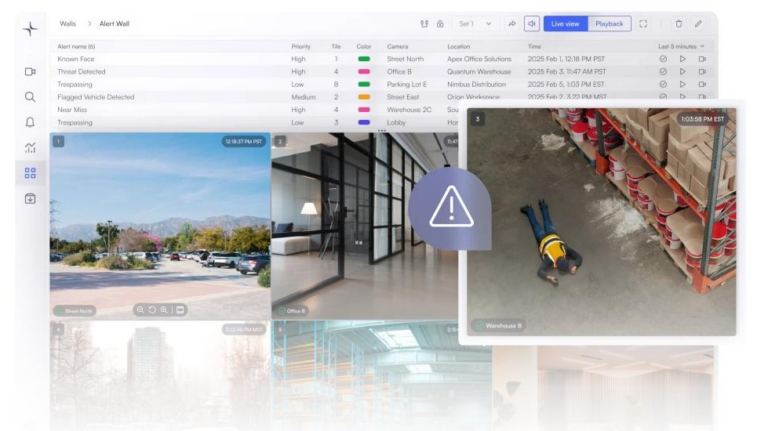
The modern surveillance environment is no longer defined by resolution or storage capacity. It is shaped by how effectively systems interpret, share, and act on data. Organisations are no longer asking whether they can see an incident. They are asking whether they can understand it in real time, and whether that understanding can be integrated into wider operational workflows.
This shift has brought a familiar tension back into focus. The industry is moving towards intelligence-led surveillance, yet much of its installed base was built for observation. Bridging that gap is not a question of replacing hardware, but of redefining how systems interact and how operators trust the outcomes they produce.
From observation to interpretation
The transition from passive recording to active analysis has been gradual rather than disruptive. Video analytics, behaviour detection, and object classification have existed for years, but their adoption has been uneven. Early iterations often struggled with accuracy, particularly in complex environments, which led many organisations to treat analytics as an optional layer rather than a core function.
Manufacturers such as Axis Communications and i-PRO America have focused on refining edge-based processing, enabling cameras to perform analytics directly rather than relying entirely on centralised infrastructure. This approach reduces latency and bandwidth demands, but it also introduces new considerations around consistency and system design.
At the same time, companies including IDIS and Dahua have continued to develop integrated solutions that balance hardware performance with software capability. The emphasis has shifted towards delivering systems that are not only capable of capturing high-quality footage, but also of extracting usable information from it without overwhelming operators.
The challenge lies in defining what constitutes “useful” information. Surveillance environments vary significantly, from critical infrastructure and transport hubs to retail and commercial spaces. A system trained to detect anomalies in one setting may produce excessive false positives in another. As a result, the effectiveness of analytics is closely tied to how well it is configured and contextualised.
This is where perception continues to influence adoption. Many organisations remain cautious, not because the technology lacks capability, but because its reliability depends on factors that extend beyond the device itself. Implementation, calibration, and ongoing management all play a role, and these are often where projects encounter friction.
The platform question
If analytics has shifted the purpose of surveillance, platform architecture has redefined how it is delivered. The move towards open systems and software-led environments has been one of the most significant developments in recent years.
Milestone Systems has long positioned itself within this space, emphasising the role of video management software as the central point of control. Open platforms allow organisations to integrate cameras, analytics tools, and third-party applications within a single environment, reducing dependency on proprietary ecosystems.
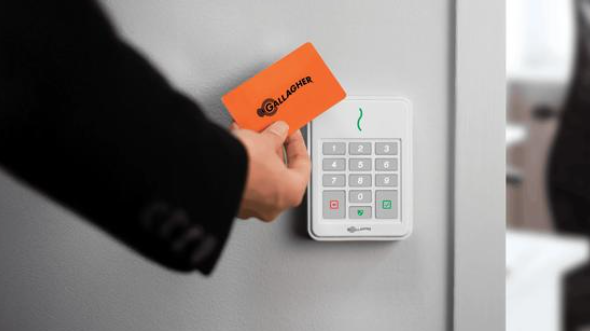
This approach aligns with broader industry trends around interoperability. Organisations increasingly expect surveillance systems to connect with access control, alarm management, and business intelligence platforms. The value of video is amplified when it can be correlated with other data sources, creating a more comprehensive view of operations.
However, openness introduces its own complexities. Integration requires standardisation, and while industry protocols have improved, compatibility is not always seamless. Differences in firmware, data formats, and system architecture can create inconsistencies that undermine performance.
Manufacturers such as Hikvision and Dahua have historically offered more vertically integrated solutions, where hardware and software are designed to work within a controlled environment. This can simplify deployment, but it may limit flexibility in multi-vendor systems. The balance between openness and control remains a central consideration for end users.