
Hannah Larvin assesses how AI-driven security in hospitality enhances surveillance, access control, and incident response, balancing safety with guest experience
Security in the hospitality industry presents a unique challenge. Unlike sectors such as retail, transport, or corporate environments—where security measures are often front and centre—hotels must maintain a balance between high-level protection and a seamless guest experience. A hospitality venue should feel welcoming, not like a fortified space under constant scrutiny. Guests expect convenience and comfort, yet behind the scenes, security teams must mitigate risks ranging from petty theft and trespassing to more serious incidents such as organised crime, cyber threats, and terrorism. Striking this balance requires not only robust security infrastructure but also discretion and subtlety, ensuring that safety measures do not disrupt the overall guest experience.
However, modern security threats—from unauthorised access and guest altercations to large-scale security breaches—are forcing hotels to rethink their approach. The rise of digital key access, mobile check-ins, and automated guest services has introduced new vulnerabilities, while increasing guest expectations for personalisation means more data is collected and stored, creating potential cyber risks. Traditional methods, such as CCTV monitoring, physical access control, and manual security patrols, are proving insufficient in an era where incidents unfold in real time and require instant responses.
AI is emerging as the key enabler in this transformation, offering faster detection, predictive insights, and automated intervention. Hotels, resorts, and conference venues are increasingly integrating AI-driven solutions that go beyond passive surveillance, allowing security teams to move from reactive incident management to proactive risk mitigation. AI-powered analytics, facial recognition, and intelligent threat detection are transforming security operations, making it possible to anticipate potential threats before they escalate.
But while AI’s potential in hospitality security is vast, its implementation is far from straightforward. Questions around bias, privacy, regulatory compliance, and guest acceptance must be addressed. Data protection laws, ethical concerns, and the impact of AI-driven monitoring on guest trust all come into play. The conversation is no longer about whether AI should be used in hotel security—it is about how it should be used responsibly, ensuring that technological advancements enhance both security and the guest experience without overstepping ethical boundaries.
From Passive to Proactive Security
For decades, CCTV surveillance has been the backbone of hotel security. Yet, its fundamental limitation is its passivity. Security teams have traditionally relied on manual footage review, often combing through hours of video after an incident has already occurred. This retrospective approach not only slows down response times but also fails to prevent security breaches in real time.
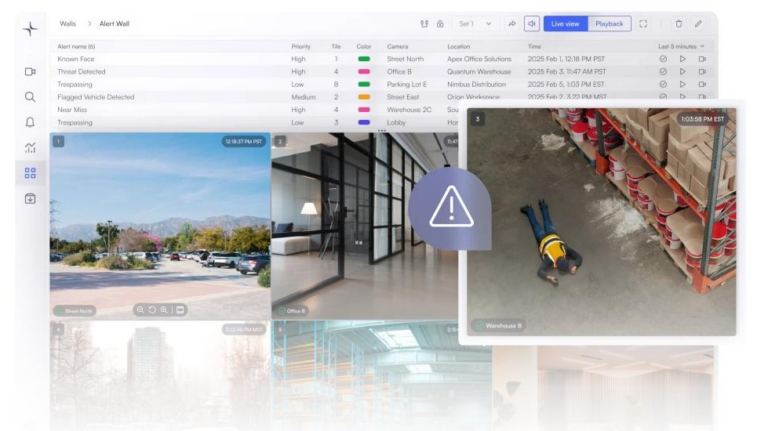
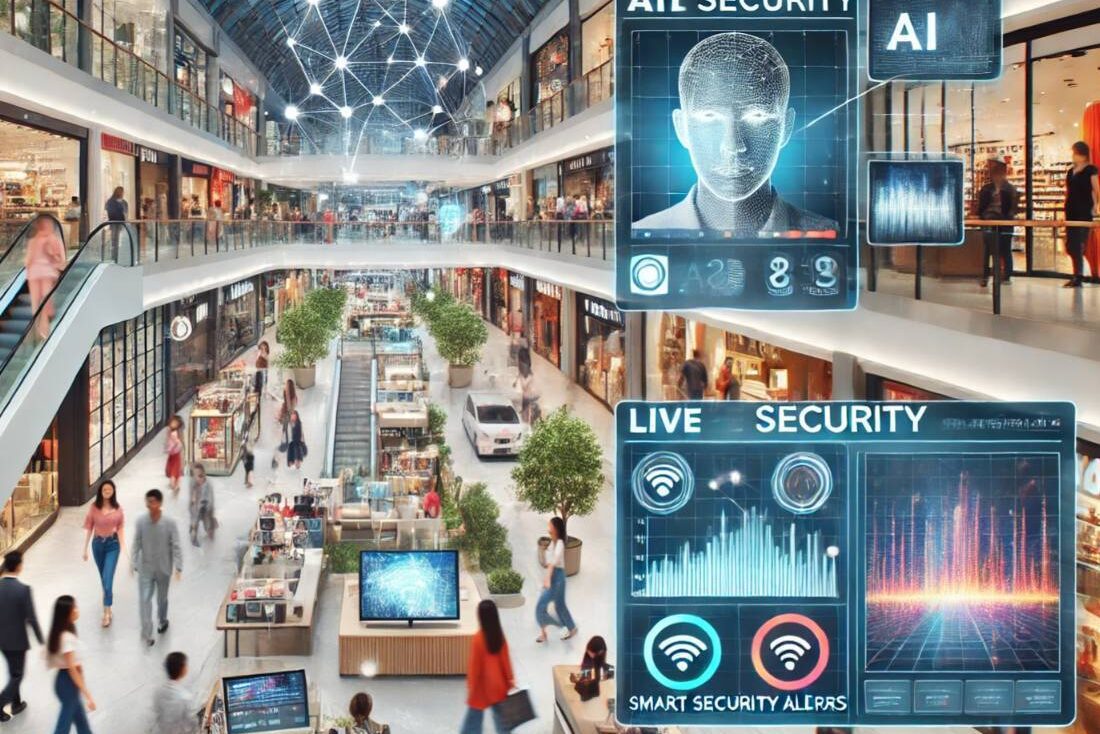
This approach is rapidly becoming obsolete. AI-powered video analytics, driven by deep learning algorithms, are shifting surveillance toward a real-time, event-driven model. The introduction of natural language search and generative AI further accelerates this transition. Instead of merely recording events, AI-enhanced security systems can now interpret, categorise, and prioritise footage, significantly reducing the time security personnel spend on investigations.
With the rise of generative AI, manufacturers are now embedding platforms like ChatGPT into their video management systems, allowing security teams to query footage using conversational prompts rather than tedious manual searches. AI-powered search eliminates the need for extensive human intervention, allowing personnel to focus on real-time decision-making rather than footage analysis.
For example, Rhombus recently launched an AI-powered event search tool that allows hotel security teams to locate specific incidents with simple commands. Instead of sifting through endless footage, a security officer can type, “Show all instances of a man in a blue suit entering the staff-only door between 8 PM and midnight,” and the system will instantly retrieve relevant clips. This means that what once took hours or even days can now be achieved in minutes.
This represents a clear shift toward efficiency, as AI eliminates the resource-heavy burden of manual video review. However, while this level of automation speeds up investigations, it also introduces questions of reliability and oversight. Can AI truly interpret security footage without human bias, or does it reinforce pre-existing inaccuracies in detection algorithms? What happens when AI misidentifies a guest or staff member, potentially flagging them as a threat?
Hotels must weigh the benefits of AI-enhanced surveillance against the risks of misidentification and false positives—particularly in environments where guest privacy is a top priority.
Additionally, the use of AI-based surveillance allows for behavioural pattern recognition, which can flag anomalies such as loitering in restricted areas, repeated attempts to access secure zones, or unusual movement patterns in public spaces. This proactive monitoring can prevent incidents before they escalate, but it also raises concerns about the ethics of predictive security. Will guests accept AI making assumptions about their behaviour, or does this verge into profiling?
Furthermore, AI-driven surveillance can now integrate with other hotel security systems, such as access control, alarms, and crowd monitoring, creating a fully connected ecosystem. For instance, if a suspicious individual is detected in one part of the hotel, AI can instantly alert security personnel, lock specific doors, or direct staff to investigate. This represents an entirely new paradigm in hotel security, where AI is not just a tool for review but an active participant in maintaining safety. However, as reliance on AI grows, so does the need for clear operational guidelines, human oversight, and ethical safeguards to prevent the misuse of such powerful technology……
Read the full article in our latest issue here.
Never miss a story… Follow us on:
LinkedIn: Security Buyer
Twitter (X): @SecurityBuyer
Facebook: @Secbuyer
Media Contact
Rebecca Morpeth Spayne,
Editor, Security Portfolio
Tel: +44 (0) 1622 823 922
Email: [email protected]