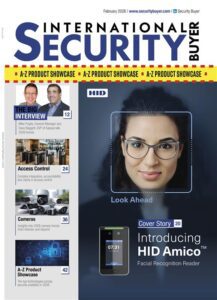
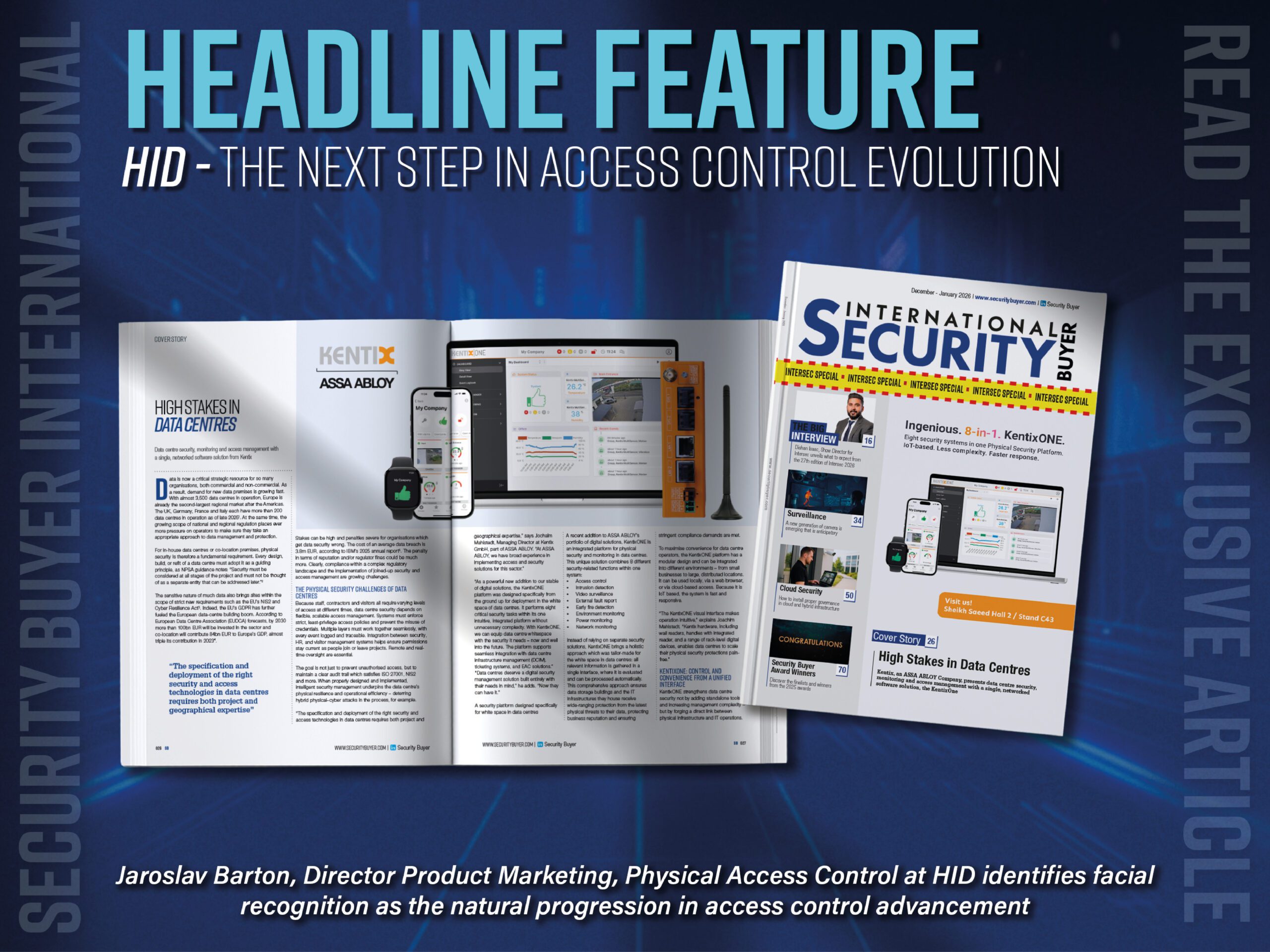

Jaroslav Barton, Director Product Marketing, Physical Access Control at HID identifies facial recognition as the natural progression in access control advancement
Security leaders face a persistent challenge: how to protect physical assets and facilities without creating friction for the people who need access. Traditional methods—key cards, PIN codes, fingerprint scanners—have served their purpose, but each carries inherent vulnerabilities. Cards get lost or shared. Codes are forgotten or compromised. Contact-based systems create bottlenecks and raise hygiene concerns.
The answer increasingly lies in contactless facial recognition. This technology has moved beyond experimental deployments to become the cornerstone of modern physical access control strategies. It delivers what enterprises need most: security that doesn’t slow people down, accuracy that stands up to sophisticated threats, and an experience that employees and visitors actually prefer.
This shift isn’t happening in isolation. Broader trends in workplace technology, heightened security requirements, and changing employee expectations are converging to make contactless, frictionless access not just desirable but essential. Organisations that once viewed facial recognition as a future consideration are now implementing it as a strategic priority.
This article examines the current state of biometric access control, the factors driving adoption of facial recognition, and what organisations should consider when evaluating these systems for their own environments.
Adoption and Market Growth
Biometrics have become an essential part of daily life, enabling consumers to unlock their phones, conduct financial transactions and verify their identities before performing tasks where data security is a concern.
Recent market surveys show that biometric identity checks are a common occurrence, with 87% of respondents to one survey reporting that they had been asked to verify their identity by providing biometric information within the past year. Biometric modalities mentioned in the survey include fingerprints, selfies, live video, voice recordings and iris scans. Another survey reported that half of all users rely on biometrics for daily authentication. Respondents to both surveys reported privacy concerns about using their data but submitted to biometric checks anyway.
Amid increasingly sophisticated attacks on buildings and electronic environments, maintaining physical and digital security is critical in today’s business environment. Companies are turning to biometrics to strengthen access control by linking credentials to unique human characteristics rather than cards or passwords. Biometric access and verification reduce the risk of credential sharing and compromise while improving convenience for employees and administrators alike.
The global market for all biometric systems is expected to grow by nearly 130% over the next six years, reaching a market value of more than $134 billion by 2032. Contactless biometric options such as facial recognition, iris scanning and palm vein identification are projected for the highest growth, “driven by the demand for hygienic, fast and secure authentication solutions,” according to analysts.
Growing concern for public safety, along with advances in imaging, sensors and software, is driving rapid adoption of contactless biometric systems across a wide range of industries, the report notes.
According to the 2025 State of Security Report, a global survey conducted by HID, 35% of respondents reported that they were currently using biometric technology, with another 13% planning to. Nearly three-quarters report using biometrics as part of their multi-factor authentication (MFA) strategy aimed at ensuring a multi-level approach to identity management for access to digital assets and critical areas of facilities.
Interestingly, responses varied widely across geographies, with Latin America and Asia Pacific respondents reporting higher rates of use or intent (79% and 62%, respectively) than those in Europe, the Middle East and Africa (EMEA, 46%) and the United States and Canada (42%)…
Read the full interview here